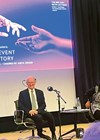
An interview with Professor Henryk Skarzynski, the President of the 18th International Conference on Cochlear Implants and other Implantable Technologies.

Professor Henryk Skarzynski.
What makes CI2026 different to previous CI meetings?
CI2026 is one of the most important and prestigious series of scientific meetings dedicated to sharing expertise in medical and rehabilitative care involving hearing implants. It's also a platform for presenting both clinical and basic research that drives innovation in this field. For decades, this conference has been a central point of reference for professionals working with implantable hearing technologies.
The tradition of the meeting goes back to 1987. Since then, these conferences have consistently brought together virtually all specialists involved in hearing implants, from diagnostics and surgical procedures to rehabilitation and long-term outcome analysis. What makes it unique is the combination of scientific depth, interdisciplinary dialogue and an engineering and technology component.
It is an event showcasing technological premieres and new solutions being implemented in clinical practice, including next-generation implants, speech processors, and diagnostic and measurement equipment.
How will the programme ensure that new research translates into everyday clinical practice for clinicians?
The conference provides an opportunity to present research results in the most convenient format. During the event, participants will deliver around 800 scientific reports in various forms. We have planned several hundred presentations across 70 panels, discussions and debates, during which topics related to cochlear implants and other implantable devices will be explored, including issues in surgery, bioengineering, rehabilitation, economics and social aspects.
I am convinced that particular interest will be drawn to sessions dedicated to fully implantable devices, partial deafness and the preservation of preoperative residual hearing, as well as to robotics in implant surgery and to new developments in rehabilitation and engineering.
Which emerging technologies or innovations in cochlear implantation are likely to shape discussions at the conference?
The conference's leading topics will undoubtedly be fully implantable devices. In this area, the latest results from multicentre studies will be presented. Another emerging topic will be surgery assisted by various robotic systems, along with an assessment of whether and at what stage such technology can provide meaningful support to the surgeon.
In the field of audiology, considerable interest will be drawn to topics such as intraoperative electrocochleography monitoring and new target patient groups. Additionally, attention will be given to computer programs for modelling and visualising cochlear structures with an inserted electrode, along with new concepts for speech processor fitting developed based on detailed knowledge of inner ear anatomy (ABF – anatomy-based fitting).
An intriguing area of discussion will be the perception of music by cochlear implant users. Another innovative topic involves the use of artificial intelligence in therapeutic and rehabilitation processes, as well as in remote diagnostics and remote fitting of hearing implant systems (Remote Care).
The conference will also feature studies on the effectiveness of implants in new target groups, such as patients with single-sided deafness, as well as new ideas for personalising rehabilitation strategies (Personalised Medicine in CI).
A growing target group consists of patients with partial deafness, in whom normal or socially functional hearing is preserved only in the low or low and midfrequency ranges. Since the beginning of the 21st century, our Institute has performed the largest number of such procedures worldwide. In recent years, a new subgroup has emerged within this population: patients with low-frequency partial deafness.

How does CI2026 support collaboration across multidisciplinary cochlear implant teams?
The sessions have been planned to ensure thematic coherence. In many panels, we have aimed to include representatives of diagnostic teams, surgeons, and other specialists to provide a multi-perspective view of the issues under discussion. I have had the opportunity to participate in numerous scientific conferences around the world, which allows me to draw on the experience, insights and ideas I have gained. As an organiser, I am committed to ensuring that moderators actively lead the discussion rather than merely introducing the next speakers.
Will the conference address global disparities in access to cochlear implantation, and what solutions do you hope to highlight?
We have made an effort to tailor the conference topics to participants from different countries, representing various levels of economic development and differing degrees of experience with implantable hearing technologies.
During the discussion panels, issues – including economic ones – will be addressed, so participants and attendees can apply the presented arguments and adapt them to the conditions in their own countries. Among the planned sessions is one dedicated to cochlear implants in developing countries. Representatives from smaller centres will participate and present their experiences with access to cochlear implant technology.
There will also be presentations on corrective measures to improve education in otology and audiology and reduce existing inequalities.
Why was Warsaw chosen as the host city, and what can delegates expect beyond the scientific programme?
We worked for 12 years to secure the opportunity to host this conference. The right to organise it is granted only to centres that make a significant scientific and clinical contribution to the field. For 30 years, we have been among the leading teams specialising in hearing implants; personally, I have performed more than 250,000 surgical procedures, including over 20,000 operations involving various types of hearing implants. Our centre has been a global leader in this area, performing the most hearing implant procedures worldwide in a given year.

The World Hearing Center in Kajetany has been the site of numerous technological premieres and first ever surgeries involving different types of implants. For this reason, I believe that our 34 years of clinical, scientific and implementation activity on the international otolaryngology stage, along with our participation in major conferences, both as attendees and organisers, were key arguments that influenced the decision of the Board of Former Presidents to support Warsaw as the host city for CI2026.
As part of the accompanying events, participants will have the opportunity to attend the premiere of the musical The Return of Beethoven, for which I wrote the libretto. Among the many performers, the cast will include cochlear implant users.