
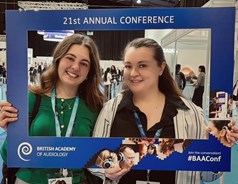
 Lucy Mills and Yasmin Yuztas, Mid and South Essex Foundation Trust
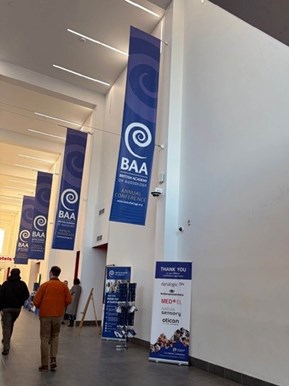
We had the pleasure of attending the 21st Annual BAA Conference at the Telford International Conference Centre. This was our first time at the event and anticipation was high as we joined colleagues from across the audiology world. Over two days, a wide range of sessions were available. These included the latest clinical practice updates looking at current research into hearing aid technology, paediatric audiology, implantable devices, tinnitus management and many others. Between sessions, there was time to browse exhibitor stalls, connect with peers, and even add to the ever-growing collection of free pens!
The conference opened with H Gus Mueller's lecture titled 'Common Misconceptions Related to the Selection and Fitting of Hearing Aids', challenging us all to rethink established fitting practices and highlighting evidence-based approaches. His talk was both informative and engaging, offering practical tips for hearing aid fitting and selection which has helped us develop our decision making for our own clinic. Another keynote speaker was Pádraig Kitterick from the national acoustic laboratories, who introduced “NAL-NL3: The Next Generation Hearing Aid Fitting System”. His talk explained how NALNL3 improves speech perception in noise and is better for patients with a mild hearing loss, a considerable step forward in modifying hearing aid prescriptions exclusively to each person. This will help us with understanding the new fitting algorithm and enhance our clinical decision making for patients and benefit the patients in the long term.
The presentation by Petrina Checkland focused on cochlear implantation. It highlighted the important role audiologists have in ensuring early patient-centred conversations about implantable hearing options are carried out. A key learning point was the importance of initiating these discussions before patients reach or exceed candidacy criteria, particularly for individuals with severe-to-profound hearing loss who are reporting reduced functional benefit from hearing aids. Many patients who are approaching candidacy criteria may continue to struggle for prolonged periods because this option has not been discussed early enough in their rehabilitation pathway. Petrina Checkland’s presentation emphasised that delayed discussion of cochlear implants can contribute to prolonged communication difficulties, reduced quality of life. In our clinical practice this has reinforced the need to introduce the discussion of cochlear implants earlier in the rehabilitation pathway, allowing patients to become familiar with the idea and ask questions, this approach may reduce anxiety and resistance when a referral is later suggested and supports informed decision making. Overall, we gained awareness of when and how to initiate these conversations in clinic, promoting early engagement and a more proactive, patient-focused approach to hearing rehabilitation which we can take use in our clinical practise.
A highlight of the second morning was the Cochlear Breakfast hosted by the British Cochlear Implant Group. This informal yet informative session gave us the chance to hear updates on implant technology and patient outcomes while networking over breakfast. It provided a valuable opportunity to discuss how cochlear implants continue to evolve and expand access for patients across the UK. 
Later, Marlene Bagatto closed the conference with her lecture 'Reframing Clinical Management of Unilateral Hearing Loss in Infancy', which explored the latest Kindon report in paediatric audiology and provided valuable comparisons between healthcare and audiology practices in the UK and Canada.
Beyond the lectures, the conference was a chance to connect with peers, meet new people, and exchange experiences, which proved to be one of the most rewarding aspects of the event. Attending the BAA Conference for the first time was both inspiring and motivating. We left with fresh ideas, practical insights, and a renewed sense of belonging within the audiology world. The event highlighted not only the challenges facing the profession but also the creativity and resilience of those working to overcome them. Learning about NAL-NL3 stood out as a highlight as this is the future of hearing aid fittings and how things will change. Also, the different lectures on paediatric audiology will be especially helpful with our careers going forward as one of us begins to work within the paediatric audiology department. We can’t wait to join again!


