
 Amol Anand, Speciality Registrar in Audiovestibular Medicine, Guy’s and St Thomas NHS Hospital Trust, UK
Sabarinath Vijaykumar, Speciality Registrar in Audiovestibular Medicine, Royal Derby Hospitals, UK
Dr Thomas Wedell, Speciality Registrar in Audiovestibular Medicine, Guy’s and St Thomas NHS Hospital Trust, UK
The British Association of Audiovestibular Physicians (BAAP) Annual Conference 2026, held at the Holiday Inn Birmingham Airport NEC, brought together around 75 delegates from across the UK, alongside an international and multidisciplinary faculty including audiovestibular physicians, ENT surgeons, audiologists, geneticists, neuroscientists, psychiatrists and anaesthetists. Over two days, the meeting delivered a rich and varied programme, reflecting the growing breadth of audiovestibular medicine and its increasingly integrated approach to hearing and balance disorders. 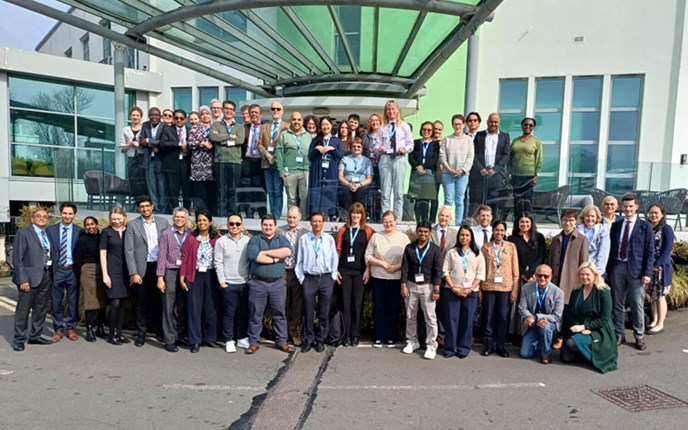
Day one opened under the chairmanship of Professor Soumit Dasgupta. The Sue Bellman Lecture was delivered by Professor James Hall III, who explored the medical comorbidities influencing hearing loss in older age. His talk challenged the notion of presbycusis as a purely age-related process, instead emphasising the contribution of cardiovascular disease, hyperlipidaemia, diabetes, rheumatoid arthritis and COPD, alongside lifestyle influences such as diet, exercise, smoking and noise exposure. Professor Andy Beynon followed with an engaging presentation on cortical evoked audiometry and its applications in both clinical practice and research, before Professor Enrico Armato gave a detailed and practical overview of the finer points of video head impulse testing.
A major highlight of the morning was Professor Manuel Manrique Rodriguez’s presentation on genetic screening, diagnosis and gene therapy for congenital hearing loss. Drawing on experience from Clínica Universidad de Navarra, he highlighted the increasing importance of accurate genetic diagnosis in congenital deafness and discussed the emerging reality of gene therapy, particularly in OTOF-related hearing loss. His emphasis on careful surgical technique and personalised intervention gave the session a strong sense of how rapidly this field is moving from research into clinical practice.
The afternoon session, chaired by Dr Rohani Omar, turned towards novel treatment strategies and broader brain-body themes. Dr Magdalena Sereda discussed the translational potential of non-invasive brain stimulation for tinnitus, while Professor Sally Dawson explored genetic susceptibility to age-related hearing loss and its possible link with dementia. Professor Petroc Sumner then presented “Balance Land and Beyond”, describing an integrated approach to rehabilitation for persistent postural-perceptual dizziness (PPPD), including gamified visual desensitisation aimed at improving motivation and adherence. Dr Jessica Eccles gave a lively and thought-provoking talk on the relationship between hypermobility, neurodivergence and vestibular symptoms, encouraging a more joined-up way of thinking about patients whose dizziness sits across conventional specialty boundaries. The final presentation of the day, from Dr Vandita Ralhan and Kathryn Knight, showcased Barts Health’s “super sedation” pathway for paediatric ABR testing, an innovative service development that has improved access and reduced waiting times for neurodivergent children.
Day two began with the BAAP AGM, followed by resident doctor presentations and prize sessions. The trainee programme covered a wide range of clinically relevant topics, including osteopetrosis with round window obliteration as a cause of mixed hearing loss, altered responses to electrical vestibular stimulation in Ménière’s disease and vestibular schwannoma, changing practice in hearing loss management in achondroplasia, quantification of nystagmus during nitroglycerin provocation in vestibular migraine, and the use of Ménière’s MRI scans in children. Dr Roohi Shrivastava also presented early work on the use of a vibrotactile belt in children with bilateral vestibular hypofunction, showing encouraging preliminary results in reducing falls and improving confidence and participation. The Hallpike Prize Lecture, delivered by Dr Vasileios Gkiousias, explored outcomes from the Liverpool Vestibular Infant Screening clinic and highlighted the importance and feasibility of early vestibular assessment in children with permanent childhood hearing impairment.
The afternoon consultant session, chaired by Dr Raj Nandi, brought the meeting to a strong conclusion. Professor Adolfo Bronstein delivered a masterclass on chronic dizziness, reminding delegates that persistent dizziness is not simply PPPD and that diagnoses such as gait disorder, bilateral vestibular failure, downbeat nystagmus, orthostatic hypotension and small vessel disease must not be overlooked. This was followed by Dr John Chan on periodic alternating nystagmus in Chiari I malformation, Professor Soumit Dasgupta on isolated otolith dysfunction, and Dr Michele Corrado on the head circumduction paradigm as a model for vestibulospinal activity. The final talk, 'Back to the Future?' by Dr Peter West, centred on a case of neurosyphilis presenting with otological and neurological symptoms, serving as a timely reminder that syphilis remains an important and reversible diagnosis in neuro-otological practice.
Overall, BAAP 2026 delivered a thoughtful and engaging programme, combining scientific advances with practical clinical learning. Across both days, the meeting reflected a specialty that continues to broaden its scope while remaining firmly grounded in patient-centred care.


