
By Katharine Hamlett, ENT Registrar, Northwest Deanery, Nathan Walker, ENT Registrar Northwest Deanery
(see below for report on NEST at BACO)
BACO International 2026 arrived in Glasgow this July, bringing together delegates from across the full breadth of otolaryngology for three packed days at the Scottish Event Campus. This year's meeting was deliberately streamlined, with fewer but higher-impact themes, lower delegate fees, and a strong emphasis on cross-specialty, collaborative sessions. Each day kicked off bright and early with a choice of instructional sessions, before opening out into a rich and varied educational programme, with lunchtime symposiums keeping delegates well fed and informed in between. 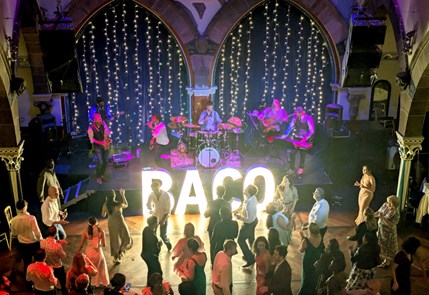
The academic programme was packed with daily plenary lectures and internationally renowned keynote speakers threaded through each day. Alongside this sat Evidence-Based Reviews, developed in partnership with the journal Clinical Otolaryngology, and the popular 'Back-to-Basics Meets Cutting-Edge' sessions running across all the major subspecialties. This blend was perfect for delegates wanting both a solid grounding in the fundamentals and a clear view of where the specialty is heading.
A particular highlight was the Lionel Colledge Lecture, delivered this year by Ajith George, who took delegates on a fascinating journey from Victorian stereograms through to AI-generated depth maps, exploring how three-dimensional imaging and machine learning are reshaping the way we teach and understand ENT anatomy. Thursday was SFO UK Day, a dedicated programme for students and junior trainees exploring a career in ENT, alongside sessions tailored for GPs and Allied Health Professionals, reflecting the conference's efforts to broaden its reach across the whole ENT workforce. 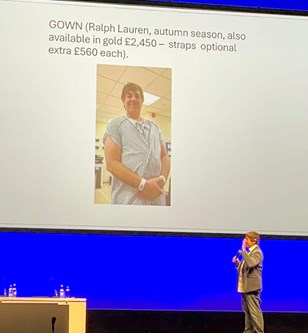
Two plenary lectures stood out in particular. Mark Steel's plenary (above), 'The Leopard in My House', was both hilarious and deeply moving, as he shared his own experience of head and neck cancer with real warmth and honesty. It was a powerful reminder of how important it is for us as ENT surgeons to see the patient side of this journey. Ginny Bowbrick's plenary, 'EDI: Channelling Your Inner Miranda', was equally excellent, offering a candid and engaging look at why equality, diversity and inclusion matter so much within surgery and surgical training.
No BACO report would be complete without a mention of the exhibition hall. Housed in Hall 5 alongside the catering and poster displays, it was vivacious throughout, with a huge and varied turnout of industry representatives, the latest devices, technology and equipment on show, and plenty of hands-on demonstrations to get stuck into between sessions. It's always a rich and worthwhile part of the BACO experience, offering a genuinely useful opportunity to see new products up close, chat to reps, and pick up ideas for practice, as well as being a great space to catch up with colleagues over several coffees. The Thursday evening 'Meet the Sponsors' event, held in the same hall over drinks and canapés, was a relaxed and thoroughly enjoyable way to round off the day's learning.
True to form, the conference made the most of its Scottish hosting. Early risers were treated to a yoga session within the SEC on Thursday morning, followed for the more energetic among us by a fun run along Glasgow's iconic bridges. Throughout the week, the warmth of the Glaswegian welcome, from the venue staff to the local faculty, added a lovely personal touch to what is already one of the best networking opportunities in the ENT calendar, giving trainees and consultants alike plenty of chance to mingle, share ideas and forge new connections.
The undoubted social highlight, was the infamous BACO Party on the Thursday evening, held at the iconic Òran Mór in Glasgow's West End. Delegates were treated to a delicious meal and drinks, before live music from none other than ‘The Arrhythmics’ got the dancefloor going, with everyone dancing well into the night. It was a brilliant, high-spirited close to the day and a genuine reminder of just how sociable this conference and our specialty can be.
The conference concluded on the Friday with the ENT UK AGM and prize-giving for the oral and poster presentations. Watching fellow trainees receive recognition for their research was a clear reminder of the strong work being carried out across the breadth and depth of ENT, and a promising sign for its future.
Our thanks go to the BACO Executive Committee and ENT UK for organising a conference that was educational, well run, and genuinely enjoyable to attend as trainees. We are already looking forward to the next one!
National ENT Simulation Training (NEST) workshops at BACO
Ahmad Kassas, ENT junior doctor, Barts Health NHS Trust 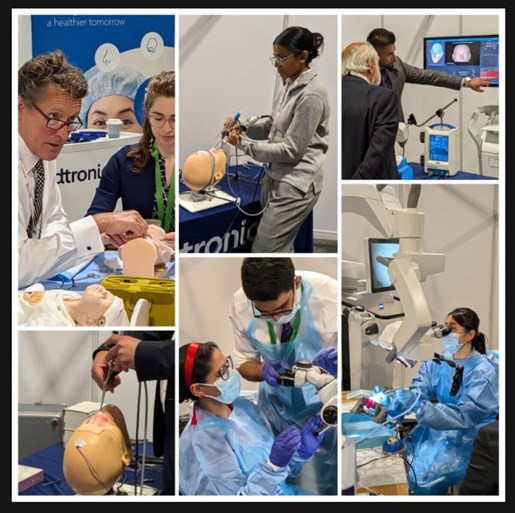
In my experience, national conferences can at times feel like a spectator event, inspiring lectures, but few chances to hold an instrument and learn something practical. The NEST (National ENT Simulation Training) Innovation Workshops at BACO International 2026 in Glasgow addressed exactly that gap!
This interactive, half-day workshop provided ENT trainees with hands-on experience using high-fidelity simulation models across multiple ENT subspecialties. The session was designed to give delegates exposure to simulation platforms and training equipment that may not be available in their regional deaneries. Participants rotated through four themed simulation stations: otology, rhinology and paediatric airway management. There were 64 individual practical teaching sessions across the morning, including sinus surgery, ear surgery (temporal bone dissection), paediatric tracheostomy dissection and paediatric bronchoscopy, with many candidates benefiting from attending multiple sessions. 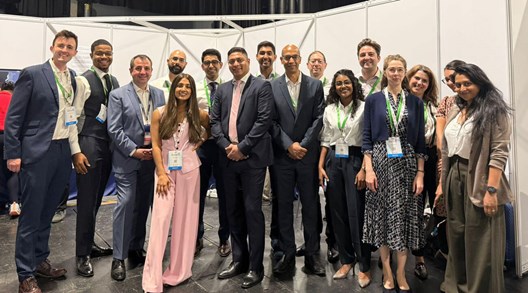
Run in the Exhibition Hall between sessions, trainee-led and completely free to attend, they were, for me, the highlight of the conference. What made them distinctive was the format. Each station was designed and delivered by trainees, for trainees, in small groups with genuinely hands-on time. There was no hesitation about asking ‘basic’ questions, the emphasis was on practical engagement, teamwork and decision-making in realistic clinical scenarios.
My key takeaways: first, simulation is at its most powerful for rare, high-stakes emergencies where real-life exposure is scarce, but confidence must be immediate. Second, The blend of peer-led teaching and consultant expertise flattens the learning curve: trainee faculty anticipate the sticking points because they have met them so recently, while the consultants on hand at each station added the depth, reassurance and the anecdotes that only experience brings. Third, portable training models can truly deliver valuable learning an approach readily reproducible in any deanery, or indeed any country, without expensive infrastructure.
NEST is a self-organised, trainee-led national ENT simulation training committee, dedicated to trying to improve opportunities for surgical simulation training. NEST workshops aim to make simulation-based learning both educational and enjoyable, offering a supportive environment where trainees can practise key surgical and emergency management skills under the guidance of experienced faculty.


