
This year we feature two reports from ENDOAthens, to offer different perspectives on the event.
Mohsen Naraghi, MD, FARS, president, Rhinology Research Society
Set against the breathtaking background of one of the world’s most historic cities, EndoAthens proved to be an exceptional gathering of global minds in endoscopic surgery. The congress perfectly blended cutting-edge scientific innovations with warm Greek hospitality, making it a truly memorable event both academically and socially. 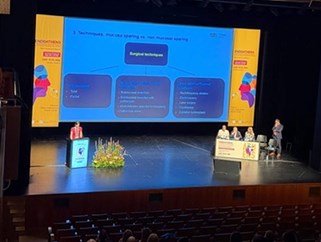
Academically, the programme was notably forward-looking. The full three-day conference was held in eight parallel conference halls. Intense scientific sessions brought together leading rhinologists, skull base surgeons, neurosurgeons, radiologists, ophthalmologists, ENT surgeons, orthopedic surgeons and scientists from across the globe to share, debate, and advance the frontiers of endoscopic surgery. The meeting was chaired by the world-renowned rhinology leader and author, Professor Christos Georgalas, and expert skull base surgeon Wouter van Furth. I was honored to be invited as a faculty speaker, panelist and session chairman at the world’s leading meeting on endoscopic nose, sinus and skull base surgery. 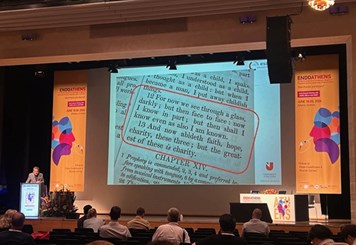
The live surgical dissection demonstrations were a particular highlight, showcasing remarkable precision in extended endoscopic approaches to complex skull base approaches and pushing the boundaries of what can be achieved with minimally invasive techniques. Expert surgeons demonstrated complex procedures, providing step-by-step commentary that clarified challenging anatomies and advanced techniques.
For the attendees, the learning outcomes were clear and highly practical. The panel discussions and roundtables were equally engaging. Controversial topics in rhinology, such as the management of recalcitrant chronic rhinosinusitis and the latest protocols involving biologics, were debated with evidence-based precision. The multidisciplinary approach was highly emphasised, particularly in the skull base sessions, which featured collaborative presentations from both ENT surgeons and neurosurgeons. In several panel discussions, it became evident that the future of treating severe chronic rhinosinusitis and anterior skull base pathologies relies not just on surgical finesse, but on the precise, combined use of targeted medications and advanced imaging.
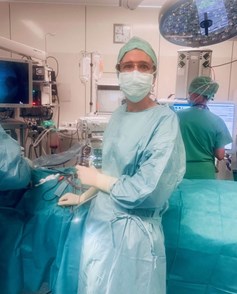
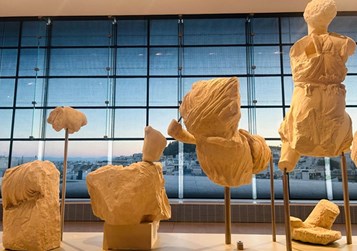
No report on a conference in Athens would be complete without mentioning the exceptional warmth and hospitality of the hosts. The social programme provided a perfect counterbalance to the intense scientific sessions. The gala dinner, held with a stunning view of the illuminated Parthenon and tour guided visit of Acropolis Museum, offered delegates the chance to network, renew old friendships, and establish new collaborative ties in a relaxed and unforgettable setting.
ENDOAthens2026 successfully bridged the gap between historic legacy and future innovation. The meeting not only highlighted the incredible strides being made in endoscopic ENT surgery but also reinforced the importance of global collaboration in pushing our specialty forward. Delegates left Athens with enriched knowledge, refined skills, and a renewed inspiration to deliver the highest standard of care to their patients.
 Malene Speth, ENT consultant, Department of Otorhinolaryngology, Head and Neck Surgery, Klinikum Rechts der Isar, Technical University of Munich (TUM), Germany.
ἦθος (êthos)
Let us be doctors again
“We become just by doing just acts, temperate by doing temperate acts, brave by doing brave acts.” (Aristotle)
EndoAthens was my first ‘endo’ congress. I could type it into an LLM and get a tidy answer about how distinguished the speakers were and how much we all learnt. It was all that, but it was so much more.
First, the organisers. On entering, before I had even given my name, the team greeted me and asked how I was. They remembered me from the ERS in Budapest. The venue was large, yet compact enough to keep meeting people and some exhibitors revealed barista skills.
Secondly, the sessions were excellent. A strimming accident, a metal fragment entering through the orbit into the ICA, brought everyone’s blood pressure up. One could jump from a talk straight into the dissection room. There were well-researched facial plastics sessions too, from surgeons not usually ‘broadcasted’, who showed great skills and, without our ever having met, said: “Come and visit my clinic – and do a bit of a holiday here.”
Finally, the sessions on public health and health in war zones. Palestine was the congress's country of honour, with free registration offered to all Palestinian colleagues. A colleague presented his research by live broadcast from a conflict zone. Others spoke of working in Lebanon, and in Gaza. 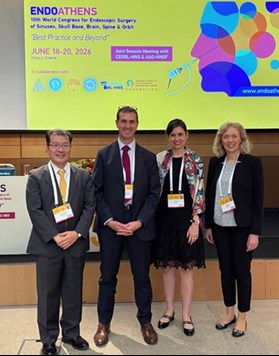
The congress was dedicated to Professors Paolo Castelnuovo and Ricardo Carrau, pioneers of endoscopic endonasal and skull base surgery. The faculty reception was held in the Acropolis Museum, among the Parthenon marbles, with the Acropolis itself glowing in the background.
Whether it was the barista, the staff at the entrance, or the ‘big’ names, what they had in common was that people cared. These were people to whom things are not indifferent.
An easy chat at the faculty dinner with one of the ‘big’ ones turned to life. “Why should I not push forward?” he said. “I have a great job, I was well trained, I have patients who love me. There is no reason not to try and make a difference.” Edge, vision, not being a perpetual yes-sayer – all encouraged as it makes a difference. Life is not a sprint; it is a value based marathon, he said.
The Greek taxi driver on the way to the airport had worked more than ten years in the UK and came back to care for his mother. He still cannot work in his profession, because his papers have not come through. “Can’t you make a donation – isn’t that how it’s done here?” I asked. He would not give a cent. He would rather drive longer. “It is harder this way. But I have values, and ethos.”
"If there is one clinical lesson I take with me, it is how little the mechanism of injury can tell you: a strimmer, a metal fragment, and suddenly the ICA is at stake. If there is one other, it is less clinical: to hold on to the people who choose edge over comfort, in medicine and outside it."
As physicians, we are bound by the Declaration of Geneva. In war, hospitals and those who staff them are protected under the Geneva Conventions. Yet, medical neutrality is under attack. Hospitals are struck on the claim that they shelter combatants or weapons. Staff caring for the sick should never become a shield for political ends.
Such claims demand neutral, independent investigation so that protected spaces remain protected. It is a precondition for medical care, not a preference to be waived under political pressure. Its erosion abroad and the declining respect for clinicians at home share a common root. Reversing this will require the enforcement of international humanitarian law, and the reaffirmation of a norm that has never been more fragile, or more necessary.
Medicine cannot be neutral about injustice. But it must always defend the neutrality of care. Let us be doctors again.


