
Dr Mujahid F Din, consultant ENT surgeon, programme director, CIGOK
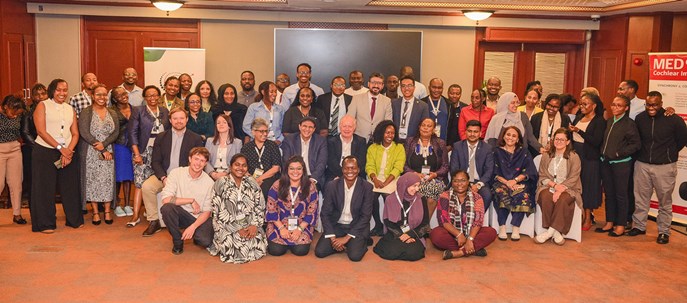
In May 2026, in collaboration with the Kenya ENT Society (KENTS), the Cochlear Implant Group of Kenya (CIGOK) successfully hosted the First Cochlear Implantation Training Workshop in Nairobi.
The workshop brought together distinguished local and international faculty from the UK, including Gerard O’Donoghue, as well as experts from Stanford University, Qatar, Austria, India and Egypt. Participants included ENT surgeons, residents, and audiologists, as well as speech and language pathologists from Kenya and across the wider East African region.
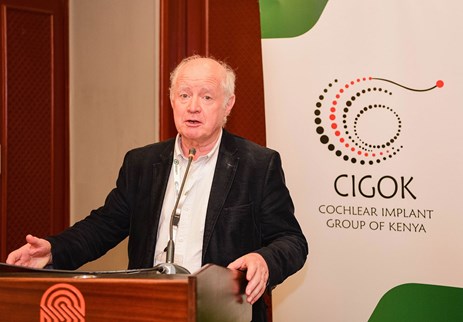
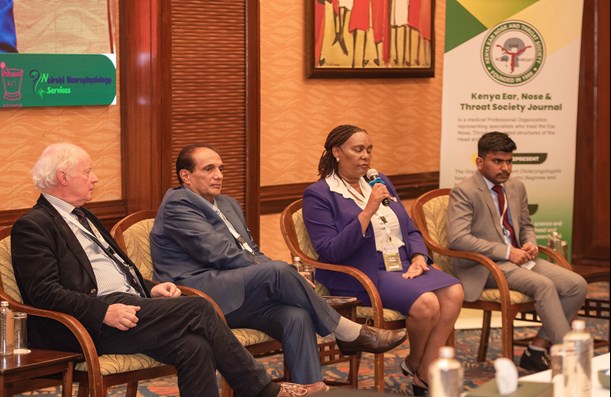
The scientific programme featured lectures, panel discussions and interactive sessions addressing various aspects of cochlear implantation. ENT surgeons and residents also participated in temporal bone dissection sessions, providing valuable hands-on surgical training. The academic sessions were conducted at a leading hotel in Nairobi, while the temporal bone dissections were held at Kenyatta National Hospital.
The two-day workshop concluded with a high-tea social event during which faculty members and delegates were recognised for their contributions and participation.
Cochlear Implantation in Kenya
Kenya, an equatorial East African nation with a population of approximately 60 million people, faces a significant burden of hearing loss. Nearly 75% of the population resides in rural areas, and almost half are below the age of 20 years. The national burden of hearing impairment is estimated to affect more than 600,000 people.
Prior to 2012, cochlear implantation (CI) services were not available locally. Limited trained personnel, economic constraints and inadequate awareness of cochlear implantation meant that patients requiring CI were infrequently referred abroad for treatment, often involving considerable financial and logistical difficulty.
The concept of establishing a cochlear implantation programme in Kenya was first proposed in 2005/2006 by Dr Mujahid F Din, consultant ENT surgeon. He was soon joined by Prof Isaac Macharia, and subsequently by audiologists and speech therapists, leading to the formation of the Cochlear Implant Group of Kenya (CIGOK).
Following several years of training in cochlear implant surgery, audiological programming, and speech rehabilitation – both internationally and through locally organised workshops – the group successfully performed the first cochlear implant surgery in the region in 2012.
In its early years, the programme faced numerous challenges, including the high cost of implantation, incentivised medical tourism, sporadic ‘touch-and-go' philanthropic initiatives, and limited awareness among both the public and healthcare professionals. Despite these obstacles, local expertise steadily grew. A third surgeon, Dr A Patel, later joined the team, together with additional audiologists and speech and language therapists.
With increasing governmental financial support and growing institutional experience, CIGOK has now successfully performed more than 200 cochlear implantations. Outcomes and experiences from the programme have been presented at both local and international conferences and symposia.


