The frequency range of human hearing spans 20 Hz to 20 kHz. In the UK, standard audiometry usually assesses 0.25–8 kHz; the extended high frequencies (EHFs) are those above 8 kHz. The importance of assessing EHF hearing has been increasingly realised in research settings (e.g. for investigating subclinical effects of noise/toxin exposure, or for understanding mechanisms of tinnitus/speech perception) but clinical translation has been limited [1].
Extended high-frequency audiometry
EHF audiometry is arguably the best-known method for assessing EHF hearing, and publications on it have risen exponentially since 1985 (Figure 1).
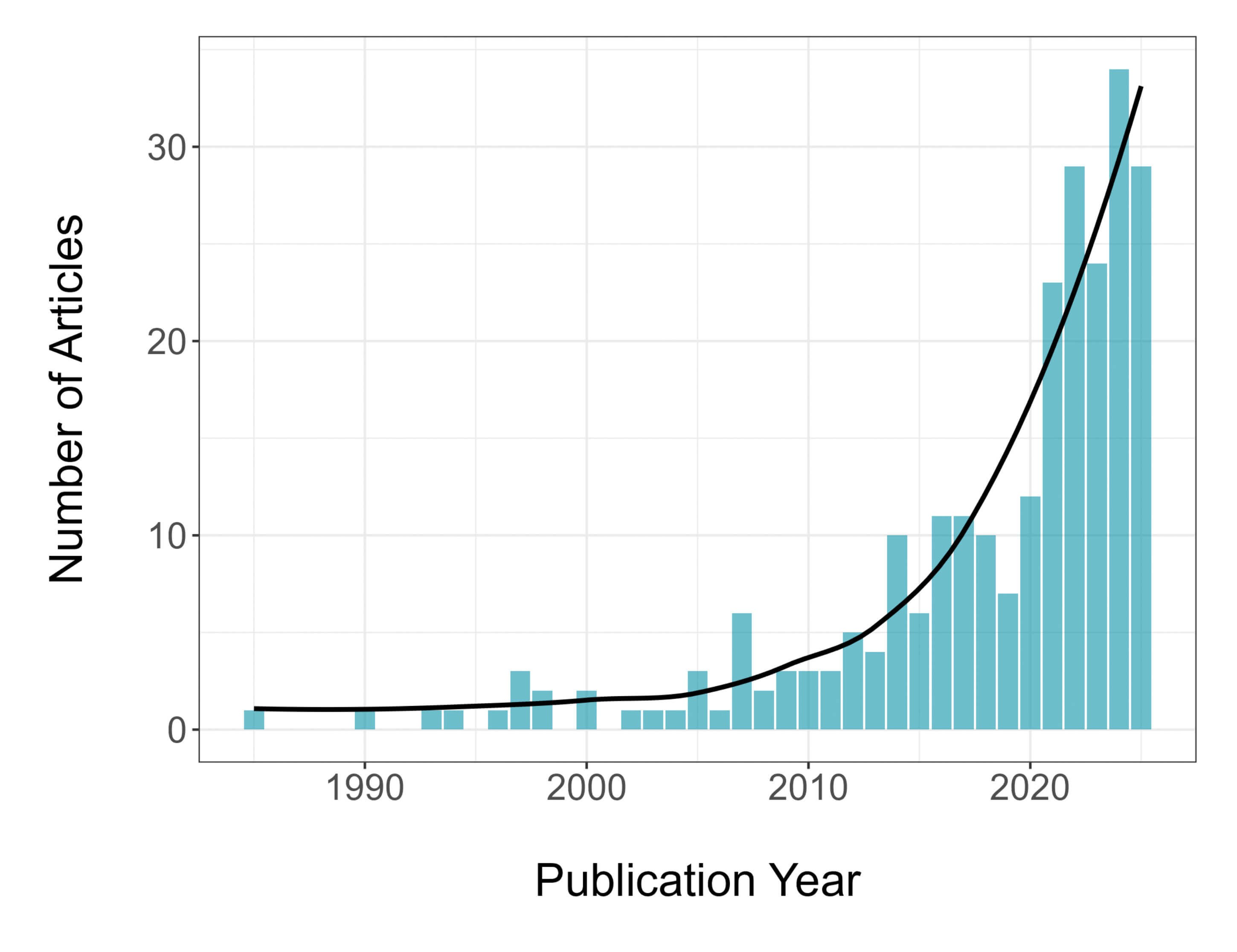
Figure 1: Results of a PubMed search (16 July 2026) showing the number of articles containing the search terms ‘extended high-frequency’ and ‘audiometry’ in the title/abstract that were published up to the start of 2026.
EHF audiometry extends standard pure-tone audiometry into the EHF range. It requires suitable transducers and an audiometer able to produce EHF stimuli (typically calibrated to adult reference equivalent threshold sound pressure levels). It is not difficult to perform EHF audiometry, but published procedural guidelines are often non-existent [1] and prior knowledge of EHF-specific test technicalities is required.
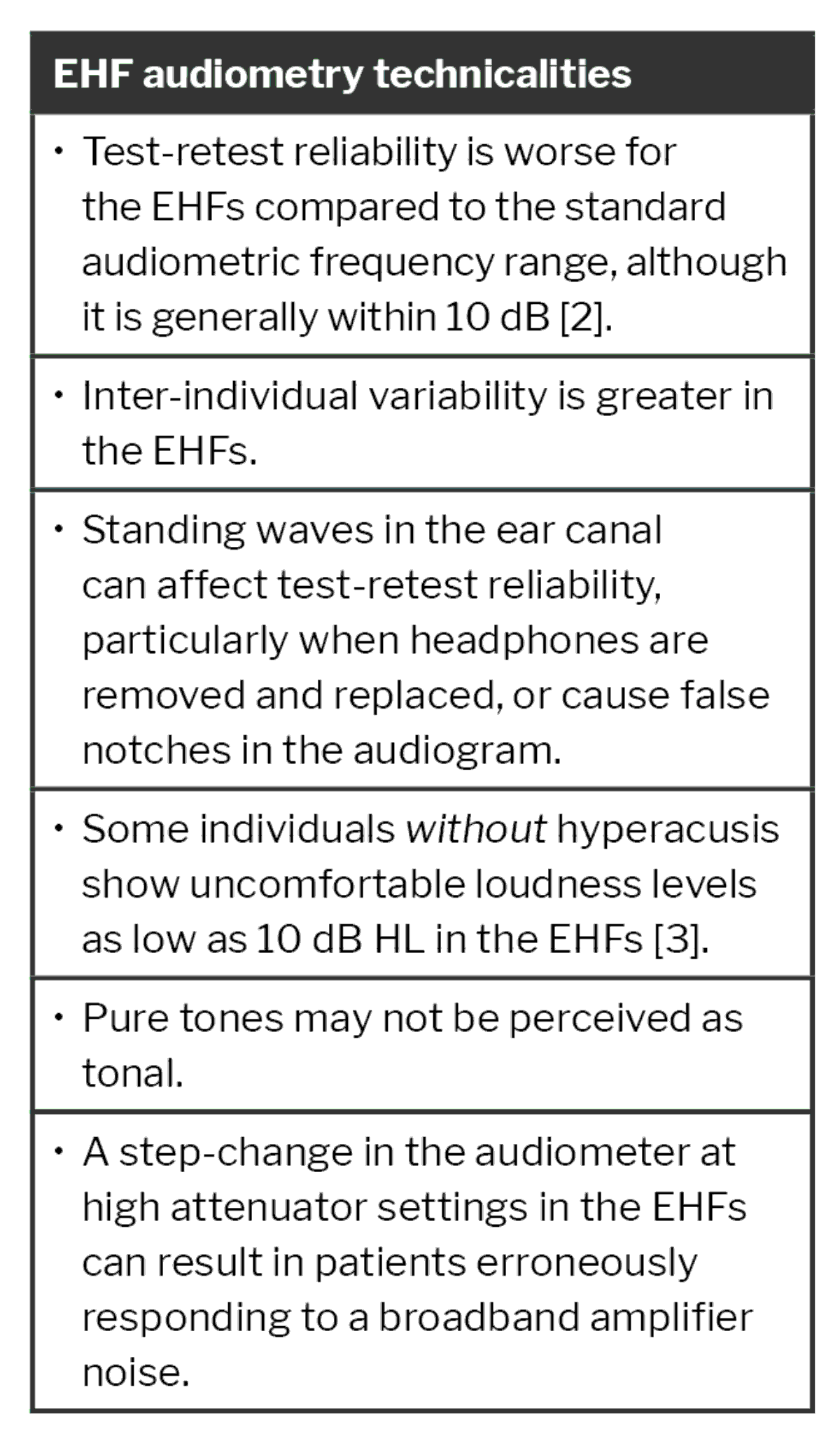
Audiologists’ familiarity with pure-tone audiometry likely explains why EHF audiometry has gained some traction clinically; however, many other EHF assessment methods have been described in the literature.
Other ways of assessing extended high-frequency hearing
We conducted a scoping review to identify all tests/methods/tools for assessing EHF hearing in humans, besides EHF audiometry. After a rigorous search and screening procedure (https://osf.io/t6vz3/overview), we identified 38 unique EHF tests/methods from 239 relevant peer-reviewed articles (Figure 2). Distortion product otoacoustic emissions (DPOAEs) and auditory brainstem response (ABR) were most common, appearing in 77 and 11 articles, respectively.
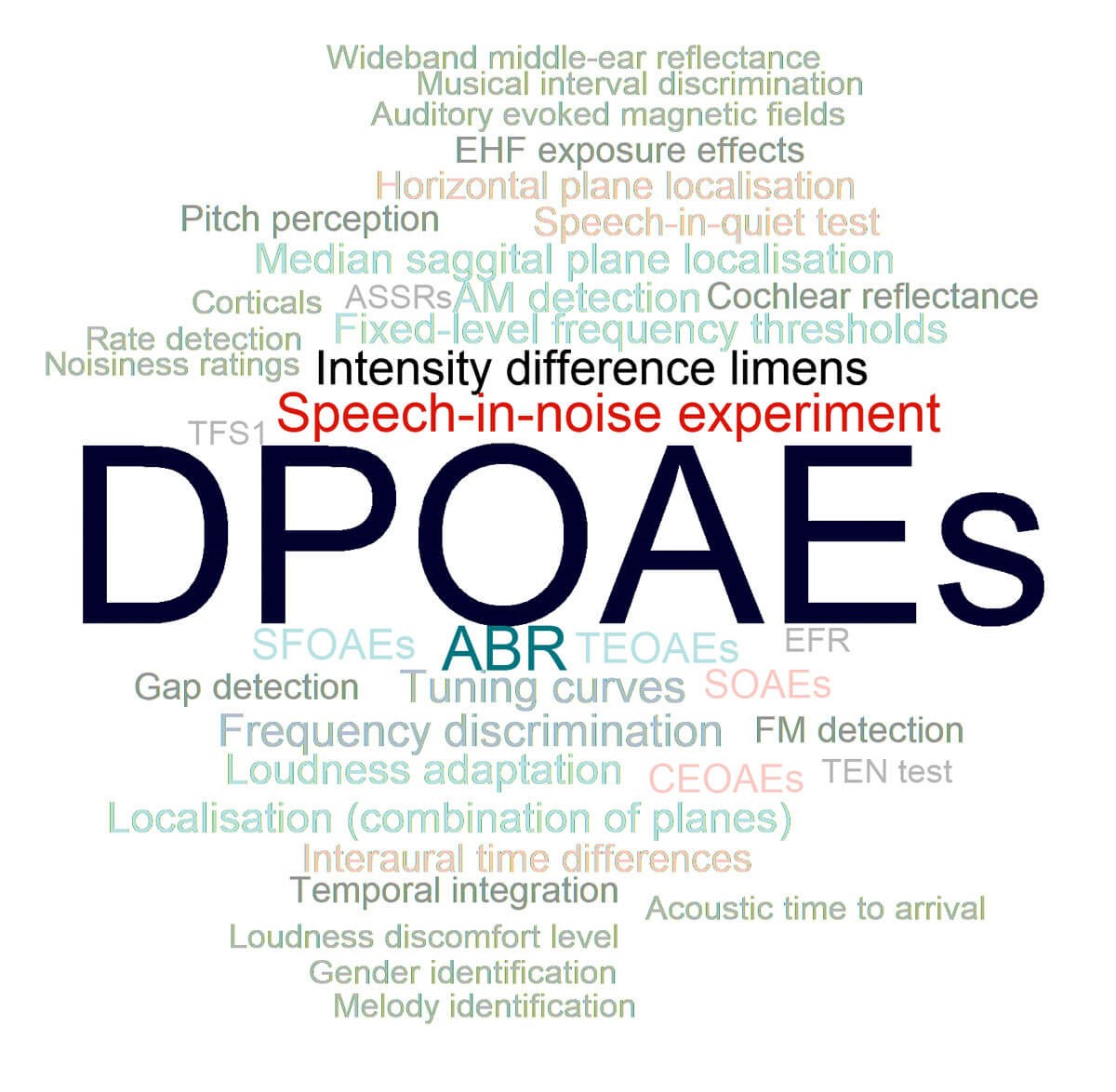
Figure 2: Word cloud depicting EHF tests/methods/tools identified from the scoping review. The size of the text reflects the number of articles that described/utilised the EHF test, i.e. the greater the number of articles, the larger the text.
In 51% of the articles involving EHF DPOAEs, clinical equipment was used to record the 2f1-f2 DPOAE, suggesting that EHF DPOAEs are potentially accessible to clinicians. However, some EHF audiometry technicalities also apply (e.g. standing waves and poorer test-retest reliability), and large-scale translational studies remain scarce making it unclear when/how this test should be used in clinical practice. Nonetheless, EHF DPOAEs appear to show promise for reducing failure/false-positive rates in newborn hearing screening programmes [4] and identifying subclinical ototoxic damage (particularly in young children or adults who are unable to provide behavioural responses, or those with middle ear dysfunction) [5,6].
Of the 11 ABR articles (published 1991–2004), 10 had the collective aim of developing an objective method of ototoxicity monitoring. ABRs evoked with both tone-burst trains (across 8, 10, 12 and 14 kHz) and EHF clicks produced efficient and reliable results [7].
Usefulness for predicting hearing aid fitting outcomes
Ototoxicity monitoring is frequently cited as a target area for EHF testing, but is there benefit in more routine assessment of EHF hearing? Predicting whether first-time hearing aid users are likely to derive benefit from hearing aids would be valuable for personalising their care and could have wider implications for reducing waste, yet our ability to make such predictions is currently poor. Measures of EHF hearing could improve predictions because there is evidence to suggest that the EHFs are a marker for overall ear health and contribute to speech-in-noise listening ability [2]. We therefore began two studies, the first of which has been completed, to learn whether EHF assessment can predict hearing aid fitting outcomes.
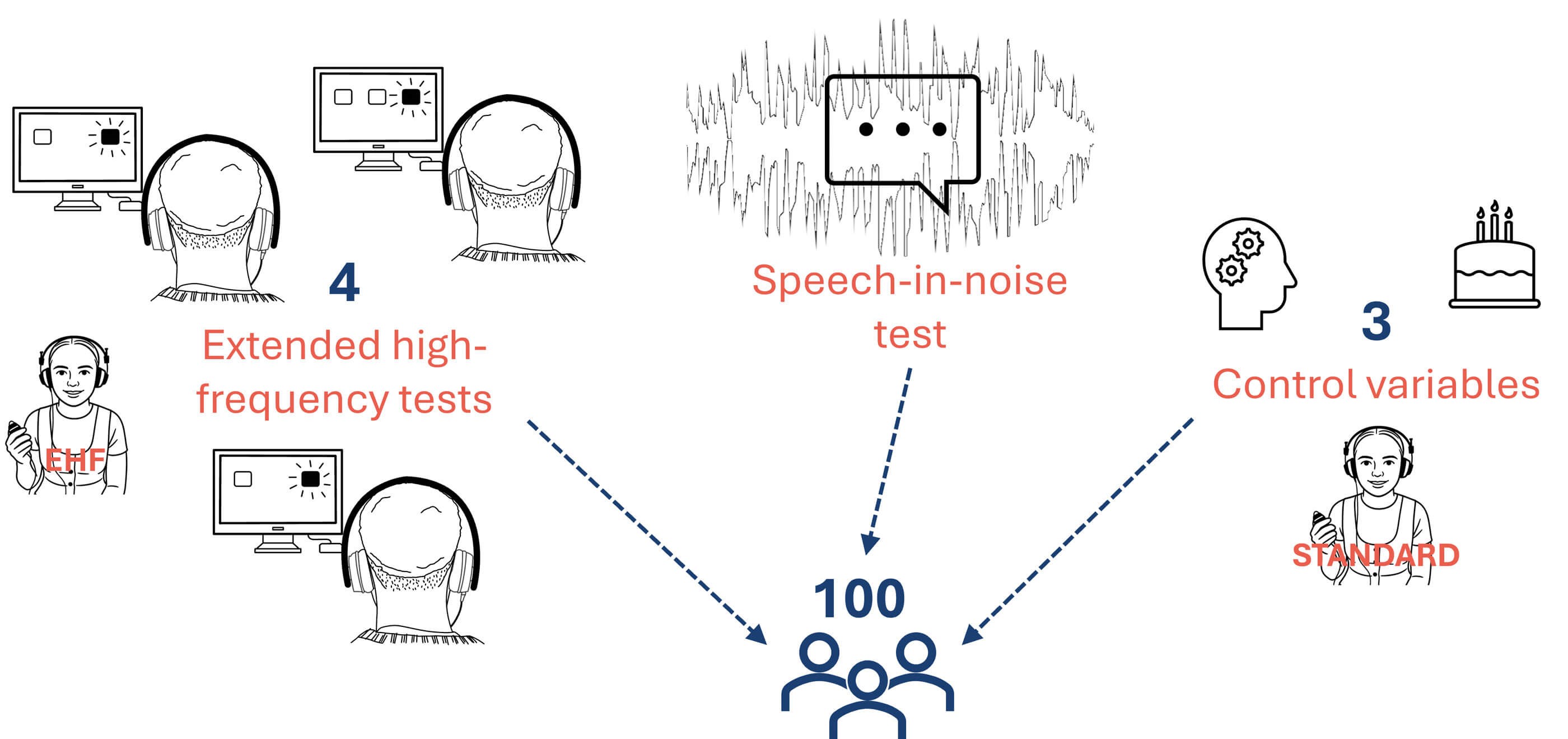
Figure 3: Infographic of Study 1 methods.
Our first study aimed to clarify if measures of EHF hearing could predict speech-in-noise perception within the frequency range of conventional hearing aid amplification. Five studies have previously failed to find an association, but these only used one EHF test (EHF audiometry). We recruited 100 adults (aged 18–44 years), with normal hearing based on standard pure-tone audiometry (Figure 3). Participants performed four EHF tests (EHF audiometry, fixed-level frequency threshold test, amplitude modulation detection, frequency modulation detection) and a monaural digits-in-noise test over headphones (our outcome measure); importantly, the target speech and masker in the digits-in-noise test were low-pass filtered at 8 kHz to reflect hearing aid amplification limits. We also recorded age, score on a working memory capacity test, and average standard audiometric frequency hearing threshold (our control variables).
Multiple linear regression with nested models analysis tested whether EHF information improved the prediction of speech reception threshold beyond the control variables. The results showed that the control variables only explained around 5% of the variance in the digits-in-noise test, and that age, working memory capacity and standard pure-tone average together did not significantly predict speech-in-noise perception. Adding the EHF hearing measures did not significantly improve predictions either.
We chose to recruit a sample with normal standard audiometric frequency hearing to reduce the likelihood of missing EHF data and because our focus was more mechanistic than translational. However, it is possible that our inclusion criteria were too restrictive for any predictive effect to be seen. Our second study (currently underway) extends our investigations to a sample of people with mild/moderate sensorineural hearing loss and aims to learn whether one EHF test (the fixed-level frequency threshold test) predicts aided speech-in-noise ability measured with a more realistic speech-in-noise test.
Summary
-
There are 38 tests/methods for assessing EHF hearing, besides EHF audiometry.
-
EHF DPOAEs/ABR have potential clinical utility, particularly for ototoxicity monitoring.
-
The aim of our current project is to discover the predictive value of EHF hearing for hearing aid fitting outcomes. In people with normal hearing, EHF hearing measures do not predict speech-in-noise perception within the frequency range of conventional hearing aid amplification; the results for people with mild/moderate sensorineural hearing loss are forthcoming.
Related articles
Rivero N, Mishra SK. Why hearing above 8 kHz matters more than you think. ENT & Audiology News 2024;33(5):50–1.
Funding
This research is funded by the NIHR Biomedical Research Centre: Manchester (NIHR203308).
References
1. Lough, M, Plack C. Extended high-frequency audiometry in research and clinical practice. J Acoust Soc Am 2022;151(3):1944–55.
2. Hunter LL, Monson BB, Moore DR, et al. Extended high frequency hearing and speech perception implications in adults and children. Hear Res 2020;397:107922.
3. Bigras C, Duda V, Hebert S. Loudness discomfort levels at extended high frequencies in young adults: A potential marker of hyperacusis. Hear Res 2025;467:109425.
4. Akinpelu OV, Funnell WRJ, Daniel SJ. High-frequency otoacoustic emissions in universal newborn hearing screening. Int J Pediatr Otorhinolaryngol 2019:127:109659.
5. Dreisbach L, Ho M, Reid E, Siegel J. Effects of oxaliplatin, carboplatin, and cisplatin across treatment on high-frequency objective and subjective auditory measures in adults. Perspect ASHA SIGs 2017;2(6):17–38.
6. Kei J, Brazel B, Crebbin K, et al. High frequency distortion product otoacoustic emissions in children with and without middle ear dysfunction. Int J Pediatr Otorhinolaryngol 2007;71(1):125–33.
7. Mitchell CR, Ellingson RM, Henry JA, Fausti SA. Use of auditory brainstem responses for the early detection of ototoxicity from aminoglycosides or chemotherapeutic drugs. J Rehabil Res Dev 2004;41(3A):373–82.
Declaration of competing interests: None declared.