
A new regenerative treatment for people with chronic voice disorders has been used in the UK for the first time. Guy’s and St Thomas’ is the first NHS trust in the country to provide this treatment in the larynx (or voice box) for patients with chronic voice conditions that cause voice change or dysphonia, making the voice sound hoarse, strained, breathy, weak, or fluctuate in pitch and loudness. 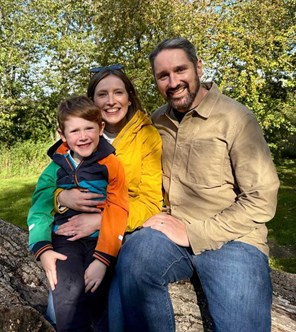
The first patient, David Metherell (above, with his family) from London described the treatment as “really impressive and life changing". He caught a rare strain of the human papillomavirus (HPV) as a baby, causing him to develop recurrent respiratory papillomatosis, which are wart-like growths, to his voice box. He had surgery to remove them, but they returned – between the ages of 9 months and 6 years old it recurred 21 times resulting in him having repeated laser and debulking treatment.
The use of Platelet-Rich Plasma (PRP) injections involves taking a small sample of the patient’s blood and spinning it in a centrifuge machine to concentrate and separate the platelet-rich plasma. This is then injected into the patient’s vocal cords to boost the natural healing process, shorten recovery time and promote tissue regeneration.
The treatment is already used in a variety of conditions for people with injuries to their tendons, ligaments, muscles and joints, as well as for osteoarthritis, and cosmetic purposes such as hair loss and skin rejuvenation. 
Shiying Hey (above), a consultant ENT surgeon and laryngologist at Guy’s and St Thomas’, set up the PRP injection trial in August 2025. So far, together with her colleagues, their team has treated 10 patients, with all of them reporting an improvement in their voice.
Shiying said: “Not having a good voice can have a huge impact on someone’s life, as they can feel like they’re losing their identity. This new regenerative treatment option for people with chronic voice disorders can help improve dysphonia and vocal functions.
“It is usually performed in our clinic with state-of-the-art facilities, allowing quicker treatment and avoiding the need for a general anaesthesia. It is also cheaper than current treatments as we use the patient’s own blood, and it can be longer lasting as the PRP encourages the vocal cords to regenerate and accelerates the healing process.
“It is incredibly exciting to be able to offer this treatment at our centre and to broaden the options available for people living with chronic voice disorders".
Top Of Page

Accreditations


Pinpoint Scotland Ltd (Registered in Scotland No. SC068684) | © 2026 - Website by Gecko Agency