
The Minnesota-based medical technology company iotaMotion has announced a "meaningful milestone in peadiatric hearing care", having received clearance from the US Food and Drug Administration (FDA) for the iotaSoft® robotic‑assisted cochlear implant insertion system for children aged four and older.
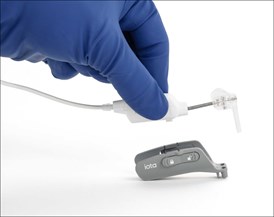
The iotaSOFT Insertion System enables precise and controlled electrode array insertion during one of the most delicate steps of cochlear implant surgery. By standardizing this critical step, iotaSOFT is designed to help preserve delicate cochlear structures, a consideration that is often central to decision-making.
The system is commercially available in the US and is under clinical investigation in other global markets. Cincinnati Children’s Hospital has become the first paediatric centre to adopt iotaSoft®, joining more than 35 leading cochlear implant programs across the United States.
"At Cincinnati Children's, our focus is delivering the highest standard of care while thoughtfully integrating innovations that benefit our patients," said Dr. Daniel Choo, chief clinical growth officer and professor of otolaryngology–head and neck surgery. "Robotic-assisted cochlear implantation represents a meaningful advancement in our cochlear implant program." 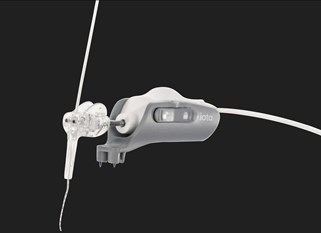
Globally, fewer than 5% of eligible cochlear implant candidates receive an implant, despite more than 430 million people worldwide experiencing disabling hearing loss, according to the World Health Organization. In paediatric patients, early access to sound is critical for speech, language and educational development, yet concerns around hearing preservation and surgical variability can delay intervention.
"Robotic assistance in cochlear implantation is about precision and consistency," said Marlan Hansen, MD, co-founder and chief medical officer of iotaMotion. "With the expanded paediatric indication for iotaSOFT, supported by growing clinical evidence, families can have greater confidence that controlled, standardised insertion is designed to protect the cochlea and preserve its structure and function. This is especially important for children who may benefit from emerging therapeutic advances, including gene-based and regenerative hearing technologies, which will likely depend on atraumatic, cochlear implant array placement early in life."


