You searched for "bleeding"
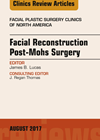
Reconstructing post-resective auricular defects
The auricle is split into six specific anatomic subunits that vary in skin thickness, contour, structural integrity and the availability of healthy surrounding tissues. It is important to reconstruct an aesthetically pleasing auricle as slight deformities may be prominent. The...
Bilateral transposition lip flaps of central upper lip defects
This case series brilliantly explains a novel technique to repair central upper lip deformities at a Moh’s reconstruction referral practice. Most of the current treatment operations advocate a secondary surgery in order to fully restore the philtral columns and the...
Do endonasal approaches for meningiomas have more CSF leaks?
Rarely, patients presenting to the ENT surgeon with anosmia may have an anterior skull base neoplasm such as a meningioma. Historically, the traditional approaches have focused on several transcranial, external routes, including the pterional craniotomy, and the subfrontal craniotomy. The...
Research ethics and otolaryngology
The aim of this review was to assess the frequency of reporting of informed consent and regional ethical committee (REC) approval in all reports of trials published in the three major European otolaryngology journals in 2012 (including Clinical Otolaryngology itself!)....
Should we leave a reconstructed auricle exposed?
Microtia results in psychological and functional morbidity and total auricle reconstruction offers the affected individual a more cosmetically pleasing ear. The art of dressing postoperatively can be heterogenous between surgeons. This single-centre retrospective study based in China compared complication rate...Cochlear Implant International Community of Action: closing the gap in CI provision
The 25 February was International Cochlear Implant (CI) Day. Over 50 years after the introduction of CIs, how far have we progressed in ensuring access to CI and CI services for those who could benefit? Only between five and 10%...ASOHNS Annual Scientific Meeting 2027
For the UK ENT community, the ASOHNS Annual Scientific Meeting 2027 in Adelaide offers a compelling reason to make the journey to Australia. The convener, A/Prof JC Hodge and scientific convener, Prof Alkis Psaltis, have produced more than an international...IAOO 2025
Jason Fleming, Reader/Hon Consultant Head & Neck Surgeon, Liverpool Head and Neck CentreThis July, Liverpool became the beating heart of global oral oncology, welcoming almost 1200 delegates for the 10th World Congress of the International Academy of Oral Oncology (IAOO)....From the editor May/Jun 2026
Declan Costello, MA, MBBS, FRCS(ORL-HNS),Consultant Ear, Nose and Throat Surgeon, Wexham Park Hospital, Slough, Berkshire, UK. TW / X: @Voicedoctor_uk In our last edition, we featured the amazing work of Prof Shahed Quraishi and his ENT Masterclass® – the organisation...In conversation with Rachel Shenton, writer and actress in The Silent Child
Rachel Shenton shares her recent Oscar achievement with us in this interview, along with her commitment to supporting those with hearing loss to be able to access the arts. She tells us also about her latest project… Rachel Shenton. Firstly...SNAP by endoscope-i (safe endoscopy starts with a SNAP)
endoscope-i have developed a simple yet effective engineered solution to ensure safe nasoendoscopy assisted procedures. The 'SNAP' is a one-way valve that can be retrofitted, in seconds, to any surgical mask. endoscope-i CEO, Chris Coulson, explains: “We are all aware...