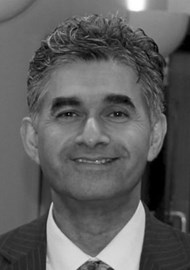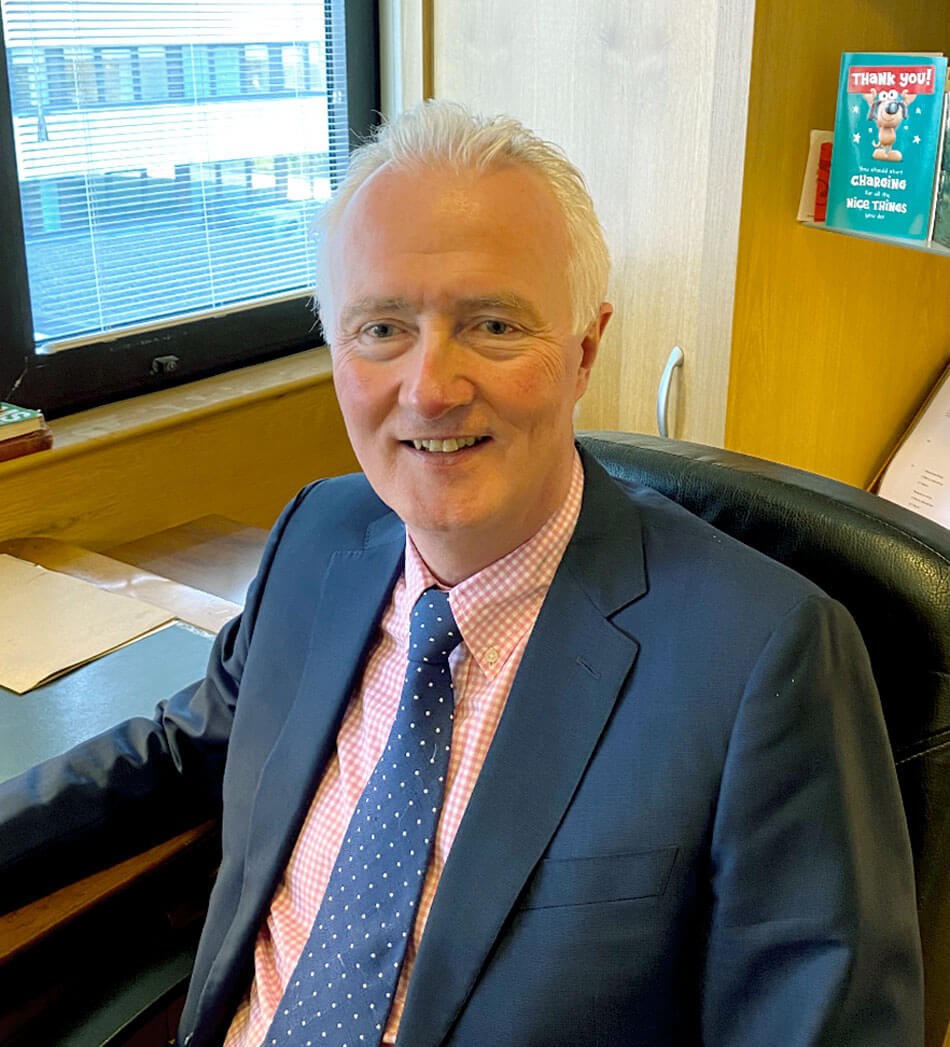
Professor Rory McConn Walsh.
I am delighted that you have taken up the role of president of the Irish Institute of Otorhinolaryngology, Head & Neck Surgery (IIOHNS). What is your vision for the institute and what you intend to achieve during your term?
It is truly a great honour and privilege for me to have taken over as president. My vision is primarily to represent all consultant colleagues, both public and private, in matters relating to their professional affairs. In that regard I proposed, and have already had, more regular meetings of the institute in person and have arranged a national audit of the current status of the specialty. I would also propose that the IIOHNS run continuing medical education (CME) events on a regular basis with invited national/international speakers.
Another very important aspect is working with the subspecialty groups in Ireland, such as the Irish Head & Neck Society, the Irish Society of Otology and Neuro Otology, and the Irish Society of Rhinology. There is also a proposal to establish an Irish Society of Paediatric Otolaryngology in the near future. The IIOHNS acts as the umbrella group for these subspecialty societies.
How do you intend to reach out to sister organisations in Europe?
At a recent AGM of the Union Européenne des Médecins Spécialistes (UEMS), I made a proposal to expand our footprint beyond the western hemisphere and achieve a global outlook. I would also like to formalise links with sister societies abroad such as ENT UK, the various European subspeciality associations and those in North America, Australasia and the Middle East. There is already a well stablished link with the CEORL-HNS, which we will continue.
In your welcome address you mentioned the activities conducted by Royal College of Surgeons Ireland (RCSI). What do you see happening between the Institute and RCSI?
The IIOHNS has very close links with the RCSI and it is my intention to continue those links. I attend the Committee for Surgical Affairs at the RCSI on a regular basis on behalf of the IIOHNS.
As you are aware, there are a number of Irish trainees that hail from different parts of the world, including Asia, Africa and the Middle East. How can the Institute include and reach out to such members in terms of educational events, fellowship opportunities, etc?
Trainees are a very important part of the future of the specialty in all countries. We like to think that in Ireland we have one of the best postgraduate training programmes in ORLHNS in Europe. The trainee’s day-to-day affairs are managed very ably by the training programme director at the RCSI and by the individual training hospitals they attend. I would also like to bring trainees in under the umbrella of the Institute and they would be very welcome to attend the CME events. I have proposed IIOHNS-sponsored dissection prizes for trainees attending the hands-on courses and IIOHNS sponsored scholarships to attend conference, meetings and courses.
Any closing thoughts, Rory?
The IIOHNS is only as good as the colleagues who contribute to it as well as the officers of the IIOHNS and the officers of the various subspecialty societies. I believe that this is a very exciting time for this society and I look forward to working closely with my colleagues here and abroad.