Trainees and consultants share insights into audiovestibular medicine, a UK specialty treating hearing loss and balance disorders through multidisciplinary care.
Audiovestibular medicine (AVM) is a hidden gem among medical specialties. To provide an insider’s perspective, we interviewed current AVM trainees and consultants who have answered frequently asked questions about the specialty and its training pathway.
As a formally structured specialty, AVM is unique to the United Kingdom. In other countries, similar practice exists within ENT as neuro-otology – a medical subspecialty that does not involve surgery. As one trainee describes, “Audiovestibular medicine offers the ability to further explore the pathophysiology of the inner ear and how it can be linked to so many different pathologies, alongside the opportunity to continuously develop interpersonal, social and communication skills, while attempting to solve complex medical presentations within a multidisciplinary and truly holistic context” (Vasileios Gkiousias, ST4).
Hearing loss and dizziness are highly prevalent in the UK and worldwide. Despite this, many doctors feel underprepared to manage these conditions, highlighting the importance of this specialty. AVM attracts applicants from across the world, contributing to a diverse and multicultural workforce. As one international trainee explains, “My MRCP qualification was readily recognised, so I only had to take IELTS to prove my English proficiency and get my GMC licence. Depending on where you come from, you may need to obtain a Certificate of Sponsorship from NHSE and apply for a Health and Care worker visa” (Dominic Ip, ST5).
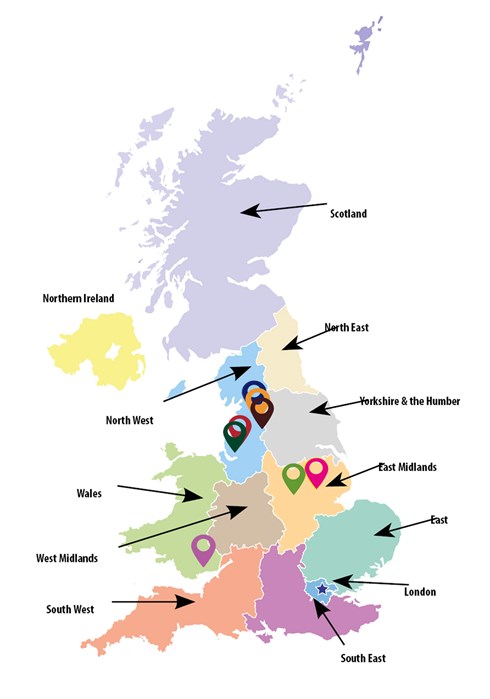
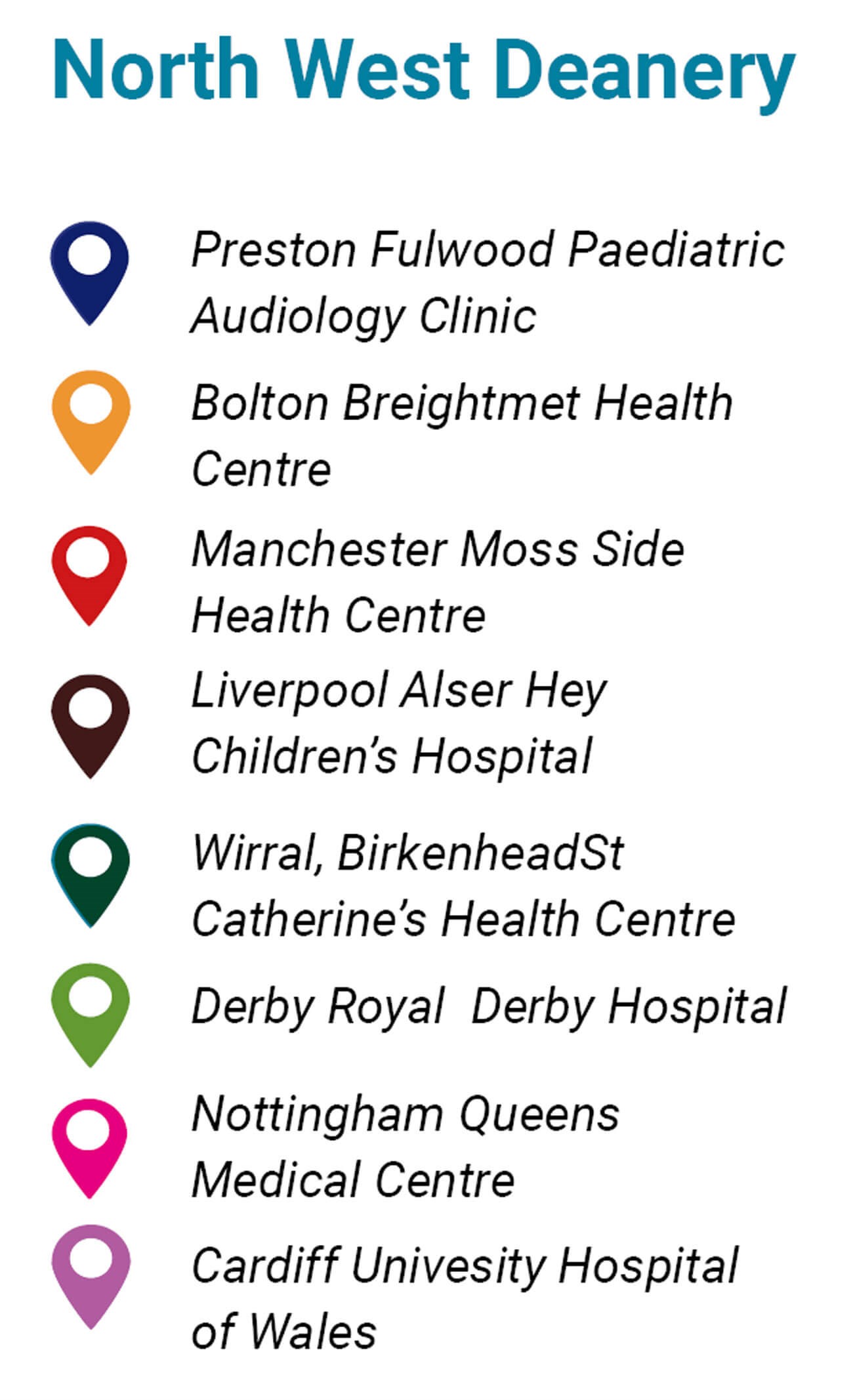

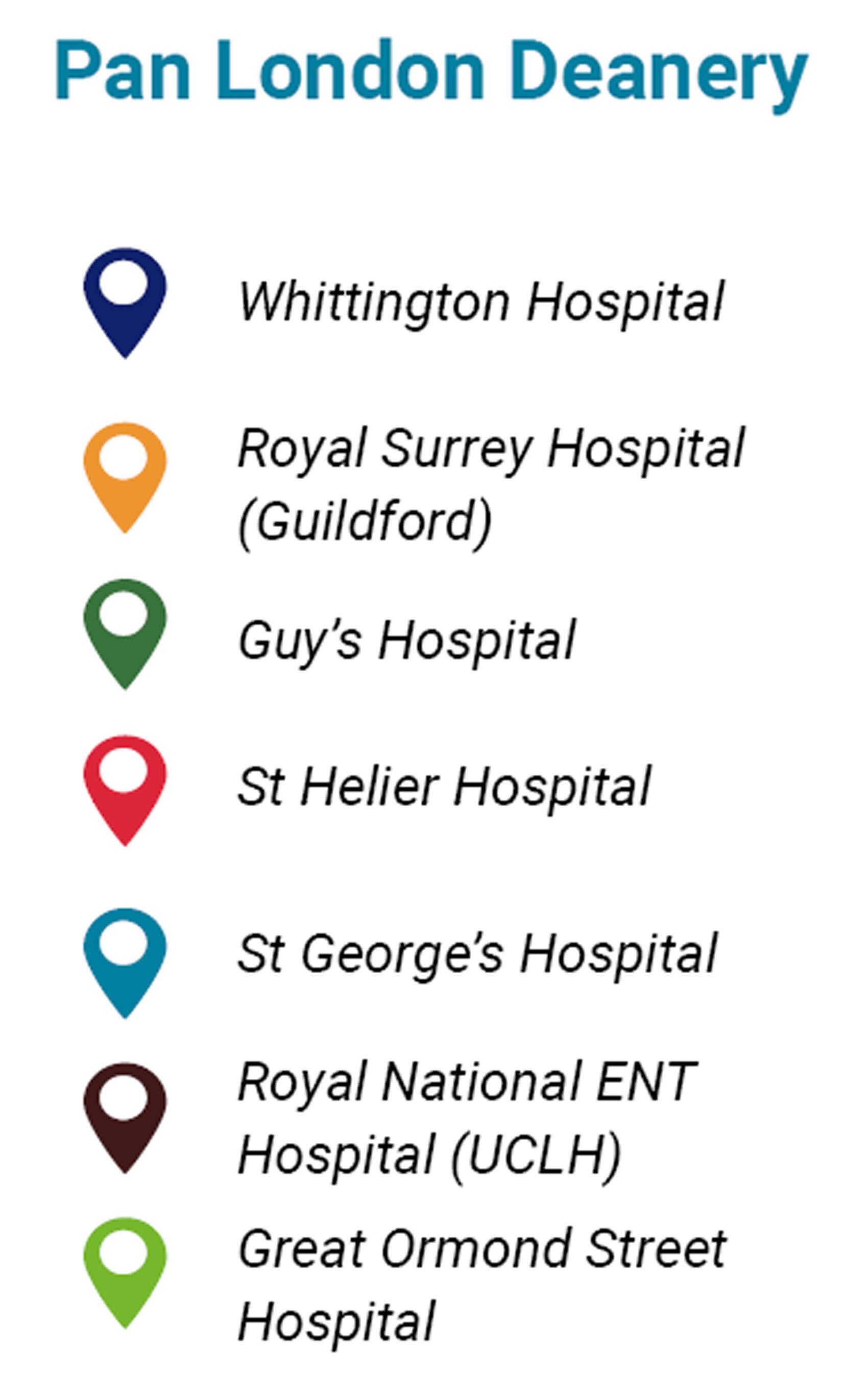
Figure 1: All possible AVM placements divided into each deanery (North West and Pan London).
AVM is part of the Joint Royal Colleges of Physicians Training Board (JRCPTB) and offers multiple entry routes, including medical, paediatric, GP and surgical backgrounds. Entry requires completion of core training and the relevant membership examination. As highlighted by a trainee, “The requirements include completion of a core (or GP) training and passing membership exams in the relevant specialty. Although not a requirement, shadowing an AVM consultant or getting involved in research is most valuable” (Natallia Kharytaniuk, ST3). The recruitment process includes a structured interview, typically consisting of four stations: “Clinical Scenario, Ethical Scenario & Management, Suitability & Commitment to Specialty, and Portfolio” (Shobha Rajagopal, ST4).
Training is delivered through two main rotations – Pan London and North West (Figure 1) – and lasts typically five years. It includes both adult and paediatric practice. Trainees must complete a postgraduate certificate in advanced audiology: audiovestibular medicine (or an equivalent) and acquire competencies through placements in related specialties. As described by a senior trainee, “Essential requirements include a PG certificate, practical procedures and gaining relevant competencies… including neurology, ENT, paediatrics, general medicine, allergy, genetics, psychiatry, psychology and neuro-ophthalmology” (Jawad Abdulla, ST7).
AVM is primarily an outpatient-based specialty, allowing trainees to develop a comprehensive understanding of neuro-otological and audiological conditions. “As a trainee, it can be a bit of a shock to be working in an outpatient-only environment… [but] it allows for a lot of reflective practice and multidisciplinary team discussions with often quite complex patients” (Rosa Crunkhorn, Consultant). Clinics typically include both neuro-otology and audiology, with some centres offering highly specialised services. “Clinics are divided into neuro-otology, with…dizziness & balance problems; and audiology… such as hearing loss, tinnitus, hyperacusis, misophonia and auditory processing disorder” (Lara Carvalho Sauer, ST5).
Multidisciplinary teamwork is central to AVM practice. “We work with various specialties on a daily basis, including audiologists, paediatricians, neurologists, speech and language therapists, physiotherapists and hearing therapists… as well as having radiology and genetics MDT meetings” (Maryum Saeed, ST5). This collaborative approach enables comprehensive patient care.
The specialty has a steep learning curve, with continuous development in knowledge and skills. As one trainee reflects, “It required me to delve deeply into an entirely new dictionary of medical terminology… but the level of support and teaching is unparalleled” (Amol Anand, ST3). Structured monthly teaching, multidisciplinary learning and academic opportunities support this progression.
A distinctive aspect of AVM is the mixture of clinical skills with advanced diagnostic and rehabilitative technology, including vestibular testing equipment and innovative rehabilitation tools, including virtual reality equipment.
Upon completion of training, trainees are awarded a Certificate of Completion of Training (CCT) and can work as consultants in adult, paediatric or mixed practice. “One of the joys of the specialty is that there are opportunities to subspecialise in different areas, creating a rich tapestry of different personalities and skillsets” (Rosa Crunkhorn, Consultant).
Patients seen in AVM clinics often have chronic conditions with significant impact on quality of life and may have previously seen multiple specialties. “Learning about other specialties through secondments provides us with a broader knowledge of medicine and enables us to develop a more holistic view of the patient” (Roohi Shrivastava, ST6). This supports a more comprehensive list of differential diagnosis, and patients are often relieved to receive a long-awaited diagnosis that may result in an appropriate treatment.
The specialty is not without challenges. “Whilst it is true that we work Mon–Fri 9–5pm in theory, the admin requirement is high (think long community paediatric-style letters!)” (Surangi Mendis, Consultant). Additionally, not all conditions have curative treatments, but we provide rehabilitation where appropriate to support patients in managing chronic conditions. Moreover, we ensure that their needs are met, especially in education and work. “By improving access to sound, treating vertigo and optimising balance, we enhance their ability to communicate, interact with those around them and, in the case of children, completely alter the trajectory of their learning and development” (Roohi Shrivastava, ST6).
We hope this article has sparked your interest in audiovestibular medicine. A more detailed version is available on the British Association of Audiovestibular Physicians (BAAP) website (www.baap.org.uk/training-in-audiovestibular-medicine). If you would like to learn more, we encourage you to get in touch, observe a clinic or speak with one of our team.
Further reading
1. JRCPTB, Joint Royal College of Physicians Training Board. Audiovestibular medicine training curriculum – implementation August 2021.
2. Murdin L, Ardle B M. A career in audiovestibular medicine. BMJ 2012;345:e5544.
3. Royal College of Physicians of Edinburgh. Audiovestibular Medicine (AVM).
www.rcpe.ac.uk/careers-training/
audiovestibular-medicine-avm
4. The British Association of Audiovestibular Physicians.
www.baap.org.uk
5. Joint Royal Colleges of Physicians Training Board.
www.thefederation.uk/training/
specialties/audiovestibular-medicine
Relevant links
1. NHS England. Medical Specialty Recruitment.
https://medical.hee.nhs.uk/medical-training
-recruitment/medical-specialty-training
2. Physician Higher Specialty Training Recruitment. Audiovestibular medicine.
https://phstrecruitment.org.uk/
specialties/audiovestibular-medicine
3. NHS England Certificate of sponsorship.
https://medical.hee.nhs.uk/medical-training
-recruitment/medical-specialty
-training/overseas-applicants
4. Health and care worker visa.
www.gov.uk/health-care-worker-visa
5. Check if you need a visa.
www.gov.uk/check-uk-visa
6. ARCP Decision Aid (2021).
www.thefederation.uk/sites/default
files/Audiovestibular%2520Medicine%25202021
%2520ARCP%2520Decision%2520Aid_0.pdf
[Links last accessed June 2026].