Strictly speaking, one is no longer allowed to accept presents from grateful patients as it could be interpreted as coercive and detrimental to the doctor-patient relationship. I can see that if the personal gift were substantial or financial, or if one worked in a health service open to manipulation, this could be the case, but it seems yet another example of the general loss of humour within the NHS.
Over the years, I have been fortunate to receive any manner of gifts, some more deserved than others. Alcohol is an obvious choice, of every sort except gin. I suspect the Hogarth’s image of ‘mother’s ruin’ lingers in the national psyche, so it is not seen as a gift for a woman doctor but, conversely, I have often been given all sorts of hard liquor – from bourbon and whisky to aquavit and brandy. Indeed, Metaxa brandy was the gift of choice from our many Greek patients, perfect for the toxic professorial Christmas punch. If asked, my secretary would discreetly whisper that champagne or port were appreciated.
I am not keen on chocolate, but olive oil, pistachio nuts and smoked cod roe were always welcome. One delightful patient from Beirut would send gastronomic delights made by various family members in France, including tins of escargots, foie gras and goose confit whilst a gentleman from Madeira presaged his appointment with boxes of Cymbidium orchids and Strelitzias from his nursery, followed by bottles of treacly black 1930s Madeira, tasting like alcoholic cough mixture.
Some gifts were hilarious. A large Nigerian chief presented me with a purple tie-dyed safari suit which would easily have accommodated two of me in each leg. I could not help roaring with laughter and asking if he thought I would grow into it, much to his amusement. Reproductions in carpet form of The Last Supper have been a surprisingly popular choice by Middle Eastern patients in colours more lurid than conceived by Leonardo da Vinci, and there are a limited number of these that anyone really needs to own. You can guess the number.
Sometimes at the end of a clinic, my consulting room looked more like a branch of Hobbycraft with knitted loo roll holders, hand-thrown pottery and home bakes – but each item representing time and effort by one of my patients. Some have given gifts of great thoughtfulness, reflecting their knowledge of my special interests, be it archaeology, cooking or collectable glass – an inscribed excavating trowel, a coin commemorating the physician who described a nasal tumour, historical maps and cookery books or antique Lalique and Baccarat glassware, to name but a few. There have been many personal gifts of clothing, designer scarves, handbags and even shoes, to say nothing of jewellery, watches, clocks, carpets and much more. I have also acquired a wonderful collection of pens, though virtually all remain in their presentation boxes as it would take me less than a day at work to lose one and writing by hand is now ‘Epically’ obsolete.
Some gifts of course were ‘trade goods’, resulting in numerous plaster heads of Hippocrates, Egyptian papyri, inlaid Middle Eastern boxes, embossed Turkish silver mirrors, Filipino macramé plant holders – but all showing kindness and often given by people who could ill afford the gesture. However, at the risk of sounding ungracious, some of these items have accrued to the extent that we periodically have a party where guests are obliged to enter a raffle and take the corresponding item as they leave – with no exceptions!
Of course, it is not just the patients who are kind enough to give gifts. At every conference one is usually presented with a plaque, certificate, medal, paperweight, decorative USB or some other item to commemorate the event. Again, I do not wish to unkindly criticise the generosity of colleagues, but some gifts are definitely worthy of note for their size or incongruity – what were they thinking? Maybe some were ironic, like the ashtray given to speakers at an Italian laryngeal cancer conference in the 1980s, although I think it unlikely as most of the participants smoked throughout the meeting, some during their own presentations. Some have been just odd – a large empty suitcase or an air-conditioning unit given after a lecture in quite a temperate part of the world.
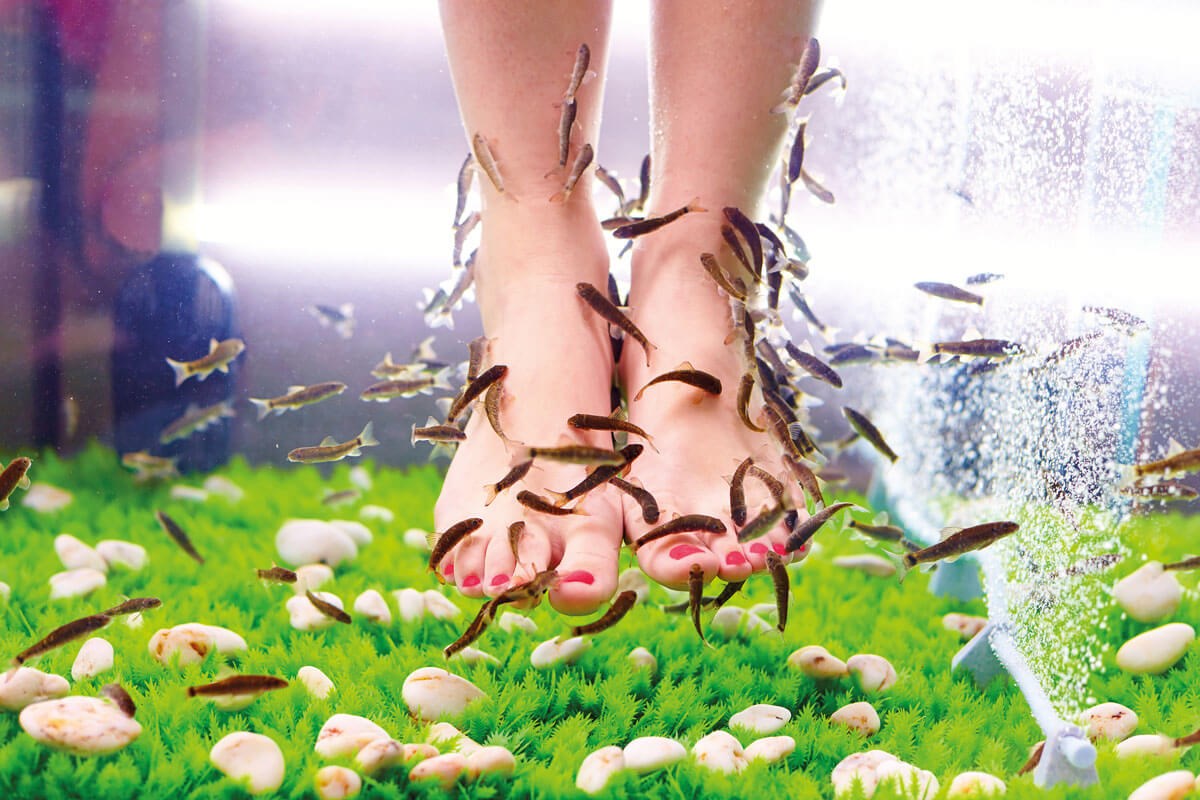
The Filipinos are generous to a fault. They even arrange fish pedicures and other spa treatments between one’s lectures, but I was physically and mentally overwhelmed when many years ago they presented me with a final gift after various others, just as I was leaving the meeting for the airport. This was a large fish made of pink capiz shells that also served as a clock and was inscribed with the words ‘The Philippine ENT Society salute Valerie J LUNG’. Clutching this under my arm, I left with no hope of getting it into a suitcase already bursting with presents (could have done with the empty suitcase, actually) and on the approach road to the airport, I hurled the piscatorial timepiece into the passing fields, secure in the knowledge that the misspelling of my name would prevent it ever catching up with me again. Many apologies to my Filipino friends…
At a meeting in Turkey, the invited speakers were each given a very large picture with their names in beautiful calligraphy on silk. With no prospect of getting it into a suitcase, but not wishing to offend, I removed the picture so that it could be rolled up to fit but left the frame in the hotel room. At the front desk, a well-known paediatric ENT surgeon was negotiating the return of his picture to the UK at great expense, though he freely admitted that he did not know what he might do with it thereafter. I was confidently explaining my solution when the hotel tannoy asked me to report to the concierge to collect the ‘lost property’ found in my room. Another airport approach road, another field!
Even the Scandinavians, normally peons of restraint and good taste, have been known to overdo it. One is usually given a beautiful piece of Kosta Boda glass or similar but, for those of you old enough to remember the television programme, Crackerjack!*, it sometimes degenerates into an ‘as much as one can carry without dropping anything’ routine. On one memorable occasion in Norway, I came away from the podium clutching a bronze Viking figure, a book on Arctic animals, a pair of fingerless gloves, a glass plaque, a wooden horse and, as the final coup de grace, a large rug covered in reindeer – each admirable in their own way but, collectively, somewhat overwhelming.
In Japan, I have been given objects of great beauty and refinement, but the deep red Kabuki devil mask, with a nose of impressive phallic appearance and dimension, raised a few eyebrows at customs. On my last visit, I also received a large pack of toki-shakuyaku-san – a popular alternative therapy taken by many Japanese women. It is made from the tubers of peonies and has been shown in clinical studies to reduce the symptoms of the menopause, improve cerebral blood supply, guard against Alzheimer’s and bring back the sense of smell after a viral rhinosinusitis. I wasn’t quite sure for which of these problems they thought I needed the treatment, but what’s not to like about these little packets of magic peony powder? Let’s hope it works.
Similar demonstrations of generosity are also commonplace in India. On a recent lecture tour, I received a succession of brass buddhas of increasing dimensions, an impressive metal construction reminiscent of the FIFA World Cup, and many plaques. My suitcase gradually became so heavy that it took two men to lift, and extra time was required to get through successive airport security, where each object was scrutinised for false compartments and contraband.
And when lecturing in Oporto, Portugal, with a colleague, where there was a sporting chance of being given a bottle of port by our hosts, I took a bottle protector sleeve so it could safely travel home in my suitcase, liquids no longer being allowed in carry-on bags. My colleague duly received a bottle of port, so I offered him my wine protector.
“But won’t you need it?”, he asked.
“No, they gave me a gold necklace.”
“Of course, they did”, he replied with good grace.
*Crackerjack! – a BBC childrens’ programme in the 1960s in which contestants had to carry all the items they won without dropping any, which usually included a cabbage and a Crackerjack pencil.