
The rhinologist’s contribution to the treatment of lacrimal obstruction: a plea for teamwork.
In 1956, Oxford ENT surgeon Ronald Macbeth recognised the importance of a multidisciplinary approach to the management of nasolacrimal pathology [1]. However, contemporary practice varies widely between both oculoplastic and ENT surgeons, both in the initial assessment and subsequent management of these patients, with no consensus on the optimal clinical approach [2].
Epiphora is a common, occasionally debilitating symptom that sits directly between the boundaries of oculoplastic and rhinology practices. Historically, patients were treated in an ophthalmological setting with a ‘traditional’ external surgical approach. However, with endoscopic endonasal surgery being so widely practised and minimally invasive methods preferred by patients, management of nasolacrimal duct obstruction (NLDO) has become a common skill in the rhinologists’ practice. Based on the authors’ local practice, this article aims to highlight the lessons learnt in establishing and running a nasolacrimal MDT for others wishing to collaborate in their regions.
The ‘one-stop’ Swansea nasolacrimal MDT clinic
This regional service welcomes referrals from across Wales. Every month, one session – one programmed activity (PA) – is allocated to a consultant rhinologist and consultant oculoplastic surgeon with an interest in nasolacrimal disorders, who perform same-day joint assessment. Each clinic sees 10–12 patients, with a mix of new and follow-up cases. This typically allows 120–140 patients to be seen per annum.
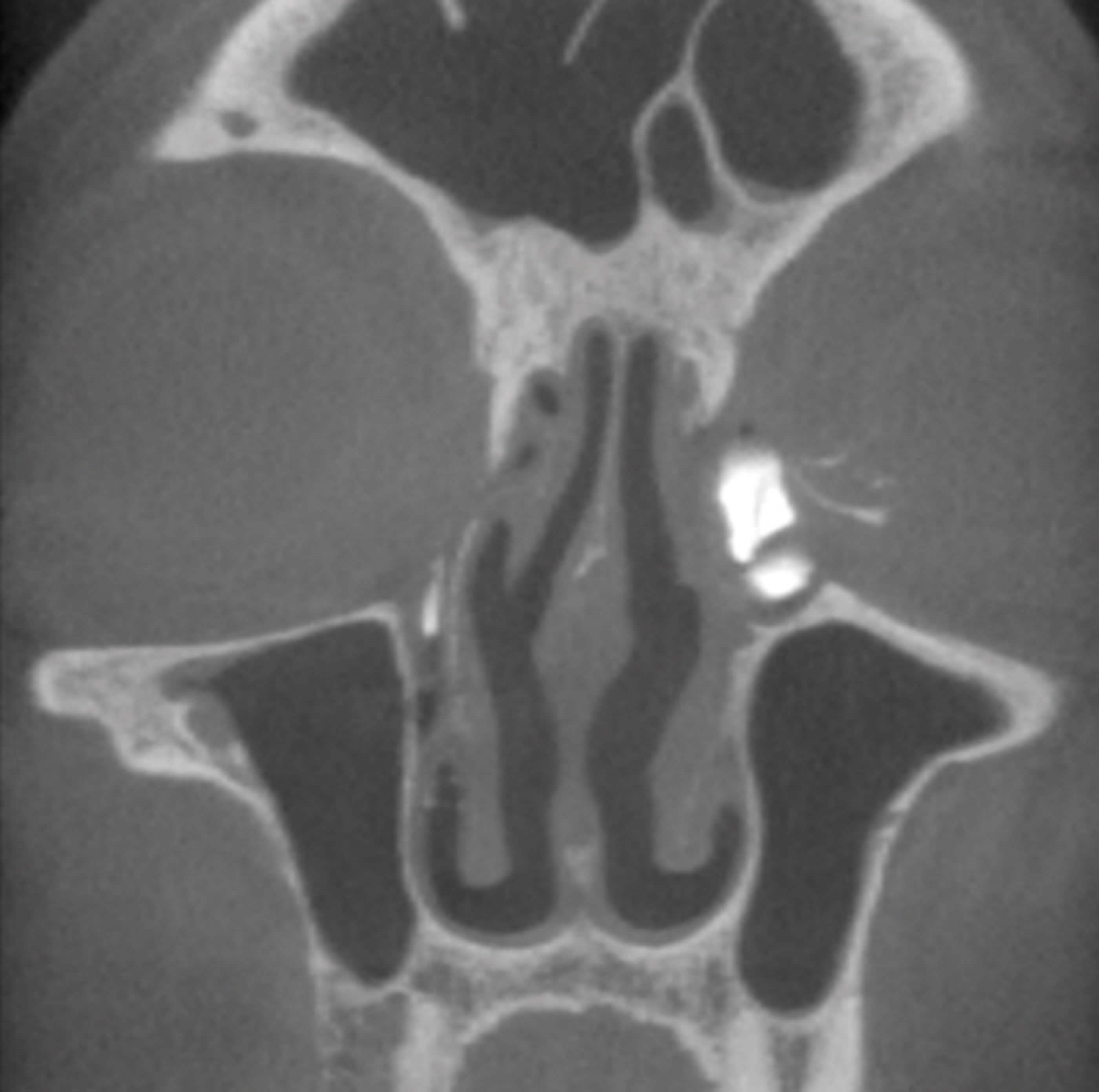
Example of CBCT-DCG.
Cross-sectional imaging in the form of computed tomography dacryocystography (CT-DCG) is the clinic’s preferred imaging modality for preoperative assessment of epiphora. The recent introduction of a cone-beam CT (CBCT) scanner in the outpatient department has allowed for same-day CBCT-DCG to aid decision-making and surgical planning in a ‘one-stop’ service.
Patient triage and assessment
Referrals into the service are carefully vetted by either a consultant rhinologist or consultant oculoplastic surgeon via the electronic referral pathway, to ensure they are likely to represent primary or acquired NLDO or functional epiphora. Referrals typically originate from general ophthalmology or maxillofacial surgery (in post-traumatic cases).
Referrals are only accepted directly from general practice in the event there are associated sinonasal symptoms, previous DCR with recurrent symptoms or individuals who have requested further review having declined previous offers of intervention. Referrals must be vetted to ensure that a simple ophthalmological problem is not the underlying cause, such as eyelid laxity, ectropion/entropion, punctal stenosis or dry-eye induced reflex tearing.
At the initial consultation, patients complete a quality-of-life measure such as the Lac-Q [3]. A clinical history is gathered to understand the nature of the symptoms, especially to characterise the constant or transient nature of the epiphora, which may indicate mechanical NLDO or functional block respectively.
In the clinic, ophthalmological assessment is then undertaken to assess eyelid position, apposition, laxity, closure and inflammation. Punctal assessment is undertaken with probing and irrigation, testing for hard-stop or soft-stop. Fluorescein dye disappearance test (FDDT) is then also undertaken. Fluorescein is dropped into both eyes, and the patient is asked to sit in the waiting room before being called for ENT assessment. It is worthwhile noting that dye disappearance can take two to six minutes in healthy individuals, or up to 30 minutes in NLDO.
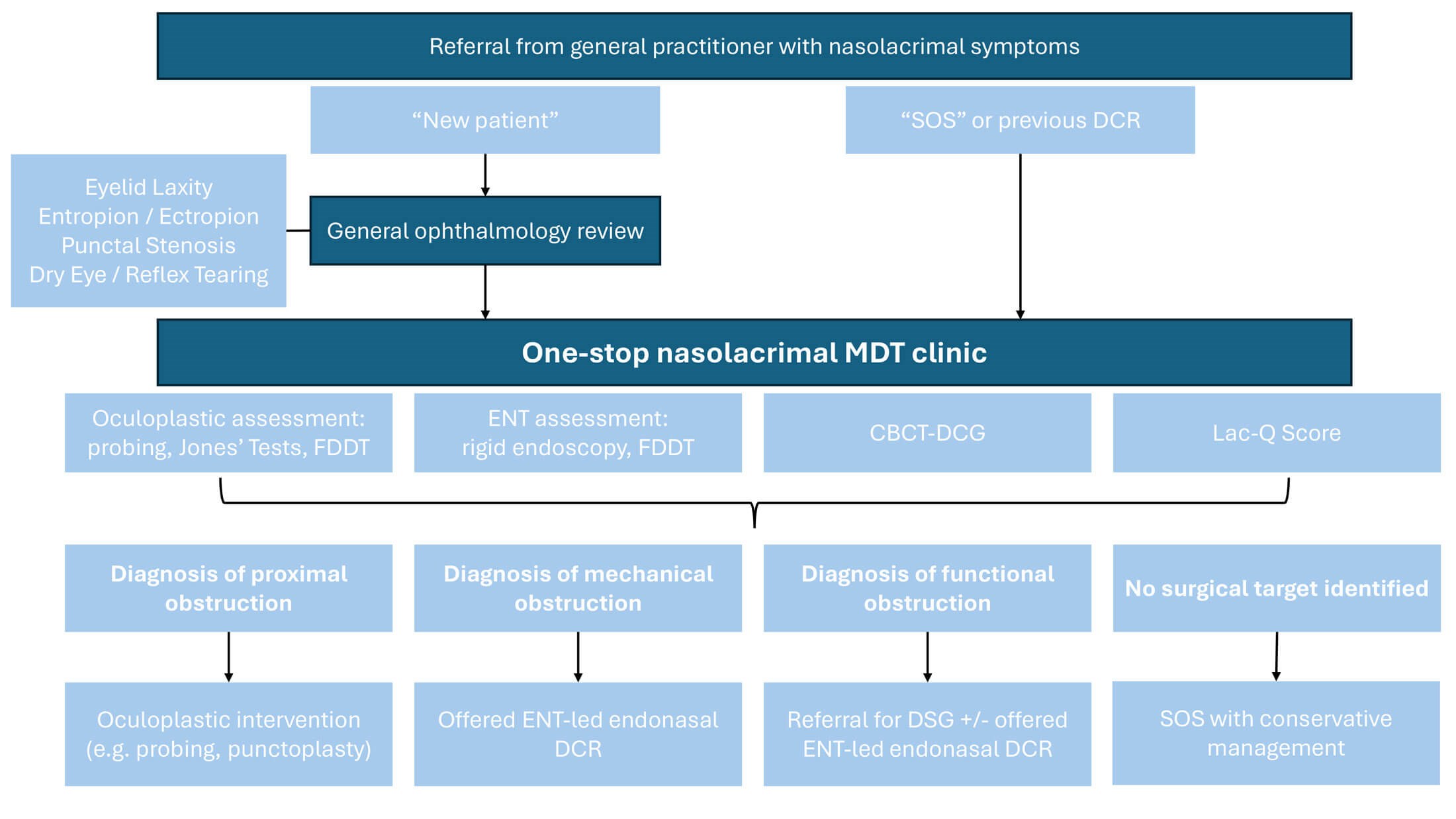
Patient flowchart.
ENT assessment entails rigid nasal endoscopy to look for fluorescein in the inferior meatus or nasopharynx. Endoscopy also allows appreciation of any sinonasal anatomical variants or surgical pitfalls, such as nasal septal deviation, concha bullosa or associated sinonasal inflammatory disease. This assessment is ultimately to determine if the epiphora is likely due to a mechanical obstruction or a functional deficit of tear flow; this influences both further investigations and management.
Investigations
Some units will offer surgery directly as a result of clinical assessment. However, these are subjective clinical assessments and can be unreliable for localising NLDO, and risk missing relevant co-existent sinonasal pathology [4]. In our practice, imaging is performed but may vary based upon whether a mechanical obstruction or functional deficit is suspected. DCG or CT-DCG and non-physiological investigations are offered in cases of mechanical obstruction. The recent introduction of CBCT-DCG allows this to be performed same-day in a one-stop setting. Dacryoscintigraphy (DSG) is a physiological investigation offered when a functional obstruction is suspected.
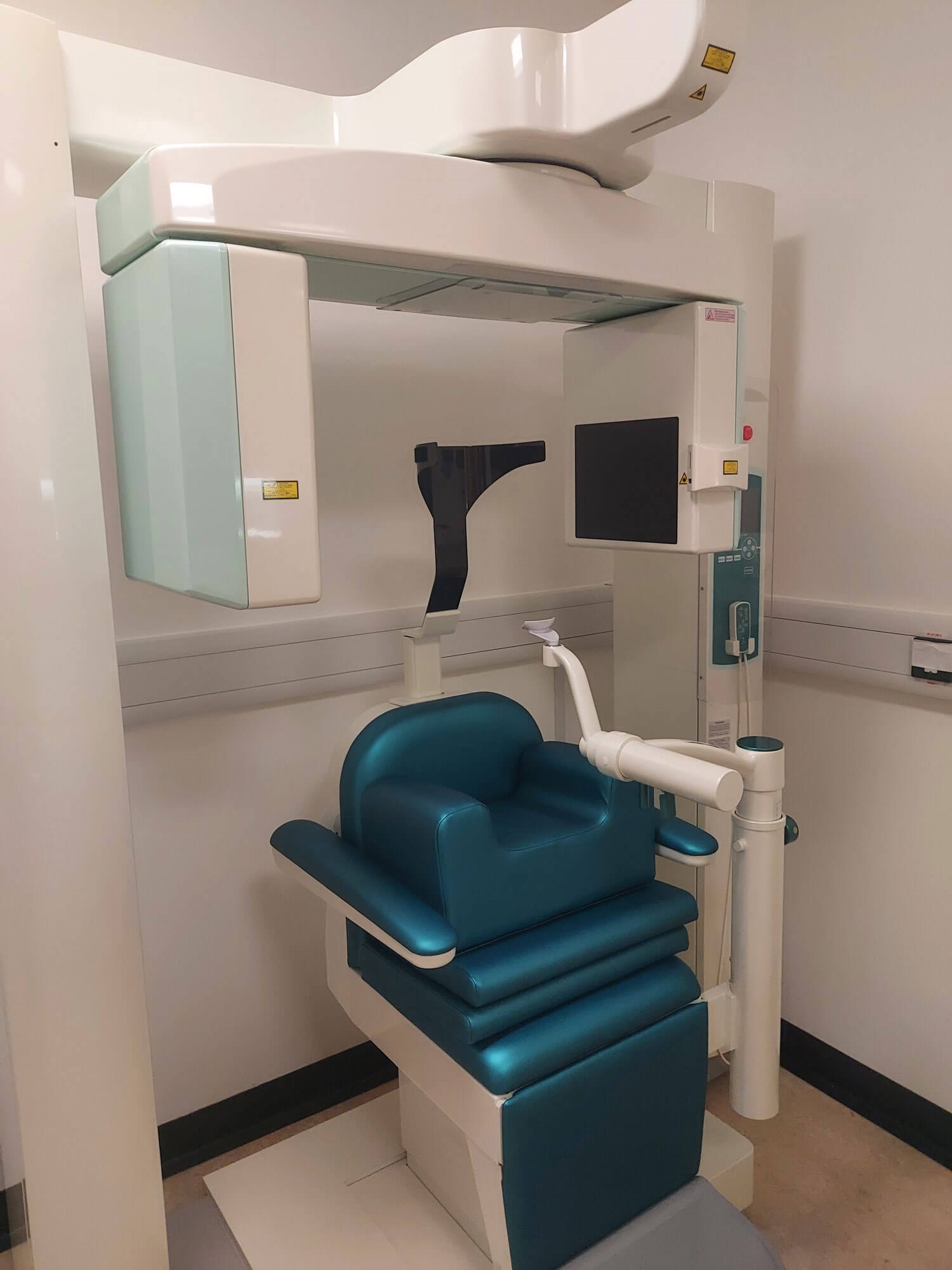
The CBCT scanner, Morita 3D Accuitomo XYZ Slice View Tomograph
(Model: MCT-1, Type: EX-2 F17).
Surgery
In our unit, approximately 50 endonasal DCR procedures are performed in a day-case surgical setting per year. These are typically arranged on the ENT surgical list for standard endonasal DCR, with canalicular stenting performed by the rhinologist. Cases that require more formal punctoplasty, revision surgery or conjunctivo-DCR bypass with Lester-Jones tubes will still be performed on an ENT list, but with oculoplastic surgeon input. In our practice, the preferred surgical technique includes an endonasal endoscopic DCR, using a piezoelectric saw osteotomy technique and Ritleng mono-canalicular stent insertion [5].
"Epiphora is a common, occasionally debilitating symptom that sits directly between the boundaries of oculoplastic and rhinology practices"
Clinical follow-up is undertaken at two weeks to confirm stent positioning and debridement of any stoma granulation tissue. Stent removal typically occurs at the six-to-eight-week follow-up. Subsequent postoperative Lac-Q scoring is undertaken to assess and audit patient-reported benefits.
Benefits
Beyond the obvious patient benefits of a joint assessment, with combined expertise and same-day decision making, the nasolacrimal MDT clinic has a number of other advantages.
- Training: A high-volume clinic for both ENT and oculoplastic trainees to gain exposure within a niche of expertise, experience assessing nasolacrimal pathology and a mutual understanding of the respective specialty contributions to the MDT.
- Sustainability: Mutual benefits, both in terms of patient travel for repeated clinic appointments and the number of PA sessions required by the directorate.
- Cost: According to NHS Tariff data, the estimated cost of appointments saved per patient in the one-stop model is £133 for ENT and £155 for ENT-ophthalmology MDT clinic follow-up. In addition, radiology appointments for formal CT imaging are costed as £69. This represents a cost saving compared to a model with repeated attendances required.
- Patient satisfaction: One-stop models are favoured by patients who are able to leave an appointment with investigations and decision-making complete.
Is a joint nasolacrimal MDT applicable to your service?
- For our geography, this service works very well in practice with clinics taking place in the ENT out-patient department equipped with endoscopic stacks, rigid endoscopes and access to a CBCT scanner.
- Assessing a need: Audit your regional practice in terms of number of clinical visits needed before decision to surgery is made, outcomes based on individual practice.
- Shared OPD: Two parallel rooms in an OPD setting, with synchronised job-plans and aligned sessions, with equipment needed for dual-assessment. Requires single a secretarial role for all referrals and clinic management. Funding split may need to be accounted for between ophthalmology and ENT budgets to adequately capture activity code. In our service it is an ENT-provided service. - Shared operating lists: For this unit, cases default to the ENT operating list. Nasolacrimal stenting is performed by the rhinologist in routine cases. Complex, challenging cases may also require the presence of the oculoplastic surgeon. Inevitably this will involve more planning to ensure availability of both. This can provide a logistical challenge based on individual contracted sessions and job-plans. Where the MDT determines a need for punctoplasty or alternative oculoplastic interventions, these will generally be carried out by the oculoplastic surgeon in their local anaesthetic day unit.
Summary
Transitioning to a one-stop MDT clinic allows for the streamlined management of patients presenting with nasolacrimal symptoms, combining the relevant expertise needed to make a sound clinical assessment and facilitating same-day decision-making. There are many benefits to this clinical approach, provided the need is justified and clinical co-ordination permits, which is welcomed by patients.
The authors welcome visitors to the clinic for clinicians wishing to establish their own nasolacrimal MDT. Please contact the authors to enquire about observation opportunities.
If you currently have your own nasolacrimal practice, we would be grateful if you would consider completing our QR code survey as we continue to map and benchmark the current UK practices.
References
1. Macbeth R. The rhinologist’s contribution to the treatment of lacrimal obstruction: a plea for team-work. Can Med Assoc J 1956:75(1):1–5.
2. Al-Shaikh S, Javed F, Fincham G, et al. UK survey of the present role of ear, nose and throat surgeons in lacrimal surgery. Ann R Coll Surg Engl 2010:92(7):583–6.
3. Mistry N, Rockley TJ, Reynolds T, Hopkins C. Development and validation of a symptom questionnaire for recording outcomes in adult lacrimal surgery. Rhinology 2011:49(5):538–45.
4. Shapira Y, Juniat V, Macri C, Selvaet D. Syringing has limited reliability in differentiating nasolacrimal duct stenosis from functional delay. Graefes Arch Clin Exp Ophthalmol 2022;260(9):3037–42.
5. Morris S, Shuttleworth G, Whittet H. How I Do It: piezoelectric saw in endonasal dacryocystorhinostomy. Eur Arch Otorhinolaryngol 2026;283(2):1159–61.
Click here to complete the National Nasolacrimal Survey.
Declaration of competing interests: None declared.