You searched for "funding"

How rare is vocal fold paralysis after spinal and epidural anaesthesia – should we be more concerned?
The authors present an unusual case of right vocal fold paralysis. Their patient was a 38-year-old woman who experienced new onset dysphonia following neuraxial anaesthesia (NA) for a caesarean section. Flexible nasendoscopy showed a right VFP with fixation in the...Entrepreneurial aspirations for the otolaryngologist
Entrepreneurship is a process of identifying an idea and starting a business venture with this idea. It requires generation of a business model or plan that emphasises the value proposition for the customer. The model must identify the partners, resources,...Endoscopic arytenoid abduction lateropexy for bilateral vocal cord paralysis in neonates
We are delighted to publish a further update on the use of the technique for vocal fold lateralisation in neonates from Laszlo Rovo and Shahram Madani, who have previously informed us of this new technique [1]. These cases are rare...The ‘bus stop’ incision for bone-anchored hearing aid placement: a step-by-step approach to soft tissue preparation
There have been many descriptions of soft tissue preparation in the era when subcutaneous tissue was routinely removed with the Nijmegen technique [1] or with the dermatome [2]. More descriptions continue to evolve with the advent of tissue preservation techniques,...PRO28F MAXI launch at EUHA 2025
Puma Soundproofing is constantly looking for innovative solutions to offer high-quality products at increasingly affordable prices. Now we have created the new PRO28F MAXI booth that will be officially presented at the next EUHA congress (Nuremberg, 22-24 October). This new...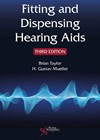
Fitting and Dispensing Hearing Aids – Third Edition
Fitting and Dispensing Hearing Aids – Third Edition is intended primarily as a course book for “non‑audiologists or undergraduate audiology students who have yet to fit their first pair of hearing aids”. It is aimed primarily at students in the...
Electrocochleography and cochlear implants programming
Cochlear implants (CIs) often are the only option for people with severe to profound sensorineural hearing loss to be able to hear. Therefore, effective CI programming seems very important, especially in children who are still developing their speech. Using acoustic...Cyclops Medtech partners with Hypatia Specialist Clinics
Cyclops Medtech is partnering with Hypatia Specialist Clinics to provide vestibular diagnostic and therapeutic solutions throughout the United Kingdom and parts of Europe.Getting the message right on hearing loss and dementia
Are we reaching a consensus on how hearing professionals should talk about hearing loss and dementia? In 2024, the British Society of Audiology (BSA), in collaboration with the British Academy of Audiology (BAA) and the British Society of Hearing Aid...IFOS 2026 bid cities
As Dubai prepares to host IFOS 2023, the next IFOS congress in 2026 is already being planned. The competition to host the meeting is certain to be fierce – we hear from the organisers around the world bidding to bring...Voice analysis
Traditionally voice analysis has been done by ear at a subjective auditory-perceptual level. The three main characteristics of voice are: pitch – normal for age and gender, too high or too low; loudness – normal, too high or too low;...