
You searched for "consulting"

Cochlear implanted children are more likely to have device failure if their balance function is impaired
We know that children with permanent hearing loss are more likely to have an associated balance problem. It is also thought that children with cochlear implants (CI) that fail do so because of an increased risk of falls and head...
Hearing intervention to prevent dementia
People with hearing impairment have an increased risk of incident all-cause dementia proportional to the severity of loss compared to those with normal hearing. Treating hearing impairment may therefore serve to slow or prevent the onset of cognitive decline. This...
Short-term risk of falling after cochlear implantation
This paper examined the effect of cochlear implantation on balance function in 16 adult patients. The authors assessed balance pre- and (two weeks) post-operatively by timing how long each patient was able to stand on a foam pad with their...
Earplugs fit for purpose
The aim of occupational audiology is to prevent hearing loss caused by occupational sound exposure which can exacerbate the long-term effects of central presbyacusis as employees age. To provide the best noise protection over time, research suggests that best practice...
The stubborn polyp cases are ‘different’
The widely different behaviour of nasal polyp disease between patients is a major feature of rhinology practice and makes counselling of patients difficult when approaching their first operative intervention. Setting aside aspirin sensitivity (Samter’s triad), which is known to be...
Controlling tinnitus
The absence of sufficient evidence for the use of integrated sound generators for the management of tinnitus led the authors to conduct a randomised blind clinical trial in which they compared the use of a conventional hearing aid with a...
To scan or not to scan, otosclerosis
Otosclerosis can co-exist with other ear pathologies such as superior semicircular canal dehiscence (SSCD). Stapedectomy in this situation can lead to development of SSCD symptoms. Authors conducted an email-based survey involving active members of the American Neurotologic Society (ANS) and...
Patient-related factors that require revision surgery for otosclerosis
Stapes surgery for otosclerosis has a high success and low complication rate but, over a period of time, good results can deteriorate, requiring revision surgery. In this study, the authors have focused on patients’ demographic data as predictive factors for...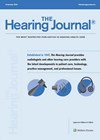
Supporting parents in improving their child’s hearing device use time
On the topic of supporting parents with improving their child’s hearing device time, The Hearing Journal recommends sharing a video from Hearing First (video provided online by Hear Jour; produced by www.hearingfirst.org) and provides a unique printable resource for parents...
To pack or not to pack!
Ear packing is thought to support grafts, control bleeding and facilitate healing. However, it is not without complications such as fibrosis and infection. The authors aimed at investigating the effect of middle ear packing on graft success rate in myringoplasty...
Keep on moving
This study compared the differences in localisation of sound between those with symmetrical hearing within normal limits (NH) and those with single-sided deafness (SSD). Unsurprisingly, those with SSD took longer to localise sounds and had a higher error rate. Although...


