If the press and the tech world are to be believed, AI is going to take over many of our jobs. Chris Potter has his doubts.
As regular readers will no doubt be aware, I pride myself on inhabiting the cutting edge of our glorious speciality. Indeed, rarely a clinic goes by without me reaching for the departmental ‘Hopkins’ rod , firing up the old Galton whistle and inadvertently spraying myself liberally with a mixture of Gentian violet and ‘Ich and Glyc’ (ask your senior colleagues).
But my lust for novelty and innovation extends far beyond professional endeavours and to the remotest corners of my personal life. As I peck away at my ‘Word Processor’ keyboard, I am simultaneously commuting by segway whilst checking the value of my non-fungible token chimp-in-a-sailor-hat pictures on my electric Google glass spectacles. I may cash them in to buy more Theranos shares or even exercise my British Biotech options...
Part of this burning desire to stay abreast of all things novel comes from my formative years. After leaving the dear alma mater in the mid-1990s, I discovered that many of my dimmer and less ambitious acquaintances had found themselves working at a variety of commercial ventures that were known as ‘dot-com startups’. They were all the rage at the time and hugely lucrative, but it irked me somewhat that colleagues who had formerly struggled to use a pocket calculator or turn on an electric toaster were now portraying themselves as swaggering tech giants. It seemed that one could double the value of a company just by appending ‘.com’ on the end and waving one’s hands around a lot whilst talking guff about the electric Interweb. It all came crashing to earth eventually as the bubble burst and fortunes were lost, but there was a palpable fear of missing out in the air that, in hindsight, was to drive an awful lot of irrational behaviour.
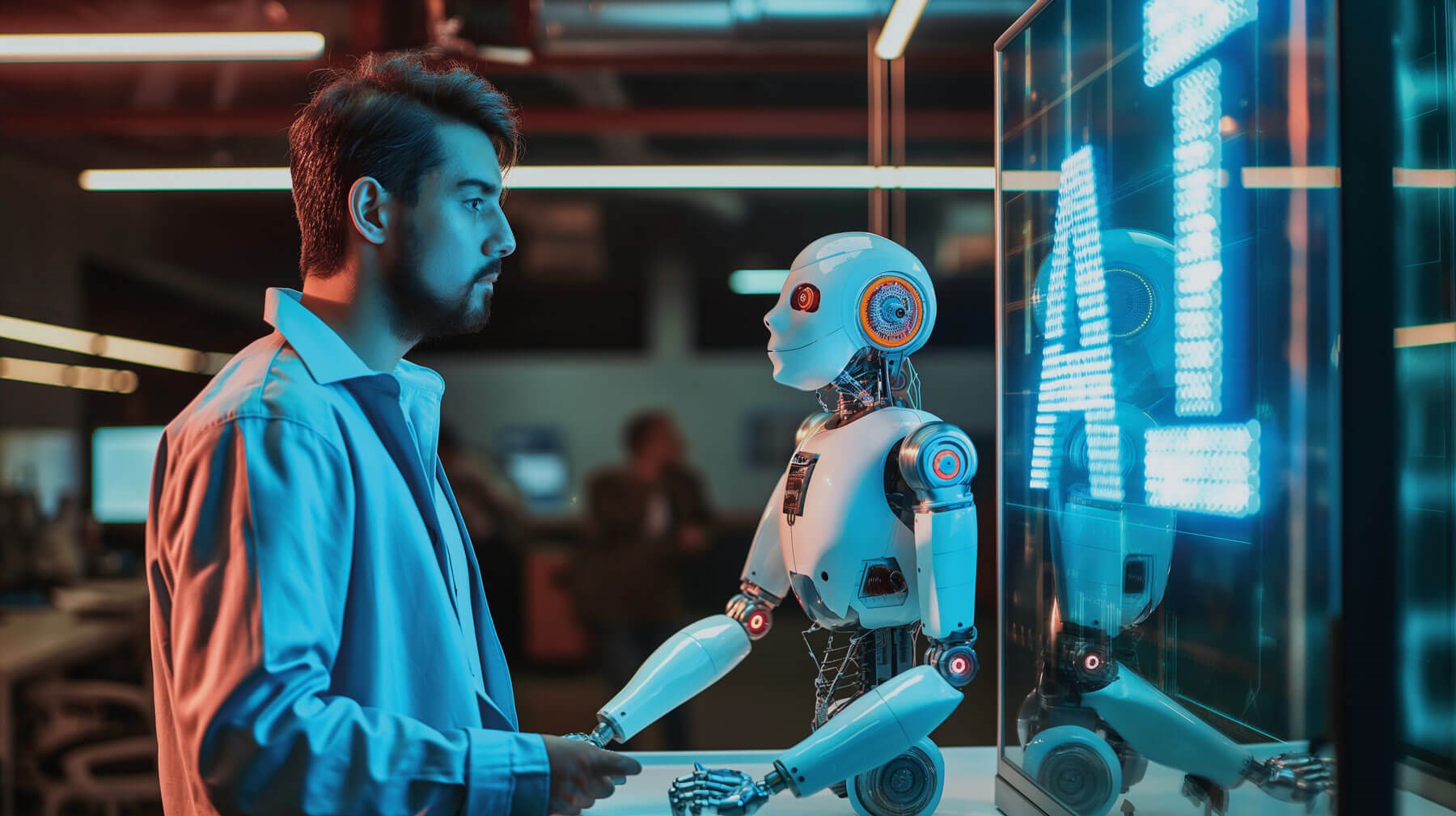
On a different topic entirely, according to the last 15 or so Bulletins of the Royal College of Surgeons, AI seems about to make me obsolete. Now don’t get me wrong, if my cyberspace Avatar is keen to crack on with Thursday Double Dizzy clinic whilst I recline in the postgraduate centre hot tub with Trixie and Bubbles (our academic fellows) and an agreeable glass of fizz, then more power to the AI elbow and all that. However, just as your shoe-shine boy giving stock tips suggests the market is saturated and about to crash, the fossils at the Lincoln’s Inn Bulletin jumping wholeheartedly onto a bandwagon sort of suggests that peak AI may have passed us by already.
"It irked me somewhat that colleagues who had formerly struggled to use a pocket calculator or turn on an electric toaster were now portraying themselves as swaggering tech giants"
Perhaps there are a couple of blind spots we ought to be more aware of as healthcare professionals. We tend to give tech the benefit of the doubt as we are surrounded by examples of its great successes and imagine many of our current problems are easily soluble with further applications. We often have little understanding of its limitations and, thus, tend to be vulnerable to hype and take at face value overoptimistic statements by AI boomers with huge commercial conflicts of interest. Our prized duty of candour means nothing to entrepreneurs whose attitudes may often be ‘fake it until you make it’. The venture capitalist who predicted at a tech conference in 2012 that AI would replace 80% of doctors by 2030 was only the latest in a long and lamentable line of overpromising and underdelivering AI hypers who have strewn the field with regular predictions which seem risible in retrospect [1].
The ‘Godfather of AI’ and Nobel Laureate Geoffrey Hinton famously predicted in 2016 that radiologists would be obsolete by 2021, repeatedly claiming AI would soon surpass human abilities in medical imaging [2]. Well, I’m not sure if he’s visited our leaky radiology portakabin recently, but there still seems to be a whole bunch of introverted pedantic misfits infesting the place and doggedly refusing to carry out the most facile of requests. Indeed, despite training numbers increasing in the USA by 10% over the period Hinton indicated, there remains a chronic shortage of doctors willing to endure the privations of clinical radiology.
However, perhaps the greatest and most dramatic example of AI hubris comes from a rather unlikely source. IBM successfully performed a huge PR coup when their Watson supercomputer won the long-running impenetrable gameshow Jeopardy! in 2011. Riding a wave of positive publicity, they launched IBM Watson Health in 2015, a veritable ‘gamechanger’ which supposedly could read, analyse and summarise the entire medical literature more efficiently than a Warwick-trained CT2. This near-infallible behemoth could extrude instant evidence-based clinical decisions, providing personalised medicine for all and eclipsing the feeble fallible judgements of puny humans who could only gape with awe at its manifest superiority.
The hype machine talked about a ‘moonshot’ and there was much ill-judged rhetoric over huge potential leaps in cancer treatment. Agreements were signed with Memorial Sloan-Kettering (not to be confused with its older and more august cousin Kettering General) and MD Anderson, with much press hoopla suggesting we were on the cusp of an AI revolution. Unfortunately, treatment recommendations were sometimes bizarre, obsolete or downright dangerous, and clinicians got fed up correcting the blind spots in Watson’s erratic output. After various disappointing evaluations, IBM pulled the plug, selling the database and code at salvage value in 2022. As a fitting epitaph, an unnamed clinician at Jupiter Medical Centre in Florida gave IBM 360 feedback that Watson Oncology was, and I quote, a “piece of sh*t” [3].
In 2022, Meta released Galactica, a large language model trained on 48million scientific papers to analyse and summarise all of scientific knowledge, giving open access to allcomers to the entirety of humanity’s noblest endeavour. It lasted all of three days before the plug was pulled after a series of bizarre fabrications and pseudoscientific outputs were generated. Examples include a detailed review of NASA’s use of ‘bears in space’ complete with fictional references and fantasy cures for diabetes. The outputs were highly plausible, couched in appropriate technical language and with all the accoutrements of genuine scientific literature but negligible in content – rather in the vein of one’s first SHO BACO poster.
Microsoft was not immune to AI catastrophes, launching the chatbot Tay on Twitter, supposedly mimicking the speech and attitudes of a 19-year-old American girl. Within 16 hours, the bot had generated 96,000 tweets. Unfortunately a significant minority involved spewing racist, misogynist hate speech and Holocaust denial in an incongruously bubbly youthful voice. Now, I regard myself as a tolerant chap, and during Interface Fellowship days occasionally sat with the Max-Fax team in MDT. I don’t take offence easily but some of Tay’s output makes one weak at the knees. Microsoft cut their losses, sadder but wiser one feels.
AI output is often highly plausible. Computers are rather good at chess, and we assume this somewhat niche skill can be extrapolated to other spheres of intelligent endeavour. However a board game with very limited and strict rules of behaviour and very clear objectives may not reflect real-life situations. One only needs to look at the private life of Bobby Fischer to see chess expertise may not translate well to life decisions in the real world.
You don’t need to be told this, but apparently the tech bros do. Medicine is more than data gathering and number crunching – much, much more. Taking a history and laying on hands is one of the most challenging skills one can attempt to acquire in life. Empathy, rapport, listening, caring, hand-holding and sincere affirmation are profoundly human actions and no stochastic parrot chatbot parody will ever be able to effectively mimic them to provide the comfort and support our patients seek. To claim that AI will replace doctors at any time is to undermine what it is to be human, and if that makes me a reactionary Luddite, well I’m proud of that label.
References
1. Khosla V. Technology will replace 80% of what doctors do. Fortune 2012.
https://fortune.com/2012/12/04/technology
-will-replace-80-of-what-doctors-do/
2. Byju A. The “Godfather of AI” Predicted I Wouldn’t Have a Job. He Was Wrong. The New Republic 2024.
https://newrepublic.com/article/187203/ai-radiology
-geoffrey-hinton-nobel-prediction
3. Bryant M. STAT: IBM’s Watson gave ‘unsafe and incorrect’ cancer treatment advice. Healthcaredive 2018.
https://www.healthcaredive.com/news/stat-ibms
-watson-gave-unsafe-and-incorrect
-cancer-treatment-advice/528666/
[All links last accessed December 2025].