Navy audiologists protect service members’ hearing, ensuring situational awareness, safety and mission readiness in noisy military operations.
Active-duty navy audiologists are naval officers who apply their specialised skill sets and serve as subject matter experts in hearing conservation and communication sciences toward solving auditory, vestibular and human performance challenges across the fleet.
Their mission is to increase medical readiness and optimise performance in all combat and training environments through advancements in safety programme management, preventive health education/training, overseeing audiometric monitoring, hearing and head protection devices, communication systems and auditory performance factors.
Historical context
Audiology as a profession – particularly the field of hearing conservation – emerged from efforts to address the effects of hazardous noise exposure during wartime. All our nation’s wars dating back to early colonisation show evidence of hearing loss as a battlefield injury. However, efforts to study the effects of noise exposure and provide aural rehabilitation to warfighters did not begin in earnest until World War II. It wasn’t until the 1970s and early 1980s that we began to see the emergence of formal hearing conservation programmes.

US Marine firing a squad automatic weapon (SAW).

US Marines firing an M777 155 mm Towed Howitzer.
Operational importance
Unrestricted hearing is imperative to mission success in all military operations. Medical readiness is defined as a service member’s ability to deploy and perform their assigned duties without preventable medical or dental limitations. Situational awareness and communication capability are the most important mechanisms for military members to operate safely and competently, both individually and as a team, in dynamic environments. These mechanisms significantly rely on the ability to hear well. In ideal lighting, our hearing allows us to detect cues or threats from any angle and outside of our immediate visual field. Normal hearing becomes even more crucial for situational awareness with less-than-ideal lighting due to time of day or environmental factors. Mild hearing loss can compromise the ability to understand speech, especially when visual cues are not available such as when focusing on a task or speaking through a communication device. Hearing in the presence of background noise creates additional challenges for individual and mission effectiveness as it places an extra load on the peripheral and central auditory system to decipher what is important and what is just noise.
Health impacts of noise-induced hearing loss
Noise-induced hearing loss (NIHL) is permanent damage to the auditory system caused by hazardous noise. At an approximate 10–15% prevalence rate, noise-induced damage is the most prevalent injury in the military every year [1]. NIHL is often characterised by poor speech understanding, difficulty hearing in background noise, difficulty locating sounds, and tinnitus. Tinnitus is perceptive of an auditory stimulus without an external sound source. For decades, tinnitus and NIHL have been amongst the most prevalent disabilities in the Veterans Administration [2]. This is because noise is one of the most prevalent hazards throughout military operations and its effects are often painless and progressive. While advancements in technology and capabilities have allowed our military to be more adaptive and multifunctional, they have also caused our hazardous noise environment to become more dynamic.
In addition, there are many non-auditory effects to noise-induced damage, which are often overlooked. NIHL is directly linked to psychological effects, cardiovascular effects, cognitive and sleep disturbances, social and occupational impacts, increased stress, and disruptions in overall quality of life [3–6].
Hazard assessment and measurement
Hazardous noise is generally determined by the overall intensity/loudness of the noise, duration of exposure and noise type (continuous/steady-state, peak/impulse or a combination of the two). It can also include spectral quality/frequency content of the noise for unique or especially hazardous environments. Service members are required to be in the Hearing Conservation Program if exposed to continuous noise equal to or greater than 85 dBA as an eight-hour time-weighted average (TWA) and/or impulse noise equal to or greater than 140 dBP. The military uses a 3 dBA exchange rate, meaning a 3 dBA increase in continuous hazardous noise exposure cuts the exposure limit in half before the same risk of damage occurs.
Sound level meters can be used to measure all aspects of hazardous noise instantaneously and/or over time for a particular environment or piece of equipment. Noise dosimeters can also be worn by personnel to calculate the TWA as they engage in the dynamic environments they are assigned. This data allows general estimations of noise hazard risk level, however, small changes in an operation (i.e. addition or subtraction of a process or part, location of equipment or personnel, number of systems running, weather/climate and individual variability, etc.) can impact that noise environment and subsequently change the risk for a particular location or job.
In the military, there are varying levels and types of hazardous noise. Dynamic occupational noise environments (rockets, grenades, explosives, missiles, aircraft, tanks, amphibious and land attack vehicles, etc.) and current limitations of hearing protective device (HPD) performance all increase the risk of NIHL. Examples of the decibel range for common military devices, tools and aircraft are as follows:
• M4 Rifle: 158–165 dBP
• .50 Caliber: 153–155 dBP
• Mortars: 175–179 dBP
• Rockets: 180–185 dBP
• H-53 Helicopter: 109 dBA
• AH-1 Helicopter: 108 dBA
• V-22 Tiltrotor Aircraft: 120 dBA
• F-18 Fighter Jet: 130–150 dBA
• F-35 Fighter Jet: 153 dBA
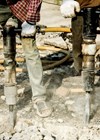
• Needle Gun: 90–115 dBA
Each of these sound levels can produce permanent hearing damage within seconds to minutes of exposure with insufficient protection.
Individual risk of NIHL will vary significantly due to many factors aside from the environment and HPD usage. Factors influencing susceptibility can also include genetics, prior exposure/damage, pre-existing hearing loss or tinnitus, sensitivity to sound, ototoxic medications and exposure to other ototoxic agents (e.g. jet fuel, various solvents and chemicals commonly used in military operations).
Protection challenges: training and proper usage
Hearing conservation enrollment entails audiologic monitoring, hearing conservation education and hearing protection requirements for personnel in the programme. Audiologic monitoring allows for early identification of damage, while education intends to prevent the problem before it happens.
Training for hearing protection devices varies across worksites and depends on the familiarity of safety managers or workplace supervisors. It is common for military personnel to not wear hearing protection within the recommended levels of attenuation, wear them inappropriately, or be exposed for longer durations than recommended. These factors increase the risk of NIHL. Therefore, training on appropriate usage and fitting of HPDs should be provided and verified to decrease the variability within NIHL.

US Navy sailors and civilian personnel operating on a flight line during takeoff.
While under-protection or inadequate usage of hearing protection devices is certainly a cause for the prevalence of hearing damage throughout the military, there is also the issue of over-protection. Just as hearing loss can have detrimental effects on safety, survivability and lethality, wearing too much hearing protection can cause the same problems. This issue is most common with more manageable noise hazards like rotary aircraft. If hearing protection configurations reduce hazardous noise for an exposed service member too far below 85 dBA, then situational awareness and communication capability can also be significantly impacted.
This dilemma of over- versus under-protection underscores the critical role of command safety leaders and workplace supervisors in selecting appropriate criteria for administrative controls and hearing protection configurations.
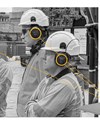
Fit, comfort and job-specific performance are essential when selecting hearing protection, with the goal of safeguarding workers while maintaining, or even enhancing, their effectiveness.
Conclusion
Effective hearing conservation in military operations requires a comprehensive, evidence-based approach that balances force protection with operational effectiveness. Navy audiologists serve as critical enablers of mission success by providing expert guidance on hazard assessment, implementing tailored hearing protection strategies and ensuring service members maintain the auditory capabilities essential for situational awareness and communication in combat environments. As military technology continues to advance and noise environments become increasingly complex, the role of audiological expertise in preserving both the health and combat readiness of our warfighters has never been more vital. Success in this mission demands ongoing collaboration between audiologists, command leadership, safety managers and individual service members to ensure that hearing conservation programmes are not merely compliant with regulations but are actively integrated into the operational culture. By protecting our personnel’s hearing today, we safeguard their ability to serve effectively throughout their careers and preserve their quality of life long after their military service concludes.
The views expressed in this article are those of the authors and do not necessarily reflect the official policy or position of the Defense Health Agency, Department of War, nor the U.S. Government.
References
1. Navy and Marine Corps Public Health Center. Hearing Conservation Compendium Report CY2015. 2016.
www.med.navy.mil/Portals/62/Documents/
NMFA/NMCPHC/root/Documents/oem/Hearing
-Conservation-Compendium-Report-CY15.pdf?
ver=_OH0q-JxiFVUNHIouQnYsw%3d%3d
2. U.S. Department of Veterans Affairs. The Fiscal Year 2024 Annual Benefits Report. 2024.
www.benefits.va.gov/REPORTS/
abr/docs/2024-abr.pdf
3. Basner M, Babisch W, Davis A, et al. Auditory and non-auditory effects of noise on health. Lancet 2014;383(9925):1325–32.
4. Lin FR, Yaffe K, Xia J, et al. Hearing loss and cognitive decline in older adults. JAMA internal medicine 2013;173(4):293–9.
5. Jo H, Baek EM. Impacts of noise-induced hearing loss on sleep, health, and workplace: Multi-group analysis. Heliyon 2024;10(9):e30861.
6. Wang TC, Chang TY, Tyler R, et al. Noise Induced Hearing Loss and Tinnitus-New Research Developments and Remaining Gaps in Disease Assessment, Treatment, and Prevention. Brain sciences 2020;10(10):732.
[All links last accessed February 2026].
Declaration of competing interests: None declared.