Ukrainian ENT teams continue life-saving and routine care under air raid alerts, with staff shortages, strained resources and the long psychological toll of war.
War reshapes medicine long before it destroys hospitals. It alters the rhythm of clinical work, the priorities of surgeons and the expectations of patients. During two weeks in May and June, I travelled through Ukraine to observe how physicians continue working under the strain of prolonged war.
Entering through the Romanian border near Suceava, I spent time in Chernivtsi before continuing to Khmelnytskyi and on to Kyiv. What emerged from conversations with physicians and hospital staff in these three major cities was not only a story of resilience, but also one of exhaustion, staff shortages, improvisation and constant disruption.
For otorhinolaryngologists, the war has created a uniquely difficult reality. ENT specialists stand at the intersection of trauma care, reconstructive surgery, airway management, oncology, infection and chronic disease treatment. In wartime, every one of these responsibilities becomes more complicated.
"Because women are not subject to the same mandatory military mobilisation as men, female ENT physicians now form the backbone of outpatient clinics and hospital departments"
This article reflects observations from hospitals and conversations with physicians working in a healthcare system functioning under continuous threat.
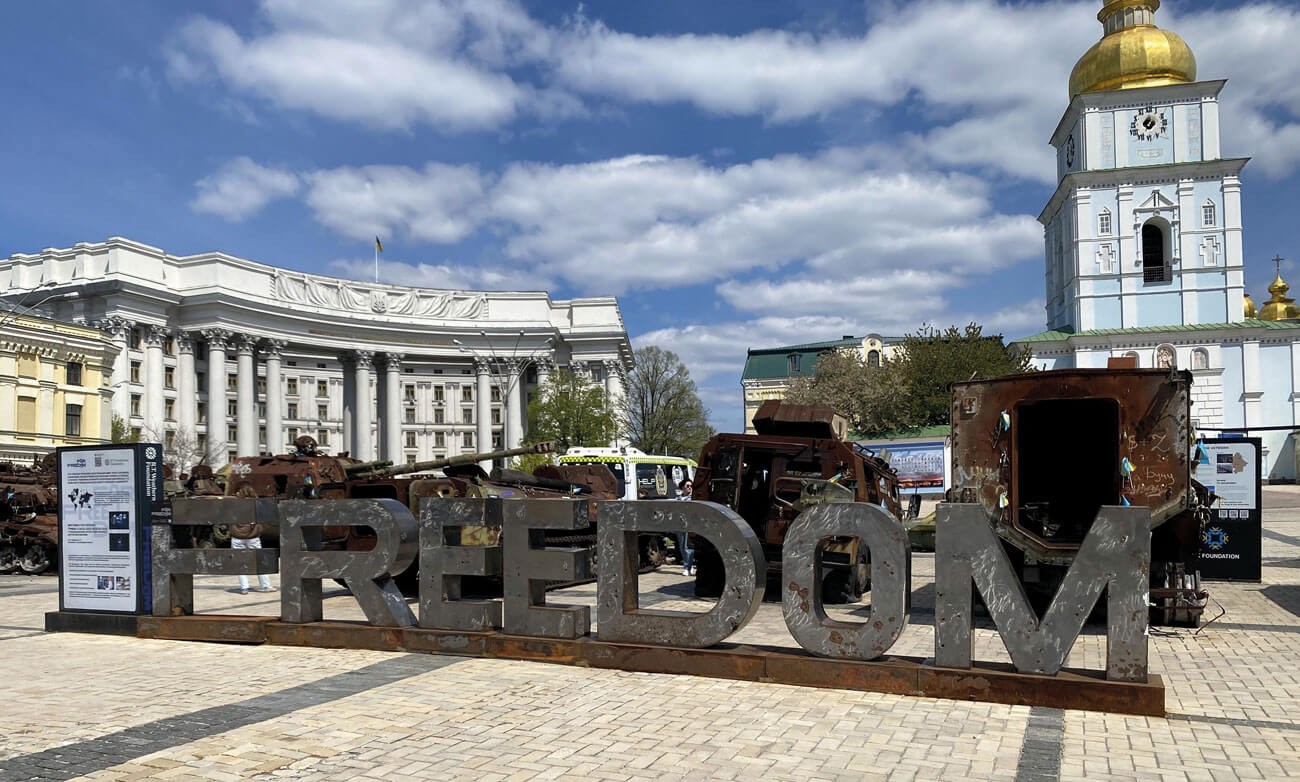
Arrival through Romania
Crossing into Ukraine from Romania feels like entering a different psychological landscape. Near the Siret-Porubne border crossing outside SuceavThe highly a, the movement of aid workers, military personnel, displaced families and returning civilians reveals the long shadow of war. Yet, western Ukraine also demonstrates the paradox of wartime normality. In Chernivtsi, cafés remain open, universities function and hospitals continue elective care whenever possible. At the same time, the city has absorbed large numbers of internally displaced people from eastern and southern Ukraine, placing additional pressure on already strained healthcare systems.
Physicians repeatedly described the burden not as dramatic, but cumulative. Colleagues have relocated abroad, residents have entered military service, and departments often function with significantly reduced staff. Doctors compensate by working longer hours and taking additional shifts, creating chronic fatigue that has gradually become normalised.
Several physicians emphasised the central role of women doctors in maintaining medical services. Because women are not subject to the same mandatory military mobilisation as men, female ENT physicians now form the backbone of outpatient clinics and hospital departments. Multiple doctors remarked that without them, many services would struggle to remain operational.
One physician summarised the situation succinctly: “The problem is not only the missile strike. The problem is the years that follow.”
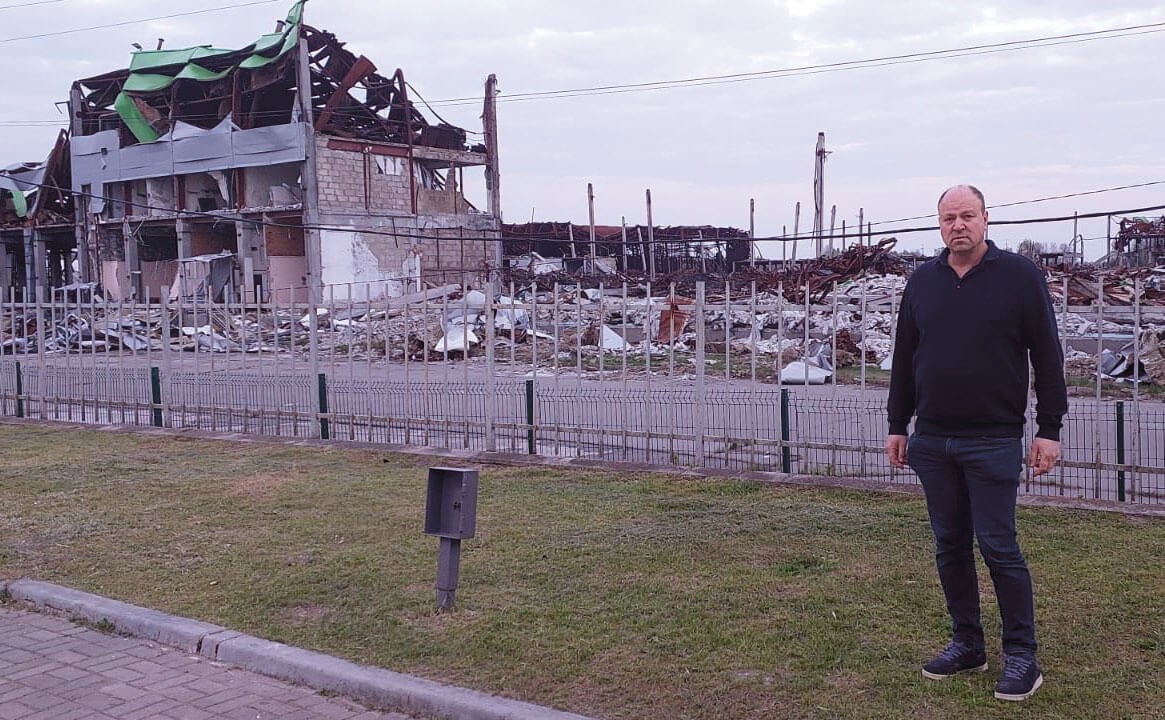
The author stands before the ruins of a heavily damaged industrial facility on the western
approaches to Kyiv, illustrating the destruction caused by the war in Ukraine.
The wartime transformation of ENT practice
To outside observers, ENT medicine may appear peripheral compared with battlefield surgery. In reality, the specialty becomes critically important during war. Blast injuries commonly affect the head and neck. Tympanic membrane rupture, acoustic trauma, facial fractures, airway burns and laryngeal injuries are frequent consequences of explosions. ENT surgeons are involved in airway stabilisation, reconstruction and the management of long-term functional deficits. Doctors in both Chernivtsi and Kyiv described increasing numbers of patients with hearing damage associated with repeated explosions. Some are soldiers returning from the front. Others are civilians exposed to recurrent missile and drone attacks. Chronic tinnitus, vestibular disorders and partial hearing loss have become increasingly common.
"Wartime medicine does not replace routine medicine; it accumulates on top of it"
At the same time, ordinary pathology has not disappeared. Head and neck cancers continue to present. Children still develop chronic otitis. Elderly patients still require tracheostomy care and oncological follow-up. Wartime medicine does not replace routine medicine; it accumulates on top of it. This accumulation creates one of the central tensions faced by Ukrainian physicians: preserving continuity of care while operating in a system repeatedly disrupted by air raid sirens, electricity failures and personnel shortages.
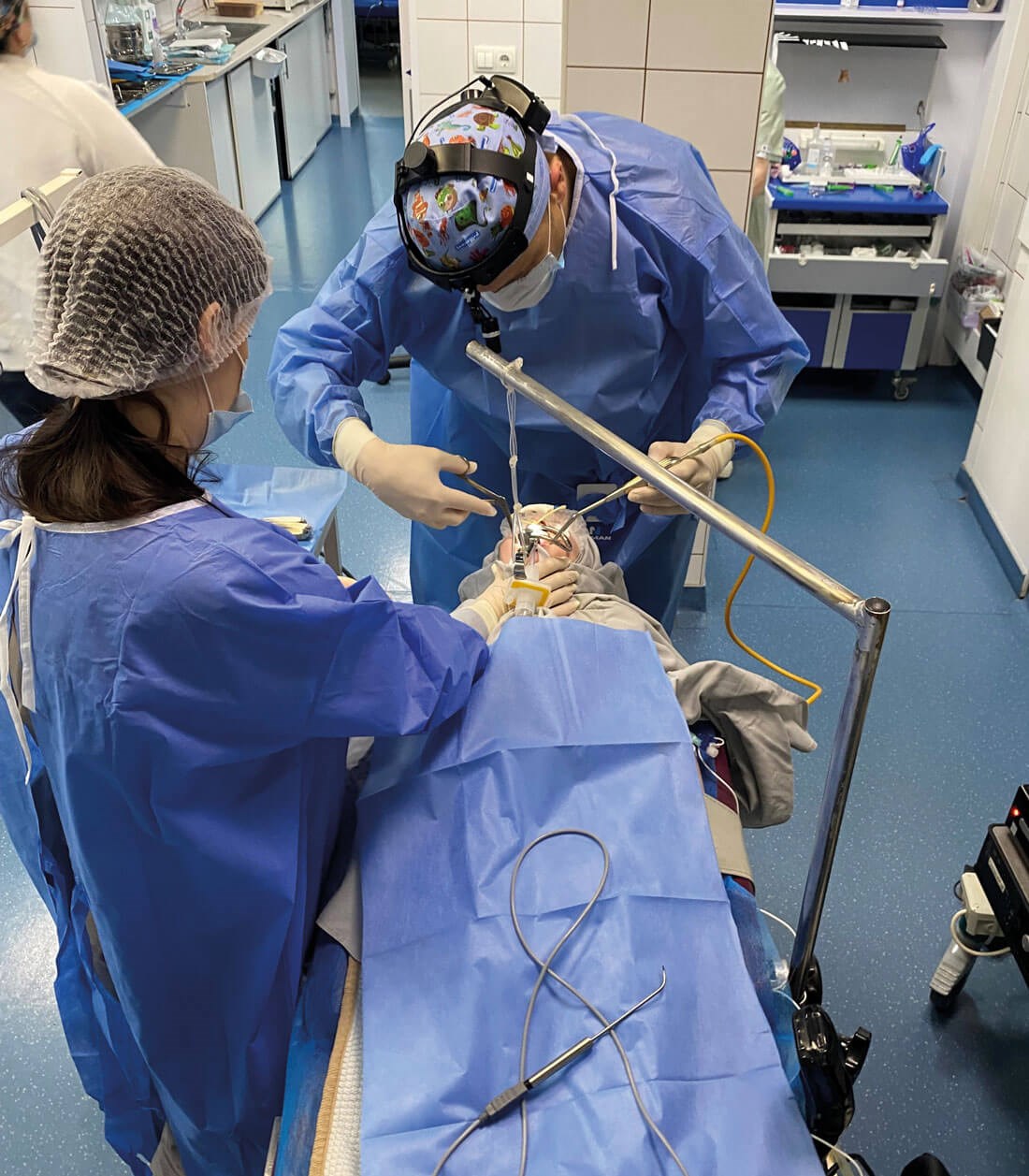
Ukrainian ENT surgeons at work. Behind every operation lies the challenge
of maintaining specialist care in a nation shaped by war.
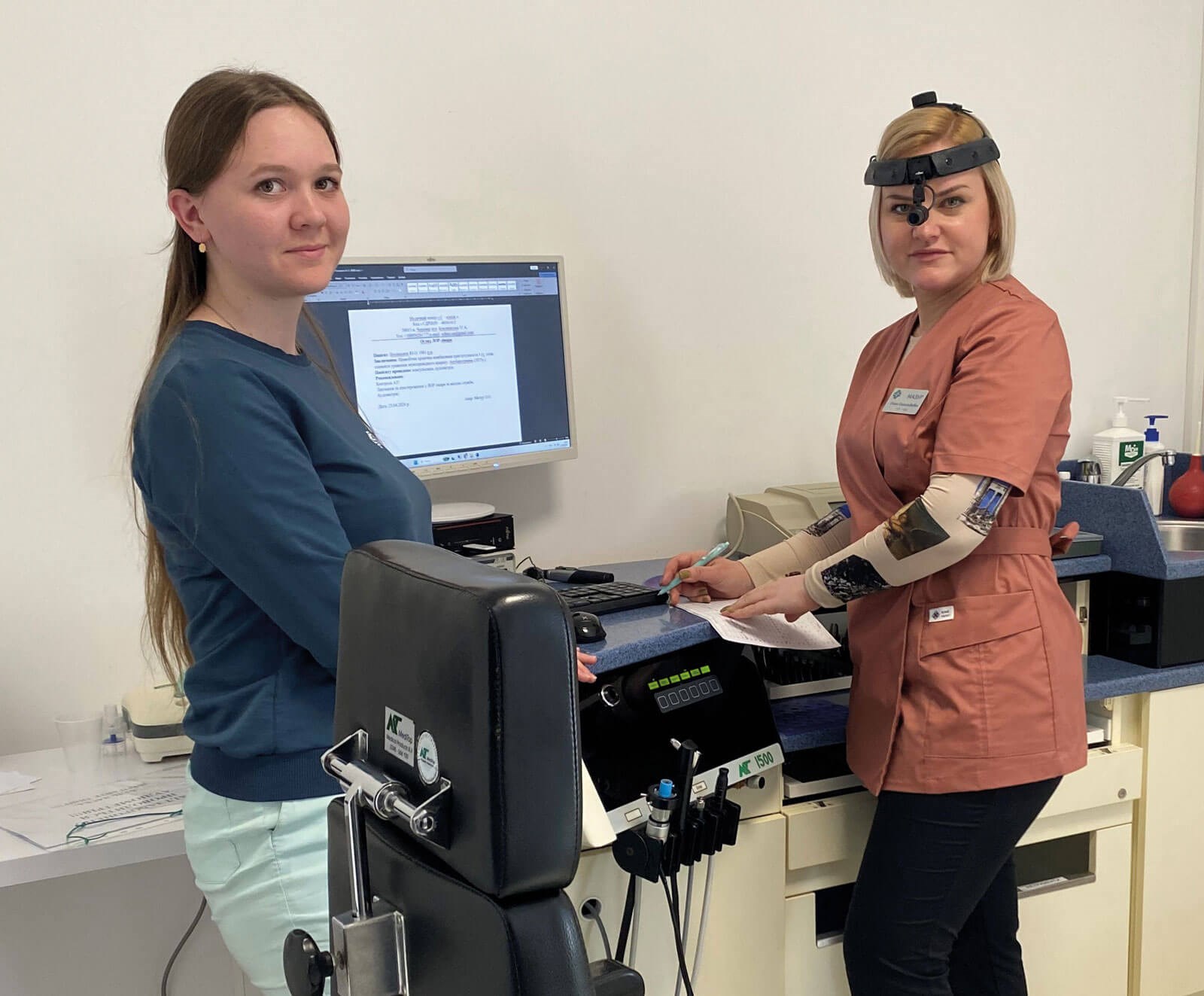
Women healthcare professionals are playing a vital role in sustaining ENT services in Ukraine during wartime.
Interestingly, many doctors emphasised that shortages of medicines are currently less severe than outsiders often assume. Supply chains have adapted over time, and pharmacies and hospitals in major cities generally remain stocked with essential medications. The larger challenge increasingly lies in staffing, infrastructure and maintaining medical equipment.
Hospitals under air raid alerts
In Kyiv, the sound of air raid sirens shapes daily life. Hospitals continue functioning during alerts, but every interruption affects workflow, concentration and surgical planning. Some hospitals have converted basement areas into treatment spaces or temporary shelters.
For surgeons, especially ENT specialists who rely on microscopes, endoscopic systems and delicate instrumentation, the disruptions create enormous practical challenges. Physicians described procedures interrupted by alerts and operations performed under the constant awareness that power outages could occur at any moment.
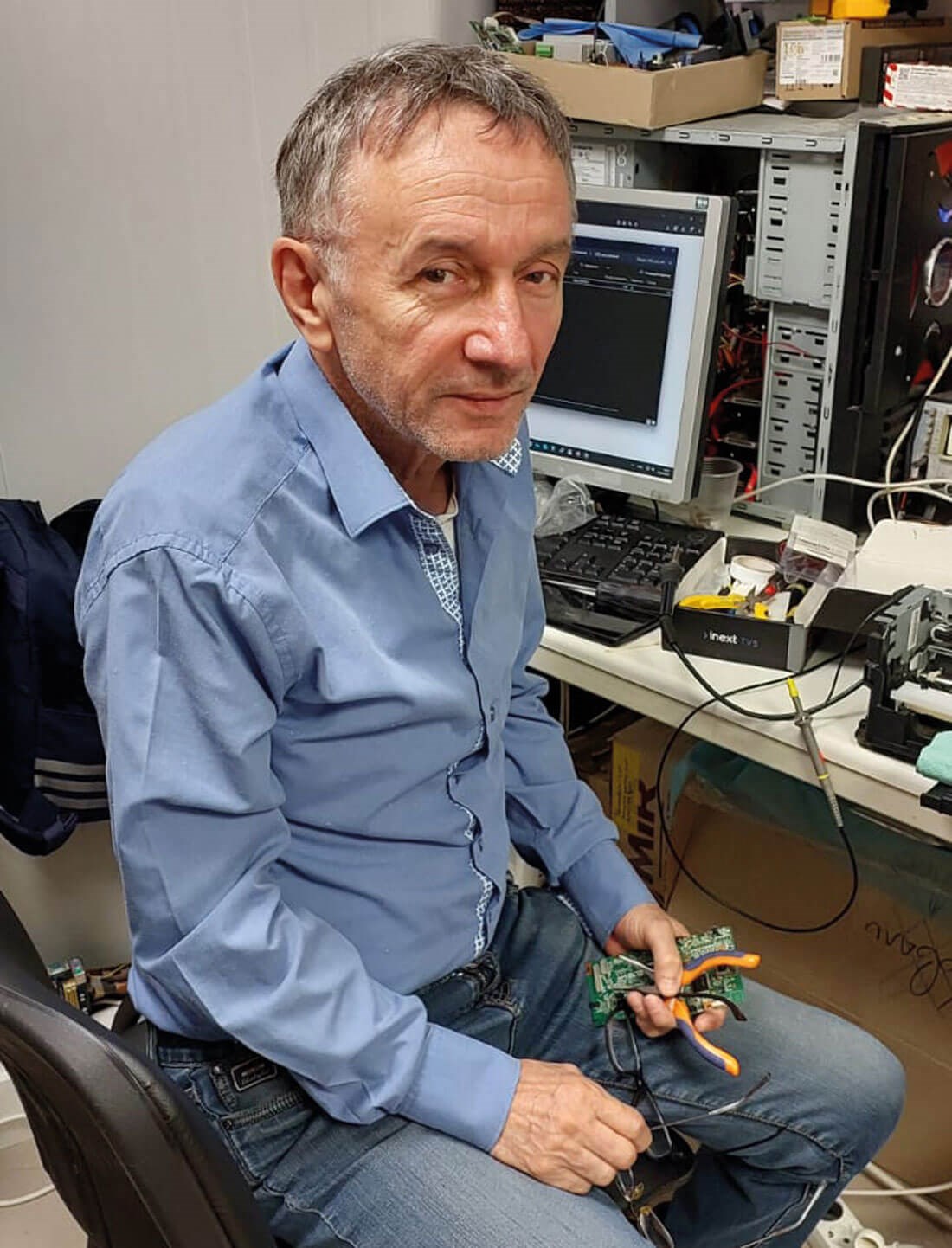
A biomedical engineer, part of a shrinking workforce.
Backup generators have become essential. During attacks on the energy grid, some hospitals operate on generators for hours or even days. Yet maintaining these systems has become a major problem in itself. Engineers and technical staff are in short supply, spare parts can be difficult to obtain, and continuous use places enormous strain on ageing infrastructure. Uninterruptible power supplies (UPS) are not just useful alongside backup generators – they are absolutely essential.
Several hospitals described another overlooked consequence of mobilisation: the shortage of biomedical engineers. Many technically trained men between 25 and 60 are serving in the military or working in defence industries, leaving hospitals without sufficient personnel to repair and maintain sophisticated medical equipment. One highly valued engineer has been living in the clinic where he works for several years. He rarely leaves, fearing that, if stopped by the authorities, he could be forcibly conscripted into military service.
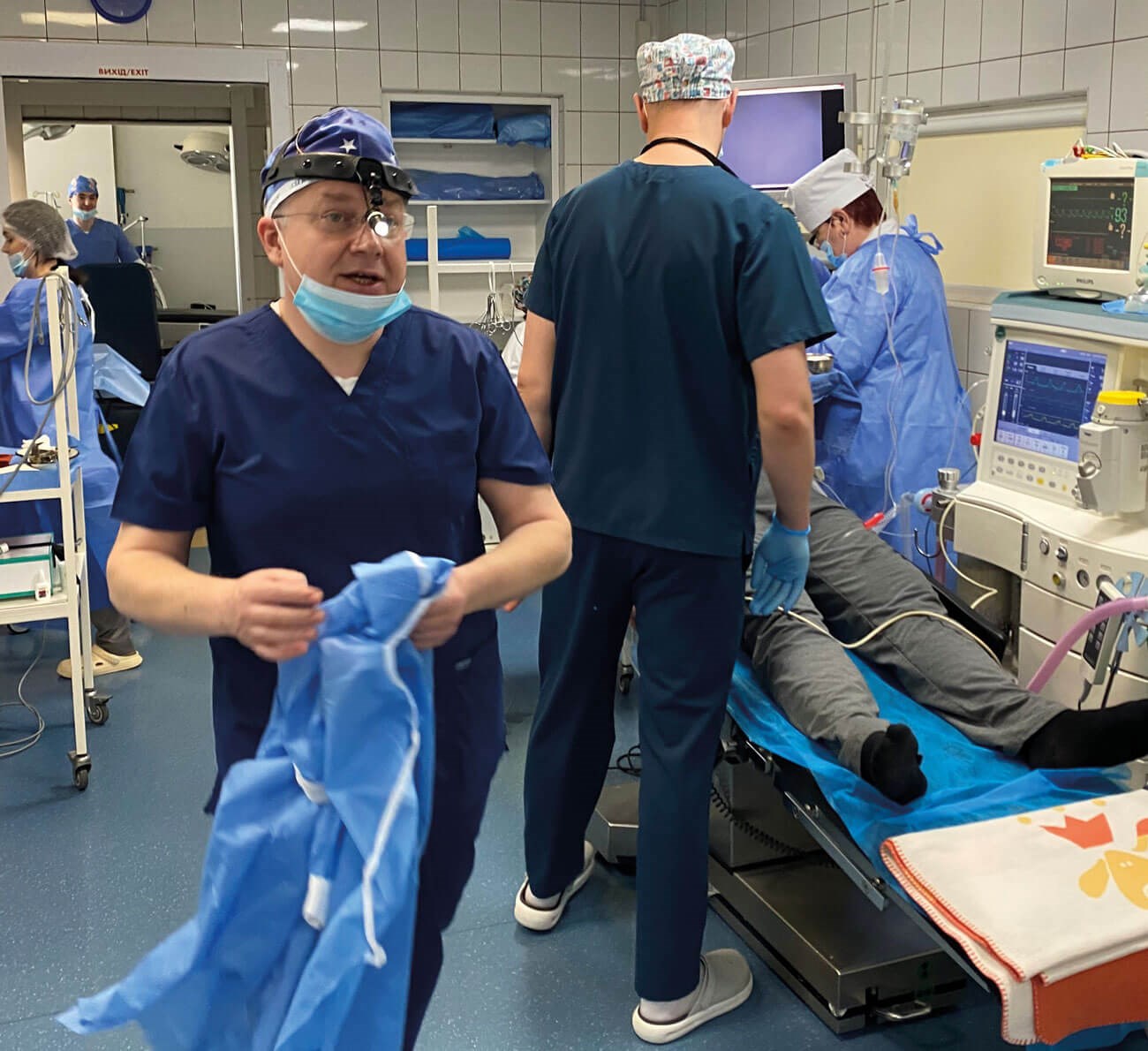
ENT surgeons and theatre staff perform a surgical procedure amid the challenges of war in Ukraine.
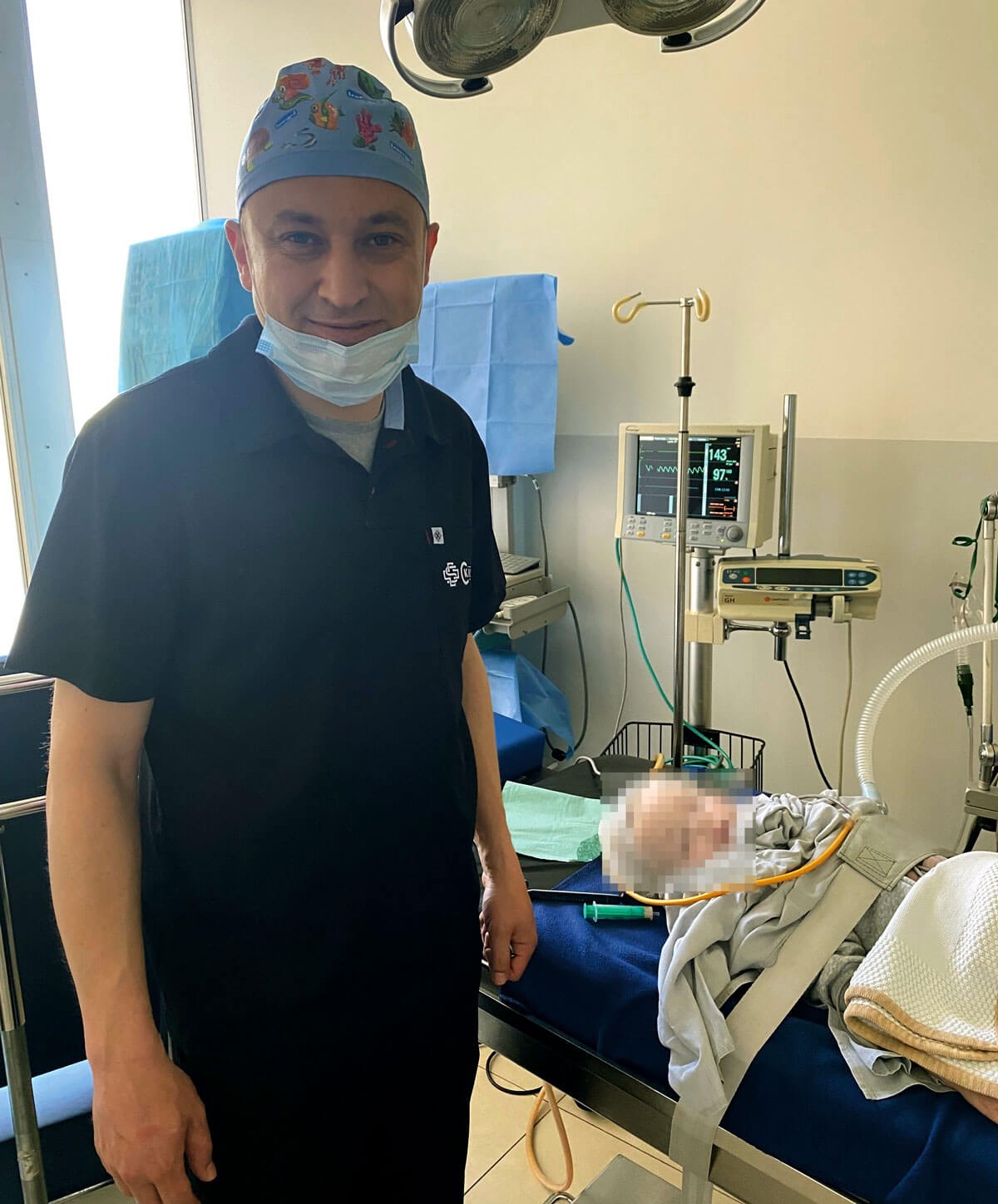
Dr Sergey Spivak in the recovery area after completing surgery on an infant.
Access to pediatric ENT care remains a priority in wartime Ukraine.
For ENT departments, this has direct consequences. Operating microscopes, endoscopic towers, imaging systems and surgical instruments require constant servicing. Physicians explained that keeping existing equipment operational has become nearly as important as obtaining new technology. One surgeon explained that every operation now requires a second layer of planning: not only how to perform the procedure, but how to continue safely if electricity fails or an air raid siren interrupts the surgery.
The strain also affects medical education. Residents experience interrupted training, fewer elective procedures and uncertainty about long-term career development. Some have left the country temporarily; others have joined military medical units. Senior physicians increasingly shoulder both clinical and educational responsibilities in understaffed departments.
Emotional fatigue among physicians
Perhaps the most striking observation throughout the journey was not fear, but fatigue. Many Ukrainian doctors no longer describe war in dramatic language. Instead, they speak about adaptation. Air raid sirens become background noise. Missile attacks become scheduling complications. Exhaustion becomes ordinary.
"Air raid sirens become background noise. Missile attacks become scheduling complications. Exhaustion becomes ordinary"
Several physicians admitted that both civilians and medical staff have gradually become desensitised to repeated alerts. While hospitals still follow formal safety protocols, years of constant interruptions have altered behaviour. Consultations, ward rounds and even surgical preparation often continue while sirens sound in the background. This adaptation carries psychological risks. Physicians acknowledged symptoms associated with burnout: chronic sleep disruption, emotional detachment, reduced concentration and difficulty separating professional responsibilities from personal anxiety. Yet few feel able to step away from work. Wartime medicine creates a moral environment in which absence can feel unacceptable. Doctors continue working not only because patients require care, but because maintaining healthcare itself becomes a form of national continuity.
The emotional burden is compounded by the dual identities many physicians now carry. Some have relatives serving at the front. Others have lost colleagues or family members. Doctors move constantly between professional duty and personal vulnerability. Despite this, there remains a remarkable commitment to maintaining professional standards. Continuing surgeries, teaching residents and following evidence-based practice becomes a way of resisting the disorder imposed by war.
Resource limitations and long-term consequences
Resource limitations create ethical pressures that are difficult to appreciate from outside the country. Physicians described balancing trauma care against elective but necessary procedures. Delayed cancer diagnostics remain a major concern. Preventive care often receives less attention when healthcare systems operate under continuous strain and staffing shortages.
ENT specialists also face difficult decisions regarding reconstructive surgery and long-term rehabilitation. Hearing restoration, facial nerve reconstruction and prolonged postoperative follow-up may become harder to provide consistently under unstable conditions.
Several doctors expressed concern about the future burden of undertreated disease. The consequences of wartime disruption may persist long after active conflict diminishes.
The effects of war on otorhinolaryngology extend far beyond acute trauma. They include delayed oncology, chronic hearing disability, interrupted paediatric care, disrupted training pathways, equipment deterioration and physician attrition. The full impact will unfold over decades.
Conclusion
Travelling from the Romanian border through Chernivtsi to Kyiv revealed a healthcare system under constant strain, yet still functioning through sheer determination and adaptation.
For ENT physicians, the war has transformed everyday clinical practice into a balance between emergency response and continuity of care. They manage blast injuries while continuing cancer follow-up. They perform surgery during air raid alerts. They work through staff shortages, power outages and chronic exhaustion while trying to preserve professional standards.
What stands out most is not only resilience, but persistence. Ukraine’s hospitals are not merely sites of emergency medicine. They are institutions attempting to preserve scientific continuity, clinical standards and human dignity under conditions that repeatedly threaten all three.
For the international ENT community, the experience of Ukrainian colleagues should prompt both solidarity and reflection. War does not only destroy infrastructure. It reshapes medical practice, professional identity and patient care long after the sirens fall silent.
Declaration of competing interests: None declared.