You searched for "prevention"
TSESI 2023 scholarship applications now open
The Tarabichi Stammberger Ear & Sinus Institute (TSESI ) is accepting scholarship applications until 31 December 2022. The scholarship programme is designed to train young otolaryngologists in basic-to-advanced endoscopic ear and sinus surgical techniques. It puts a special emphasis on...
Cochlear Implants: Principles & Practices
Cochlear implants: Principles & Practices describes the scientific foundations and the practices that underlie cochlear implants. This second edition has an expanded list of contributors and addresses the broad range of related topics that impact the field. The book addresses...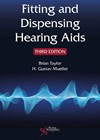
Fitting and Dispensing Hearing Aids – Third Edition
Fitting and Dispensing Hearing Aids – Third Edition is intended primarily as a course book for “non‑audiologists or undergraduate audiology students who have yet to fit their first pair of hearing aids”. It is aimed primarily at students in the...
GORD and CRS – is there an association?
This international collaboration assessed 32 papers which had published original data on the experimental, diagnostic, treatment or prognostic association between GORD and CRS. The study aims to systematically review the evidence for a role of GORD in CRS. Case control,...
To drain or not to drain
These two separate papers neatly tie together the same ideas. The first, a retrospective study of 107 patients and 116 procedures over a 10-year period who underwent a CSF leak repair, 82.2% without a lumbar drain and 17.8% with. The...
Effectiveness of oral pressure therapy in obstructive sleep apnoea: a systematic analysis
Oral pressure therapy (OPT) is a relatively new form of therapy for obstructive sleep apnoea (OSA). Paradoxically it seems to work even though it creates a vacuum in the oral cavity as opposed to the gold standard of continuous positive...
Factors affecting hearing aid recommendations
There is a wide variety of hearing instruments available to the hearing impaired. Hearing care professionals are often confronted with making decisions on which to recommend based on audiometric and non-audiometric parameters (e.g. vision, manual dexterity and vanity). The factors...
Precautions to be taken in cosmetic facial surgery
In this comprehensive write-up on precautionary measures to be taken when doing cosmetic surgery on our patients, the authors begin by emphasising that facial plastic surgery is no longer limited to celebrities and the privileged. It has extended into everyday...
Long-term voice outcomes following transoral laser surgery versus radiotherapy for early laryngeal cancers
The oncological outcomes of transoral laser microsurgery (TOLM) for early laryngeal cancers are well-known to be very similar to radiation therapy (RT). The functional outcomes associated with each treatment modality are therefore of significant interest. This study is reported to...
Transmastoid facial nerve decompression for persistent traumatic facial nerve paralysis
Facial nerve paralysis (FNP) can occur following trauma, with a small number of these patients requiring facial nerve decompression (FND) to aid recovery. The authors shared their experience in decompressing the facial nerve for persistent severe FNP via a transmastoid...
Non-autologous graft material in paediatric tympanoplasty – is it as good as temporalis fascia and is it cost-effective?
This retrospective case review looks at the experience of a single unit using a variety of autologous (temporalis fascia, n=292) and non-autologous graft material, n=241 (alloderm (human dermis), biodesign (porcine submucosa, $170-$255) and tutoplast (human pericardium, $350). The average patient...