
You searched for "communication"
EROC 2025 travel scholarships and video competition
Submissions are now open for two awards being run in conjunction with the 14th Emirates Otorhinolaryngology Audiology Swallowing and Communication Disorders Congress (EROC 2025).The Veterans Hearing Fund
Dawn Bramham introduces us to the newly launched Veterans Hearing Fund (VHF). This organisation aims to improve the lives of military personnel with hearing loss by providing access to technologies, services and bespoke rehabilitation that are not routinely available via...
IFTTT.com: a recipe for success with hearing aids?
Technology simplifies our lives: agree or disagree? For me, the answer to that statement can vary quite a bit throughout any given day. As much as I am now able to communicate, check my bank account, share photos, and find...
Patient-reported outcome measures: what do the people say?
Patient-reported outcome measures (PROMs) assess and quantify health outcomes from the patient’s perspective. Defining these questionnaires as outcomes indicates that they are psychometrically sensitive to change. This article describes three PROMS: namely the Patient Reported Outcome Measurement Information System (PROMIS),...Cognitive spare capacity: what is it and why does it matter?
Cognition refers to thinking and memory. So why would cognition be a useful concept for ENTs and audiologists? Audition provides our main channel of communication and when we speak to each other, we want to exchange thoughts and remember what...Remote hearing aid fittings and maintenance – exploring applications in Africa
Introduction Technology and connectivity are allowing audiological services to be provided in novel ways. The field of telehealth, although firmly established over the past two decades, is buoyed by the continued and rapid advances in information and communication technologies. Remote...Evidence based practice in paediatric audiology
Audiology, like most of the health sciences professions, has been working on integrating evidence-based practice principles since the mid-1990s [1]. Professional organisations and regulatory colleges have produced evidence-based clinical practice guidelines, disseminated them to audiologists and collaborated with practitioners to...From the editor May/Jun 2024
Declan Costello, MA, MBBS, FRCS(ORL-HNS),Consultant Ear, Nose and Throat Surgeon, Wexham Park Hospital, Slough, Berkshire, UK. E: d.costello@nhs.netTW / X: @Voicedoctor_uk One of the privileges of editing this magazine is interviewing senior figures within our specialty; so, it was wonderful...
No soup for you…! Early identification of postoperative perforation increases the success of conservative management
Iatrogenic perforation of the hypopharynx or cervical oesophagus is a well-recognised life-threatening complication. Previous studies have demonstrated that conservative management with broad-spectrum antibiotics and withholding oral feeding may avoid morbidity associated with surgical repair. This study addresses when conservative management...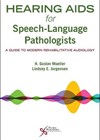
Hearing Aids for Speech-Language Pathologists: a Guide to Modern Rehabilitative Audiology
This is a book of two parts. The first six chapters are not pitched at speech language pathologists (SLP), at least not for those in typical practice in the UK. This section of the book is appropriate to experienced audiologists...NEW: Simple Yet Powerful Hearing Amplifier
BeHear® SMARTO provides out-of-the-box hearing amplification for people with mild to severe hearing loss.


