You searched for "complications"

A new criterion for diagnosing chronic tonsillitis?
It is essential to establish the diagnosis of recurrent tonsillitis in patients undergoing tonsillectomy. This is based mainly on history which itself can be inaccurate and is supported by clinical findings which are not truly specific. There seems to be...Developmental stuttering: a speech-motor impairment with sensory aspects
In treating patients who stutter, understanding the effects of sensory input (i.e. auditory input) can help to direct therapeutic approaches. Sensory processing has been identified as a contributory factor in several diagnoses, notably autism and ADHD [1], however it has...
Contemporary Rhinology Science and Practice
Contemporary Rhinology Science and Practice is an excellent textbook that provides a comprehensive and up-to-date approach to various rhinology and skull base conditions. This text expertly integrates both applied science and clinical aspects, making it an invaluable resource for practitioners...
Using evidence and international consensus to guide treatment of thyroid nodules
The authors of this practical review paper highlight a growing issue within thyroid surgery, where high-quality ultrasound has increased the detection of subclinical nodules: what do we do with the patient presenting with an ‘incidental’ thyroid nodule? This has both...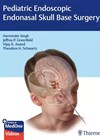
Pediatric Endoscopic Endonasal Skull Base Surgery
Published in 2020, this book, edited by professors of neurosurgery and otolaryngology, approaches the narrow field of paediatric endoscopic skull base surgery with a wealth of knowledge and expertise that the authors have achieved practising in adult and paediatric joint...
The middle way: treating idiopathic facial nerve palsy
Whilst the causes of recurrent facial nerve palsy are numerous, in many cases it may be idiopathic. There is no clear consensus on treatment of this condition and conservative management alone may condemn patients to gradually worsening facial nerve function...
Scalp reconstruction a new algorithm
Reconstruction of the scalp after acquired defects remains a common challenge for the reconstructive surgeon, especially in light of a history of radiation to the area. Wound healing by secondary intention or with a wound vacuum assisted closure are viable...
Measuring the ‘impact’ of preoperative immunonutrition
Using preoperative nutritional supplements as part of ‘enhanced recovery’ in surgical patients is not a new concept. This interesting paper looks at the latest development in optimising patients undergoing head and neck oncological surgery. Immunonutrition (Nestle’s ‘Oral Impact’ in this...
Factors affecting the occurrence of salivary fistula after total laryngectomy
It is generally believed that patients should be fed by nasogastric tube for 7-10 days after undergoing total laryngectomy or laryngopharyngectomy to avoid the occurrence of post-operative salivary fistula. This study challenges this belief and looks into various factors that...
Cerebrospinal fluid leaks after vestibular schwannoma surgery
This study analyses 30-day readmission data after vestibular schwannoma surgery using a multicentre longitudinal State of California dataset. The authors studied risk factors, and timing of readmission in 6820 patients over 15 years. Of these, 490 readmissions were reported for...
Vascularised tissue in salvage total laryngectomy
Chemoradiation (CRT) has become the mainstay for locally advanced laryngeal cancer since the RTOG 91-11 trial. Unfortunately there is still a substantial demand for salvage laryngectomies, which have a higher complication rate, the most notable being pharyngocutaneous fistula (PCF). Several...