Cochlear implants are one of ENT’s great success stories. But for some families, the decision to implant is far more complex than audiology alone.
When we talk about cochlear implantation, we often lead with the science. Candidacy criteria, age at activation and spoken language outcomes are all metrics that dominate clinical discussions. But in the consulting room, families bring something else with them: identity. And for Deaf families in particular, the question of whether to implant a child can sit at the intersection of medicine, culture and belonging in ways that many clinicians are often not trained to navigate.
A distinction worth knowing, and one that is rarely taught in medical curricula, is the difference between deaf with a lowercase ‘d’ and Deaf with a capital ‘D’. The former describes an audiological condition. The latter describes a cultural identity: a community united by sign language, shared values and a way of experiencing the world that is visual rather than phonocentric (centred on spoken language). For many Deaf individuals, deafness is not a deficit to be corrected; it is who they are.
This matters clinically because it determines how families experience that conversation with us. Research examining how cochlear implants (CIs) were portrayed in Australian newspapers found that 80% of articles framed CIs as straightforwardly beneficial, and that the Deaf community’s perspective was largely absent from that coverage [1]. The medical model of deafness, which positions hearing loss as an impairment requiring intervention, dominates public discussions. But the cultural model, widely held within the Deaf community, sees deafness as a different way of being rather than a broken version of hearing. When a clinician enters that conversation without awareness of this framework, there becomes a real risk of a breakdown in trust.
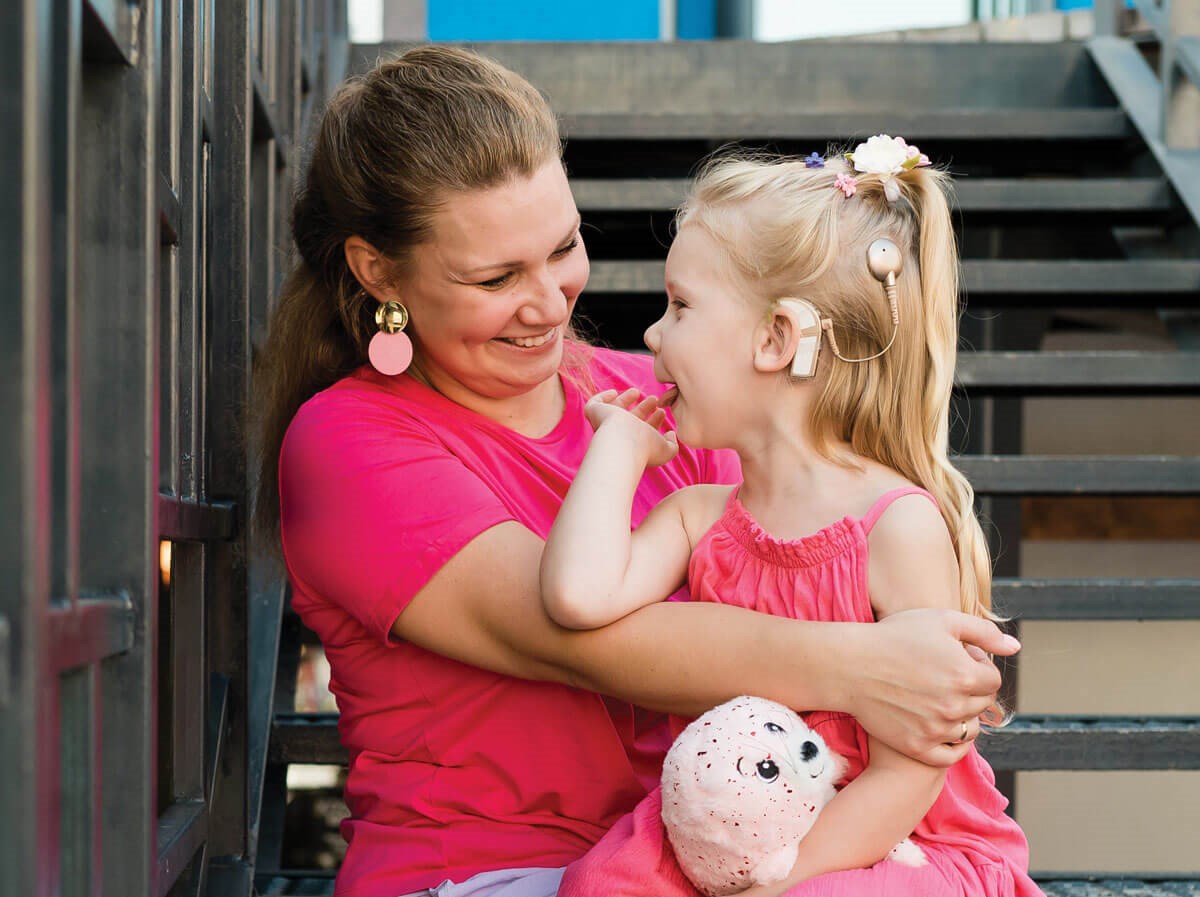
The implications are greatest in paediatric medicine. CIs are offered to children as young as nine months, and evidence strongly supports such early implantation. Children implanted before 18 months show the greatest gains in spoken language development and quality of life outcomes. But that urgency places the decision almost completely in parents’ hands, and Deaf parents in particular often approach it differently. Research by Vieira and colleagues found that Deaf parents are more likely to prioritise their child’s connection to Deaf culture over audiological intervention, and are more likely to believe that CI and Deaf identity cannot comfortably coexist [2]. This is not a failure of understanding. It is an entirely understandable worldview, and one that clinicians should thoughtfully engage with rather than dismiss.
Even for children who do receive implants, the identity picture post-implantation is rarely straightforward. Many young CI users report feeling that they do not fully belong to either the Deaf or the hearing world. Some develop what researchers describe as a bicultural identity, moving fluidly between both communities, which is associated with more positive outcomes [3]. But others, especially in adolescence, experience a genuine identity conflict [3]. Social media compounds this: CIs are frequently portrayed online as a complete transformation from deaf to hearing, when the reality is often more nuanced and sometimes a lot more isolating.
What does this mean for those of us in ENT and audiology? The practical takeaway is not that we should second-guess the clinical case for cochlear implantation. The evidence for its benefits is clearly robust. It is that cultural competence needs to sit alongside audiological expertise in how we have these conversations. A 2025 report by RNID and SignHealth found that of those who need a communication support professional at appointments, only 7% say this is always provided [4]. More shockingly, 70% of deaf patients have never been asked about their communication needs at all, despite this being a legal requirement under the NHS Accessible Information Standard since 2016. These are not just inconveniences, they are patient safety failures.
BSL interpreters are essential, but they are not enough. Understanding that a Deaf patient or family may hold a fundamentally different model of what deafness means, and that this is a legitimate cultural position rather than a barrier to overcome, is a different skill entirely. It is one that medical training has been slow to address.
We are taught to offer the best available intervention. Yet, we are taught less often to ask what that intervention means to the patient sitting in front of us. For Deaf families, that question is not an afterthought, it is a central part of the conversation.
References
1. Power D. Models of deafness: cochlear implants in the Australian daily press. J Deaf Stud Deaf Educ 2005;10(4):451–9.
2. Vieira SS, Bevilacqua MC, Ferreira NMLA, Dupas G. Cochlear implant: the complexity involved in the decision making process by the family. Rev Latino-Am Enfermagem 2014;22(3):415–24.
3. Chapman M, Dammeyer J. The relationship between cochlear implants and deaf identity. Am Ann Deaf 2017;162(4):319–32.
4. RNID and SignHealth. Still Ignored: The Fight for Accessible Healthcare. 2025 Policy Report England. RNID; 2025.
Declaration of competing interests: None declared.