From validated assessment tools to new insights into neural processing, recent research is redefining the audiologist’s role in understanding misophonia.
Misophonia – literally “hatred of sound” – is a condition marked by disproportionate emotional and physiological reactions to specific trigger sounds such as chewing, breathing, or lip-smacking [1]. While a 2019 feature in ENT & Audiology News explored the long-running debate over whether misophonia is a psychological or physiological disorder [2], the past several years have brought considerable progress on a different front: how audiologists can assess, characterise and manage the condition using evidence-based tools.
A global and growing concern
Prevalence estimates for misophonia vary widely, ranging from roughly 4.6% to 54% across international studies, reflecting both genuine population differences and the field’s ongoing struggle to standardise diagnostic criteria [3]. This wide variability, spanning single digits to nearly half of some sampled populations, highlights that current prevalence figures likely reflect differences in screening tools and study populations as much as true underlying rates [3]. Misophonia also frequently co-occurs with hyperacusis and tinnitus, as well as anxiety and mood disorders, suggesting shared underlying mechanisms that remain incompletely understood.
What recent audiological research shows
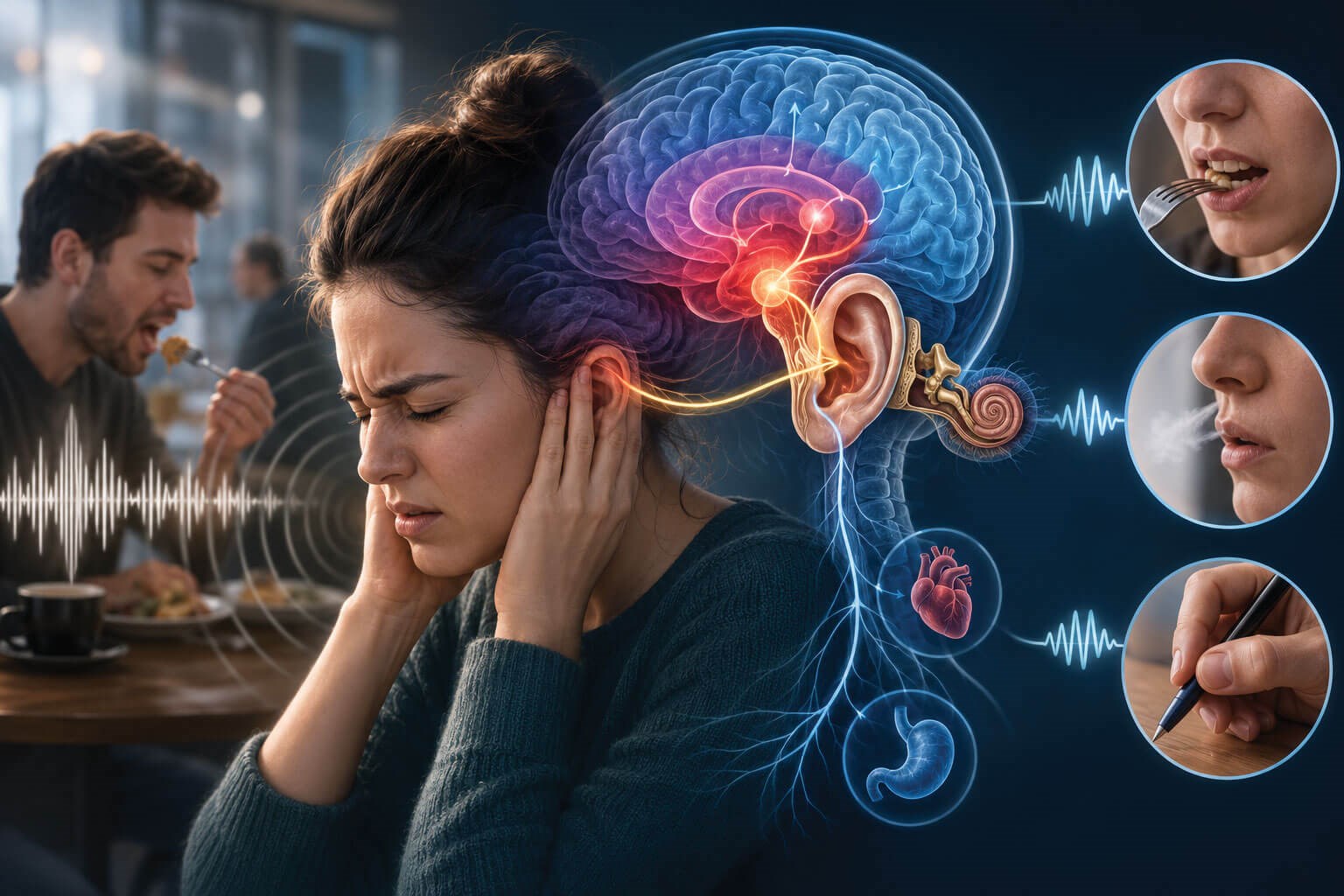
A consistent audiological finding is that individuals with misophonia typically show normal pure-tone thresholds and normal cochlear and efferent auditory system function, indicating that the condition does not arise from peripheral hearing loss [4]. Where differences do emerge is further along the auditory pathway. Reduced uncomfortable loudness levels are commonly reported, suggesting overlapping features with hyperacusis. In addition, multichannel auditory late latency response studies have demonstrated reduced N1 amplitudes and a shift in scalp distribution from fronto-central to centro-parietal regions in individuals with misophonia, supporting the presence of altered cortical sound processing [4]. Together, these findings support a growing consensus that misophonia involves disrupted interactions between auditory, limbic and autonomic systems, rather than a purely psychological overreaction to sound [5].
The push toward standardised assessment
One of the most consequential recent developments has been the emergence of validated assessment tools, addressing a long-standing gap in which clinicians had to rely on informal case history alone. Structured, symptom-oriented questionnaires now offer clinicians standardised ways to quantify symptom severity and track outcomes over time [5]. These instruments matter for audiologists specifically because they create a common, replicable language for describing patient experience, something previous case-report-heavy literature largely lacked [5]. Their continued validation across diverse populations and languages remains an active area of work, and is essential if misophonia research is to move beyond small, disparate samples toward larger, comparable multi-centre datasets.
Where the field still falls short
Despite this progress, misophonia has no formal classification in either the DSM-5 or ICD-11, which continues to complicate diagnosis, insurance recognition and treatment access for patients [5]. From an audiological standpoint specifically, there remains no standardised clinical protocol for assessment, and few audiologists receive structured training in recognising or managing the condition [5]. This gap leaves many patients without a clear clinical pathway, often bouncing between specialties before receiving an accurate explanation of their symptoms.
Treatment directions worth watching
Treatment options remain limited but are maturing. Audiological approaches adapted from tinnitus care, particularly counselling combined with structured sound therapy in the style of Tinnitus Retraining Therapy, have shown early promise in helping patients habituate to trigger sounds [6].Cognitive behavioural therapy targeting the emotional and behavioural components of misophonic reactions is increasingly used alongside audiological input, and practical strategies such as noise-cancelling technology remain popular with patients, even where formal evidence is still developing [6]. None of these approaches is universally effective, which is precisely why continued outcome-focused research matters.
Future directions
The next phase of misophonia research will likely be defined by three priorities: wider adoption and cross-cultural validation of standardised assessment tools, larger multi-centre studies that move beyond small case series, and clearer clinical guidelines defining exactly what audiologists should assess and how. Progress on these fronts would give audiologists a much stronger evidence base for confidently taking a lead role in identifying and managing misophonia, rather than deferring the condition entirely to mental health colleagues.
Conclusions
Misophonia sits at the intersection of audiology, neuroscience and psychology, and the past several years have moved the field meaningfully forward from vague case descriptions toward validated tools and a clearer neurophysiological picture. For audiologists, this growing evidence base offers a genuine opportunity to play a more proactive, well-defined role in assessment and management, provided training and standardised protocols continue to catch up with the science.
References
1. Jastreboff MM, Jastreboff PJ. Components of decreased sound tolerance: Hyperacusis, misophonia, phonophobia. Audiology On-Line 2001;2:5–7.
2. Brout JJ. Misophonia – a psychological disorder? ENT & Audiology News 2019;28(2):48–9.
3. Gowda V, Prabhu P. Prevalence of misophonia in adolescents and adults across the globe: a systematic review. Indian J Otolaryngol Head Neck Surg 2024;76(5):4614–22.
4. Karupaiah K, Trinesh R, Uppunda AK, Prabhu P. Multichannel auditory cortical responses in misophonia: A neurophysiological investigation. Hear Res 2025;468:109458.
5. Rosenthal MZ, Campbell J, Altimus C. Advances in understanding the nature and features of misophonia. Front Neurosci 2023;17:1267682.
6. Aryal S, Prabhu P. Auditory cortical functioning in individuals with misophonia: An electrophysiological investigation. Eur Arch Otorhinolaryngol 2024;281(5):2259–73.
Declaration of competing interests: None declared.