
Patients’ perspectives can be very powerful in our understanding of their experience of illness and its treatment.
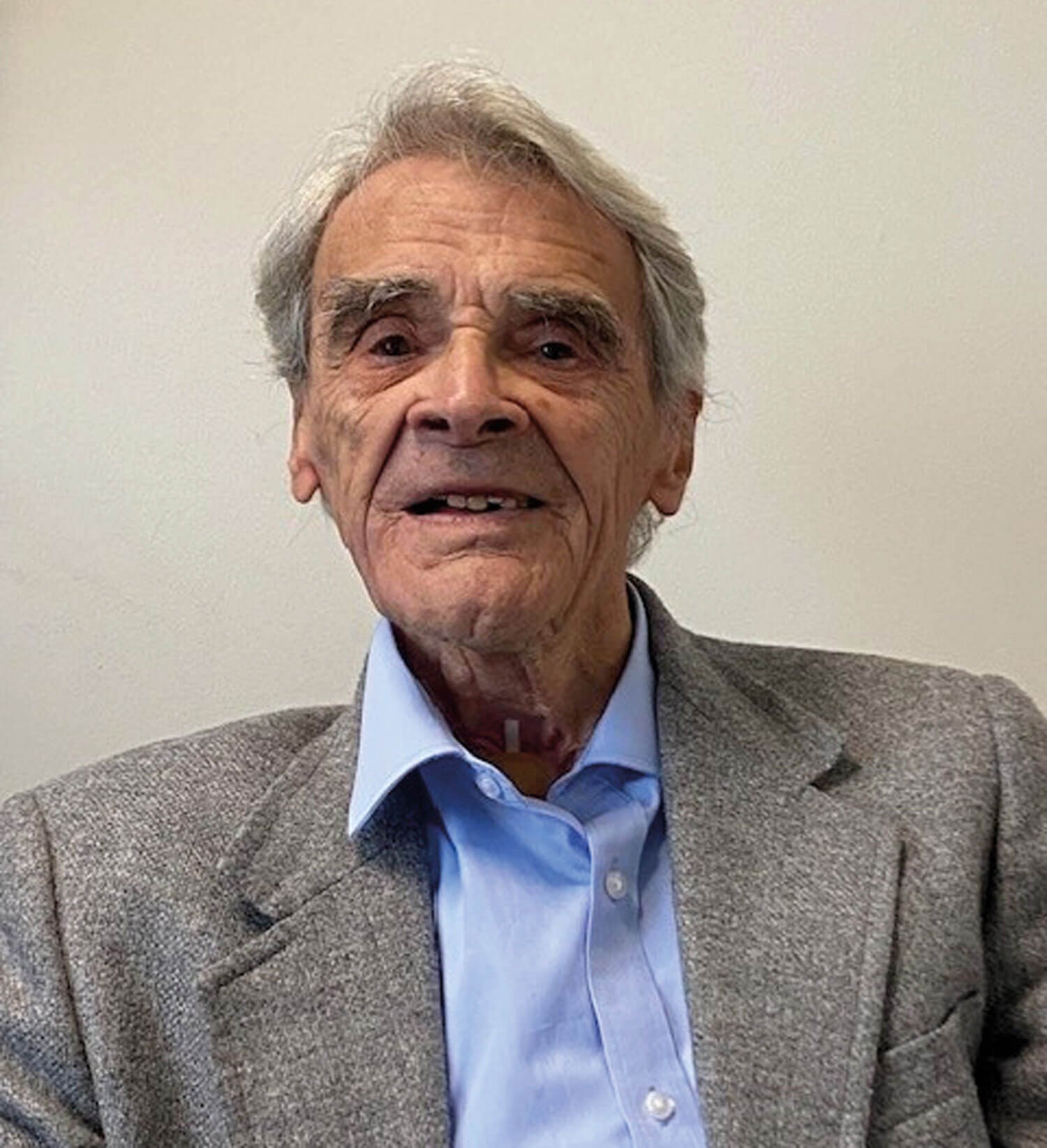
Denis Collings.
In the UK, there are more than 2000 new cases of laryngeal cancer each year [1]. In 1988, at the age of 58 years old, Mr Denis Collings was diagnosed with laryngeal cancer and underwent a total laryngectomy operation at Charing Cross Hospital, London, UK. Shortly after this operation, he underwent a surgical voice restoration procedure to enable him to speak again using a one-way silicon valve inserted into his tracheoesophageal wall. This ‘voice prosthesis’ enables pulmonary air to divert through the valve and vibrate in the pharyngoesophageal tissue as a pseudo voice [2].
"He had a look with the endoscope and said, ‘I don’t like what I see. I’m sorry, I’ve got to take your voice away' "
Mr Collings kindly agreed to reflect upon his last 37 years of living with a permanent tracheal stoma, communicating with a tracheoesophageal voice. In this interview, he provides his insights into his experiences of how healthcare and life in general have changed since his original surgery.
A lot of progress has been made in the detection and management of head and neck cancers in the UK since 1988. Do you recall the circumstances around your diagnosis?
My voice started to change so I went to the doctor, and he sent me to hospital (Princess Margaret Hospital in Swindon). They decided to have a look with an endoscope and, in those days, endoscopy wasn’t very pleasant. I had also developed a node in the neck so they sent me to Churchill Hospital in Oxford. There they did a biopsy on the node and it was confirmed as cancerous. They carried out five weeks of radiotherapy and that did seem to do the trick for three to four months, but then the symptoms returned. So, I went back to the PMH in Swindon and they decided to do a neck dissection (1987). That operation removed the node that was wrapped around the carotid artery but left the voice box, as the surgeon seemed to think it was okay. Unfortunately after another three to four months, the voice problems returned. I then asked for a second opinion as the consultant still couldn’t see any issues. I went to Charing Cross Hospital in London, where my daughter was training as a doctor. I saw a rather remarkable man called Mr Cheeseman – I believe he was the leading surgeon in the UK at the time in surgical voice restoration. He had a look with the endoscope and said, “I don’t like what I see. I’m sorry, I’ve got to take your voice away.” The following week, I had another neck dissection and total laryngectomy. He came to see me the next day and I think he was quite surprised at how well I was looking.
What was your biggest fear about the operation?
Losing my voice. That was my job; I was a teacher.
What was the most enduring memory of your hospital admission?
I had to be fed by a tube which went through the tracheoesophageal puncture. I got some contamination and I was very ill and vomiting. Anyway, it didn’t kill me.
How long did you stay in hospital?
I was in about eight days. My neck was very sore and I had to be fed by the tube at first.
They gave me a DeVilbiss nebuliser which blew warm steam onto my neck – that certainly helped with the pain.
How did your surgery impact your job?
Well, Mr Cheeseman was wonderful to me. I was obviously very upset at losing my voice because that was my life as a teacher. I used to enjoy singing as well, but he came and sat on the bed and said, “I’ll give you a voice back.” I did try to return to teaching, but I wasn’t able to speak as well as I can now. The equipment wasn’t as accomplished as it is now – the baseplates would come off, etc. So, I retired from teaching in 1988.
Did you try a different profession?
No, I actually got quite depressed for about six months. Then I convinced myself that I had to buck my ideas up because I was only 58 years old. In a way, I’m glad I was brought up in an age when you didn’t complain. My grandfather, who was my best pal, used to say, “if you fall over and skin your knees, you get up and forget it. You don’t complain.”
Before the war, people didn’t complain. The idea was that if something bad happened, you made the best of it! It’s the mentality I still have.
What were your family’s reactions?
I had three teenage children. They came to see me after the operation when I couldn’t talk and that really upset them. I convinced them I was going to speak again and, thereafter, they were very supportive and helpful. They knew all the things that could go wrong and they put up with it – and they still put up with me!
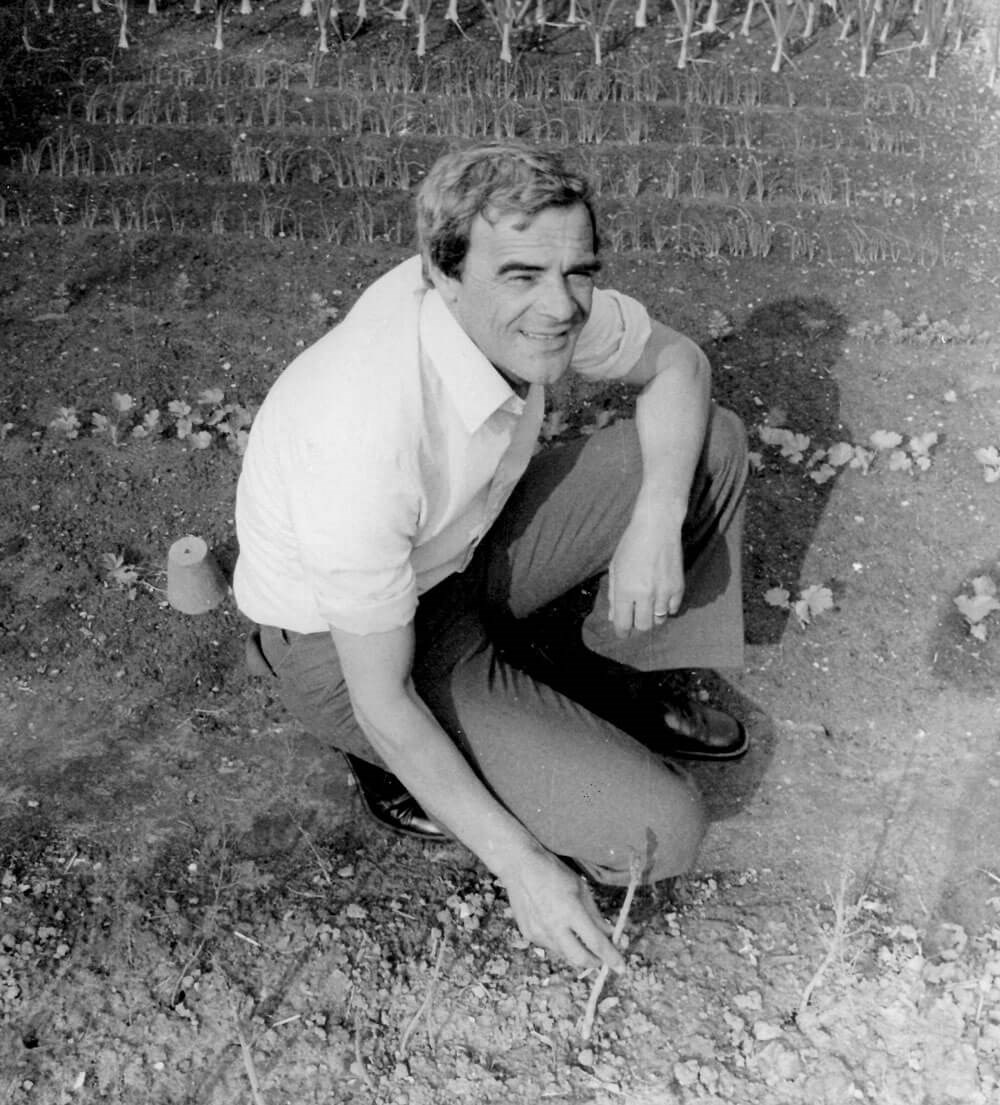
Denis before his laryngectomy.
Were you a swimmer? Did it affect any of your leisure activities?
Yes, I was a swimmer. That was a great disappointment, not to be able to swim anymore. But, like with everything else in life, you can either feel very sad or do something about it.
I ignored the advice, “if you go on a boat and fall overboard, that’s it, you drown”, but it didn’t stop me going fishing. I thought, to hell with that, I’ve never fallen overboard before so I’m going to keep fishing! I also used to walk a lot and just speak to myself because that does help. The more you speak, the better you will speak. I used to talk to my dog who thought I was crazy, but you mustn’t be embarrassed about it, and he got used to it.
Did you join any laryngectomy clubs?
No. Part of the reason was that the only one in existence was in London. It wasn’t very widespread, and Charing Cross did operations for the whole country.
Do you know any other laryngectomy patients?
No, but Mr Cheeseman said once or twice, “Look, I’ve got a very depressed patient I need to operate on. You couldn’t talk to him, could you?”. I used to go to the ward and talk to people, telling them that it wasn’t all bad and that they could speak again.
The equipment available to laryngectomy patients’ recovery has changed over the past few decades. How have these developments helped you?
Oh, they’re much better now. The development of HMEs (heat moisture exchange filters) has certainly lessened the amount of mucus you produce, and gives you a much better breathing regime at night. Trying to breathe at night without a HME was very drying. And there were no hands-free valves in 1988.
"Even though my voice may sound a bit odd, as long as I can express myself, they accept it"
How many different devices for communication after surgery have you experienced? What are your memories of them?
I was offered an electrolarynx but I sounded like a Doctor Who Dalek. So I decided to stick with the voice prostheses and try to improve that voice – and I did!
Do you think there have been changes over time in the way people respond to disability or physical differences?
Yes. When I first had the laryngectomy and spoke to people, they would ask, “have you got a sore throat?” or make some other comment, but now I think they are aware that certain people do speak like this. I meet people now and they don’t bat an eyelid! Even though my voice may sound a bit odd, as long as I can express myself, they accept it.
What advice would you give to those undergoing total laryngectomy surgery today?
I would tell them that, by some means, they will get a voice back. It’s very important to tell them that. There are different ways to communicate after surgery. I did try oesophageal speech for a time – learning to use swallowed air to speak with the help of a speech therapist – but I personally found it difficult and uncomfortable because of the effect on my stomach, so I persisted with the Blom-Singer voice prosthesis.
What do you think have been the main changes in the NHS since 1988? Is it generally better or worse, and in what ways?
It’s so much harder to get an appointment quickly nowadays. I used to be able to phone up Mr Cheeseman and go and see him. Now the appointments are all made by someone else. People demand too much of the NHS. I’ve had thousands of pounds worth of treatment and there is much reason to be grateful. Someone said to me once, “If you give the public a service for free, they will always demand more”, and it’s absolutely true.
References
1. NHS 111 Wales. Cancer of the larynx
https://111.wales.nhs.uk/encyclopaedia/
c/article/cancerofthelarynx
2. InHealth. Post-Laryngectomy Anatomical Changes and Methods of Voice.
https://inhealth.com/media/documents/
pdf/LT_ANATOMICAL_AID-B_ENG_WEB(1).pdf
[Links last accessed June 2026]
Declaration of competing interests: None declared.





