
With an estimated 740 million people worldwide living with tinnitus, and the condition strongly correlated with deteriorating mental health, the demand for accessible, practical management tools remains significant [1]. A British-designed and manufactured device offers an alternative approach to how sound enrichment is delivered to patients in their daily lives.
TinniSoothe is an audio device that uses external sound to divert a patient’s attention from the sound of tinnitus. The underlying therapeutic principles of distraction and habituation are well established in clinical practice. What TinniSoothe offers is a new mode of delivery: a tiny module worn on a lanyard around the neck or clipped onto clothing, which produces gentle, highly configurable white noise from a small speaker directed towards the ears, with no requirement to place anything in or around the ears. This may be particularly useful for patients who find in-ear devices uncomfortable for prolonged use or impractical in professional and social settings.
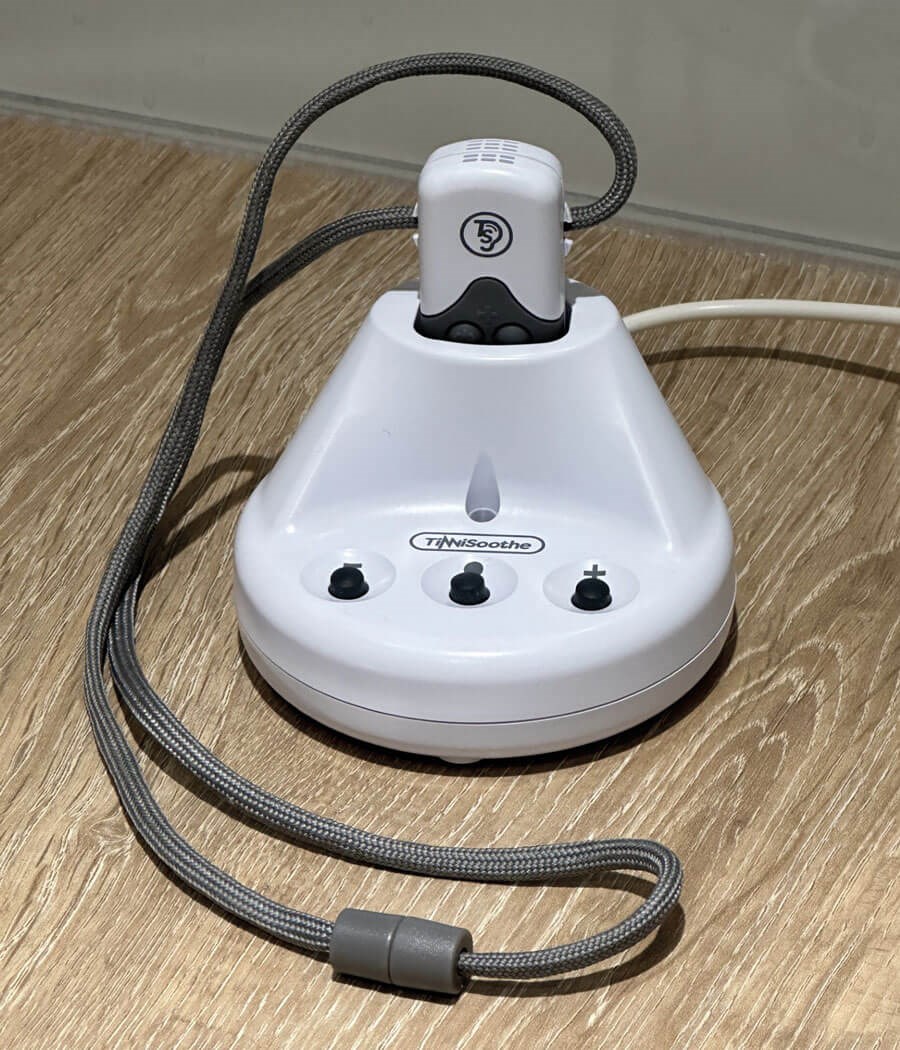
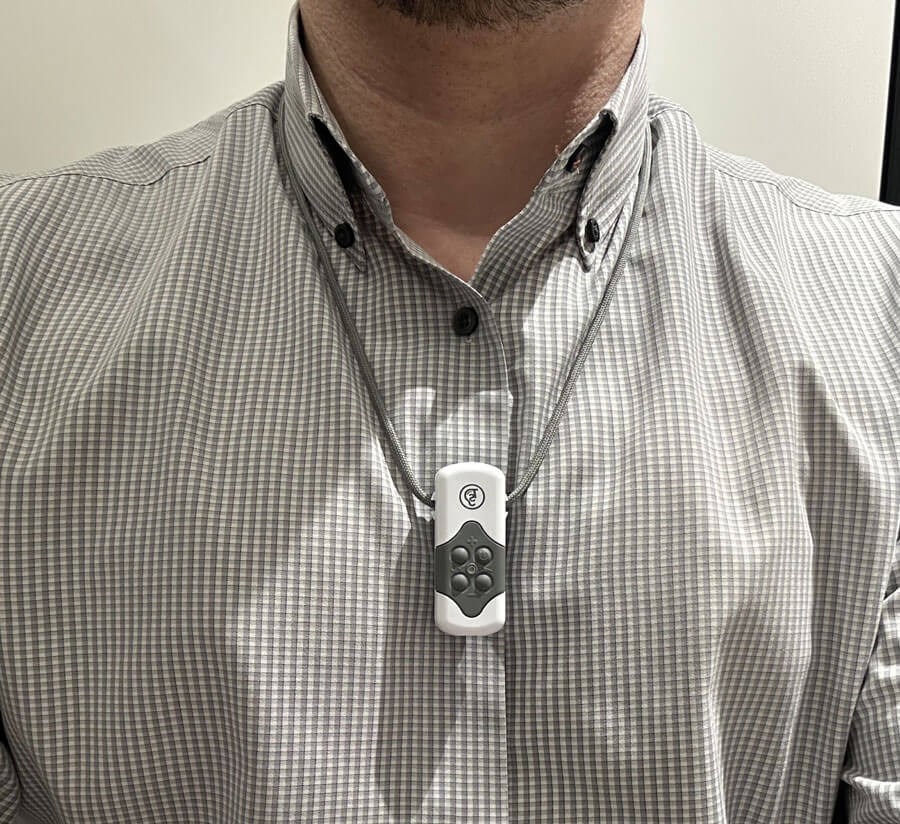
Measuring just 59 mm and weighing only 16 grams, TinniSoothe has been engineered for discretion. The device offers 60 volume increments and 40 frequency increments, providing 2400 possible configuration combinations to help users identify the settings that best manage their tinnitus. That level of configurability gives users a wide range of settings to explore, particularly for a device of this size and price (GBP 365).
The bedside docking cradle allows the device to switch automatically to a night-time mode, filling the room with gentle sound without requiring anything in the user’s ears. Battery life is rated at up to 72 hours, which is sufficient for several days’ use without recharging.
"TinniSoothe is an audio device that uses external sound to divert a patient’s attention from the sound of tinnitus"
The device has also been independently reviewed for safety and efficacy by Tinnitus UK’s Scientific Advisory Board. Their published treatment sheet, available on the Tinnitus UK website and updated in January 2026, provides a balanced assessment that clinicians may find useful to share with patients [2].
The current evidence for TinniSoothe is still in the early stages. A feasibility study conducted with the Combat Stress Centre for Applied Military Health Research involved 20 UK military veterans and found the device to be practical and well accepted, with all participants completing the study and no serious adverse events reported [3]. These early findings are encouraging, although the relatively small number of participants and the lack of a control group mean that further research is needed.
A subsequent 12-month waitlist-controlled trial involving UK military veterans is now underway, assessing the device using established measures of tinnitus impact, mental health, sleep and quality of life. The study is registered at ClinicalTrials.gov (NCT06905158), with results expected to be published in 2027. The findings should help clinicians assess the potential role TinniSoothe could play in tinnitus management.
"These early findings are encouraging, although the relatively small number of participants and the lack of a control group mean that further research is needed"
A patient in our clinic trialled the device. They are in their mid-60s, with a bilateral mild to moderate high-frequency sensorineural hearing loss. They report constant high-pitched bilateral tinnitus, which is described as a nuisance. Based on the pure-tone audiometry, the initial recommendation was for a binaural hearing aid fitting, with possibly an additional tinnitus programme. However, the patient did not feel ready to take that step. After using TinniSoothe for a month, their feedback was that the device was easy to set up and charge, although they found it hard to get the pitch of the sound to match their tinnitus. They also found that it wasn’t loud enough, although they conceded this could be related to their level of hearing loss. The device was lightweight and comfortable to wear. However, the control buttons were quite small, and they felt it would be useful if the lanyard could be adjusted to bring the device closer to the head. On this occasion, they didn’t feel TinniSoothe was suitable for them, but, considering how wearable it is, they felt it could benefit others.
Conclusion
TinniSoothe is a device that addresses a genuine practical gap in tinnitus management: the difficulty of sustaining consistent sound enrichment throughout a full day and night without the inconvenience of in-ear devices. Its configurability, discretion and ability to be used day and night may make it particularly useful for patients who have struggled with existing sound therapy approaches.
The evidence base is still developing, and clinicians should communicate this honestly to patients. However, with a 30-day money-back guarantee, independent evaluation by Tinnitus UK and a controlled clinical trial now in progress, TinniSoothe represents an interesting option for people looking for a wearable approach to tinnitus sound therapy in the UK.
The device was recognised as a winner at the 2025 Hearing Technology Innovator Awards, an acknowledgement that the broader hearing healthcare community has taken note.
For audiologists and ENT clinicians looking to expand the toolkit available to patients between appointments, TinniSoothe merits consideration as a potential complement to formal tinnitus management programmes.
References
1. Jarach CM, Lugo A, Scala M. Global Prevalence and Incidence of Tinnitus. A Systematic Review and Meta-analysis. JAMA Neurol 2022;79(9):888–900.
2. Tinnitus UK. TinniSoothe. 2026.
https://tinnitus.org.uk/tinnitus-treatments/tinnisoothe/
[Last accessed October 2026].
3. Howlett P, Murphy D. Exploring the Feasibility and Acceptability of a Non-Invasive Sound Therapy Device in Reducing Symptoms of Tinnitus in Military Veterans. J Hearing Sci 2025;15(4):19–29.
Declaration of competing interests: None declared.





