You searched for "medialisation"

CIs and the elderly
Although cochlear implantation (CI) is thought to be a predominantly paediatric procedure, more and more adults are candidates for cochlear implants. This retrospective study was performed on 80 adults aged above 50 who were implanted for at least nine months....Global hearing rehabilitation – an SFORL/IFOS collaboration
International collaboration is more important than ever, and we hear from Prof Bernard Fraysse about a collaboration that grew out of the very successful IFOS meeting in Paris in 2017. The IFOS meeting in Paris in June 2017 was obviously...Adult hearing screening: consideration for a holistic model
Background Adult-onset hearing impairment is a highly prevalent and undertreated chronic problem that poses a significant burden of disease worldwide [1]. It is usually gradual and diagnosed and managed approximately 10 years after adults have first experienced hearing difficulties [2]....Isshiki Thyroplasty Type 2
Indication Adductor spasmodic dysphonia is a neurological condition of unknown aetiology. The symptoms are believed to be caused by involuntary contraction of the adductor muscles of the vocal cord as a result of an abnormality of neurotransmitters in the basal...Enhancing performance and well-being for surgeons: the science of life coaching
Life coaching has emerged as a powerful personal and professional development tool, particularly for individuals navigating high-stakes environments. Life coaching emphasises self-awareness, self-management and self-efficacy, including establishing desired outcomes, goal setting and developing skills and action plans to achieve them....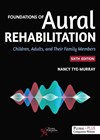
Foundations of Aural Rehabilitation: Children, Adults and Their Family Members – Sixth Edition
This book provides a plethora of information relating to aural rehabilitation. The author has taken a multi-faceted approach, combining firm evidence-based perspectives with an evaluation of the scientific foundations of current clinical practises. This book is mainly aimed at those...
Live versus e-learning – which is the most effective communication training approach for health care staff?
If staff are unable to communicate with their patients this can impact negatively on the patient’s healthcare. They may be excluded from decisions about their own care and their rights to informed consent may be violated. Conversation partner training has...
CBT for tinnitus and hyperacusis
Finding an efficient treatment for tinnitus attracts the interest of researchers worldwide. Cognitive behavioural therapy (CBT) is one of the widely researched methods used in tinnitus management. The aim of this study was to investigate what proportion of patients complete...
Does pre-op intratympanic gentamicin improve balance control after vestibular schwannoma surgery?
This retrospective study was based on data from 44 patients selected from a cohort of 153 who had undergone surgical resection of vestibular schwannoma over a 10-year period. The aim was to evaluate the dynamics of the postural control system...
How to train adults with single-sided deafness and cochlear implants
Cochlear implantation (CI) in patients with single-sided deafness (SSD) has been carried out in Perth, Australia from 2008. It poses challenges to clinicians and patients who are trying to tune in the poorer ear while still having a normally hearing...
A novel scale for the assessment of tracheoesophageal voice quality – the SToPS
There is currently no assessment tool in widespread use that permits a valid and reliable perceptual assessment of voice quality following laryngectomy. Such a scale is needed to investigate the functional outcomes of surgical voice restoration and rehabilitation regimes. Existing...