
You searched for "nasendoscopy"
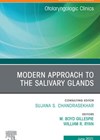
Is there a limitation for excising parapharyngeal tumours transorally?
The parapharyngeal space is a complex anatomical space bounded medially by the oropharynx and laterally by the mandible. It is conceptualised as an inverted pyramid extending from base of skull above to the hyoid bone below. The space is divided...
DISE as a rationalising tool for sleep apnoea surgery
This retrospective study on 85 adult obstructive sleep apnoea (OSA) patients provides further interesting information for sleep surgeons. These patients were all investigated with polysomnography (PSG) and drug induced sleep endoscopy (DISE). They all then underwent a simple uvulopalatoplasty with...
Is my post-intubation sore throat something to worry about?
Laryngeal injury (LI) is a rare but serious adverse outcome of endotracheal intubation, thought to arise from compression-related trauma to the laryngeal nerves and resulting neuropraxia. Patients typically present with transient postoperative dysphonia which usually resolves within a matter of...Botulinum toxin injection in spasmodic dysphonia
Spasmodic dysphonia is a rare neurological voice disorder, which is often missed by the inexperienced ear. There is no laboratory test or investigation to diagnose this condition therefore, it is best diagnosed by listening to the patient’s voice. Laryngeal endoscopy...
Laryngopharyngeal reflux (LPR) in posterior laryngitis
The authors of this study investigated the prevalence of acid reflux in the proximal oesophagus and functional gastrointestinal symptoms in patients with posterior laryngitis. They analysed plasma motilin as well as health-related quality of life (HRQOL) questionnaires before and after...EROC 2025
Professor Hesham Negm, Faculty of Medicine, Cairo University The 14th edition of the Emirates Rhinology & Otology Conference (EROC) Global Forum 2025 concluded successfully, drawing over 3056 delegates from more than 120 countries and featuring more than 100 distinguished international...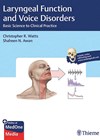
Laryngeal Function and Voice Disorders
This is a detailed, 323-page resource covering laryngeal function and voice disorders, basic science and clinical assessment. Spanning nine chapters, the authors cover the anatomy and physiology of phonation, survey of voice disorders, voice diagnostics, acoustic analysis, aerodynamic analyses, endoscopy...
European position paper on drug induced sedation endoscopy (DISE)
DISE is a controversial topic but a practice that is largely accepted in the UK. There has been much variation about the technique, and how to interpret the results. For this reason, a collection of European DISE bigwigs aimed for...
Location, location, location: How to get the steroid where you need it, in chronic rhinosinusitis
What almost all current guidelines on chronic rhinosinusitis have in common is the importance of intranasal steroid (INCS) use. However, it is increasingly understood that the efficacy of INCS depends on their efficient delivery to the point of need, i.e....
Are there any benefits of postoperative antibiotics after endoscopic transsphenoidal surgery for pituitary tumours?
This prospective randomised double-blind multicentre study evaluated whether postoperative antibiotics resulted in improvement in sinonasal quality of life (QoL) compared to placebo in patients undergoing endoscopic endonasal transsphenoidal pituitary surgery. A total of 461 patients were screened for the study...
Airway intervention for epiglottitis
This Japanese study was a retrospective review of 83 patients admitted with epiglottitis over a 9.5-year period. The authors found that the factors that were significantly more likely to be present in patients who received airway intervention were: odynophagia; drooling;...


