
You searched for "reinnervation"
HearAdvisor’s scientific and consumer-friendly approach to evaluating hearing aids
An ageing population means more hearing aid users. The authors of this article describe their techniques for independently assessing prescription and over-the-counter hearing aids in an acoustic laboratory. As the role of consumers in the hearing aid purchasing decision continues...Closing the circle: where art, science and humanity meet
As the final cover of this Art meets Science series arrives in your hands, I find myself filled with gratitude. Gratitude for the journey, for the people who walked it with me and, above all, for the deeper purpose that...OBITUARY: Remembering Thomas J Balkany 1948 - 2025
Helen Cullington, our Specialty Editor – Audiology (implantables), pays tribute to a pioneer. Back in 1996 – having worked as a cochlear implant audiologist for three years in the UK – I felt ready for a new challenge. I faxed(!)...Transferable skills in audiology: one audiologist’s journey
Ever wonder about transferable skills in audiological practice? In this issue, we hear about one audiologist’s journey from clinical practice to applying transferable skills gained in audiology to other healthcare sectors. In 1997, as a 16-year-old starting my career in...Rhinology: what does the future hold?
David Kennedy surveys the past, the present and the future of rhinology practice and research. An evolution of understanding in rhinology The dramatic growth of clinical and translational research within the field of rhinology in recent years is illustrated by...The power of mentoring
What is a mentor, and what are the benefits for mentee and mentor? Emma Stapleton and Rohma Abrar, mentor and mentee respectively, explain. The term ‘mentor’ is derived from Homer’s Odyssey, in which the goddess Athena, disguised as Mentor, guides...Sialendoscopy
Recent advances in endoscopic technology allow the ENT surgeon to access the salivary gland ductal system for both diagnostic and therapeutic reasons. In this article the authors share their experiences with using this technology, both as a standalone procedure and...Thyroid cancer – the last decade
Professor Ashok Shaha describes the evolution in the treatment of thyroid cancer that he has witnessed over the last decade and the invaluable progress made by himself and others, from their contributions to staging systems and guidelines. Nuances and paradigm...Otodynamics' OTOPORTcompletes a mission on the International Space Station
For the last few years, the International Space Station has been home to an Otodynamics’ Otoport Advance handheld clinical OAE instrument.A medical student’s perspective on the future of obstructive sleep apnoea management
Obstructive sleep apnoea remains an immensely challenging condition to treat. Many treatments have been used over the years, but no single management strategy has proven significantly better than the others. We hear about some technological innovations in the field of...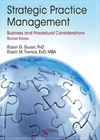
Strategic Practice Management – 2nd Edition
I was very pleased to take on the task of reviewing this book as I support Starkey’s Business Development Partnership Programme set up to support the UK and Irish Independent sector and to encourage audiologists to run their own businesses....


