
You searched for "videos"
House of Hearing expands operations with over £1million investment
Audiology and aural care expert, House of Hearing, has expanded its operations with an investment of over £1 million pounds since the start of the year, with a new clinic launched in Glasgow and the relocation of its clinic in Edinburgh, which has been on the current site for 50 years.BRS 2026 Fellowship Grants and Video Prizes
The British Rhinological Society (BRS) have announced their 2026 Fellowship Grants and Video Prizes. These awards are in collaboration with ENT UK and support trainees and SAS doctors at every career stage, encourage innovation in education, and reflect the BRS commitment to investing in and shaping the future of rhinology.
Determinants influencing ageing within the vestibular system
The observation that ageing affects vestibular function is not new. However, using a whole population survey, the authors set out to evaluate quantitatively factors responsible for the age-related changes in vestibular function. As part of a national survey on health...An update on button battery safety
ENT surgeons around the world are aware of the huge damage that can be caused by the ingestion of button batteries by young children. Our editor Declan Costello caught up with Professors Fred Dikkers and Tjark Ebels, both at the forefront of the mission for improved safety, to discuss the latest developments of regulation and innovation.A small company’s perspective
In this article, we hear from Alan McNulty, Director from Sheffmed, an SME (Small – Medium Enterprise), who have supplied surgical instruments, consumables and video systems to ENT clinicians for over 12 years. Alan outlines some of the choices and...Facing up to the challenge of behavioural observation in infant hearing assessment
The ability to assess detection and discrimination of speech by infants has proved elusive. Dr Iain Jackson and colleagues discuss how new technologies and fresh approaches might offer valuable insight into young infants’ behavioural responses to sound. The limits of...World Hearing Day 2022: WHO launch webinar goes online
The World Health Organisation (WHO) took the opportunity of World Hearing Day on 2 March to announce three hearing-loss initiatives. As well as establishing a global standard for safe listening entertainment venues, it published a related handbook for implementation of safe listening and released a media brief for journalists.Deadline for Abstracts for IFOS 2023
The International Federation of ORL Societies (IFOS ) has a long-standing tradition of education and continues to improve the level of training required for otolaryngologists and allied health workers from around the world.Founding of International Association of TransVoice Surgeons
World renowned laryngologists and voice surgeons have joined forces to improve the quality of voice care for the transgender community.Save the date: WCA 2024
The 36th World Congress of Audiology is taking place in Paris, 19–22 September 2024. The organisers have released a teaser video to encourage audiologists to attend a cutting-edge conference where diagnostic and therapeutic innovation, personalised medicine and translational research will...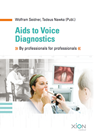
Aids to Voice Diagnostics
Voice related complaints are common presentations in the ENT clinic and a thorough knowledge of anatomy, physiology and pathophysiology is paramount in dealing with the complexities of voice disorders. With the advent of digital technological advances, most ENT units will...


