You searched for "laser"
ENT in this issue...Anaesthetics and ENT
Nick Crombie, BMedSci BMBS FRCA FIMC RCSEd RCPathME, Associate Medical Director (Governance); Consultant Trauma Anaesthetist; Honorary Researcher, National Institute for Health Research SRMRC: Clinical Lead for Resuscitation Services, QEHB, UK. E: Nicholas.Crombie@uhb.nhs.uk Plastic surgeons think we do endless crosswords. Orthopaedic...In conversation with Helen and De Wet in Paris: cochlear implants in the year 2074
The World Congress of Audiology (WCA), held in Paris, France, in September 2024, provided a fantastic opportunity to reconnect with colleagues from around the globe. I took the chance to sit outside in the sunshine with De Wet Swanepoel from...In conversation with Helen and De Wet in Paris: cochlear implants in the year 2074
The World Congress of Audiology (WCA), held in Paris, France, in September 2024, provided a fantastic opportunity to reconnect with colleagues from around the globe. I took the chance to sit outside in the sunshine with De Wet Swanepoel from...Music and single-sided deafness: challenges and solutions
Music is an integral part of many of our lives, providing entertainment, relaxation and a backing track to our past experiences. In this overview, Gemma Crundwell and David Baguley examine the impact of SSD on the perception of music and...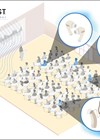
Auracast - Bluetooth technology for hearing impaired individuals
Individuals with hearing loss experience difficulties hearing in public places such as auditoriums, movie theatres, places of worship, transportation hubs, gyms and small and large events, to name a few. The traditional communication methods (speakers and PA system) that are...
Which cross-over frequency is best for electro-acoustic stimulation?
Advances in technology and improved soft surgical techniques have led to individuals with better hearing thresholds, especially at the low frequencies, becoming candidates for cochlear implants (CI). Surgeons are more confident that residual hearing can be preserved thus making those...
Updates on current evidence for biologics in chronic rhinosinusitis
For a comparatively short piece, this article manages to pack in a lot of important information about a complex emerging area of rhinology – immunologically targeted therapy (biologics). Immunologically targeted therapy is a rapidly progressing and expanding domain which is...
Increasing tongue strength to reduce dysphagia: what is the potential benefit of a device driven exercise?
Weakness in tongue muscle strength and laryngeal elevation is known to have an adverse impact on swallowing function. Various swallowing exercises are often recommended to improve function of these important structures with the goal of preventing aspiration and improving swallow...
Telepractice for the delivery of paediatric feeding services
During the current COVID-19 pandemic, telepractice is being heralded as the safest service delivery mode for the majority of outpatient consultations. Patients are reviewed by their healthcare specialist through video consultations, thus avoiding the need for patients to leave their...
Dead regions in patients with cochlear implants
The very nature of a dead region (DR) in a cochlea means that they are often found in patients who are eligible for cochlear implants. However, a variety of different hearing configurations are found in those with DRs because of...
Managing hearing preservation expectations of adult CI patients
This paper is a single-centre review of adult cochlear implants in patients with preserved low-frequency hearing, focusing on the outcomes at 10 months post-implantation, and the rates of electroacoustic stimulation actually used in this group of patients. The centre identified...