You searched for "reconstructive"

Total Otolaryngology - Head and Neck Surgery
This single volume, 1098 page book with 667 illustrations, covers all aspects of otolaryngology in both theory and practice. Compiled together by a team of world renowned co-editors from North America, as well as authors from differing specialities, this book...
Anatomy for Plastic Surgery of the Face, Head, and Neck
This textbook couldn’t have arrived with better timing. As an ENT trainee soon to sit the FRCS(ORL-HNS) with an interest in facial plastics, I can comfortably say this is incredibly useful to have in the library. The book should suit...
The Chronic Ear
For me, the title of this book conjures up an historical image. I imagine an early 20th century consulting room, an otologist with a head mirror and bull’s eye lamp. A pre-antibiotic era in which a patient’s otorrhoea is meticulously...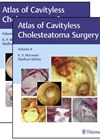
The Atlas of Cavityless Cholesteatoma Surgery: Volume I and II
The Atlas of Cavityless Cholesteatoma Surgery draws upon four decades of the authors’ experiences, based in the Jindal Institute in North India. Their aim is to showcase the inside out technique with obliteration of created mastoid cavities; and for the...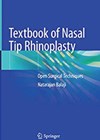
Textbook of Nasal Tip Rhinoplasty: Open Surgical Techniques
Anyone interested in nasal aesthetic, reconstruction and function will find this an essential read, but also an excellent surgical manual. As the title states, it is dedicated to unravelling the complexity of tip surgery, one of the challenging aspects of...
Textbook of Otitis Media: The Basics and Beyond
This book is a comprehensive resource that discusses the multifaceted condition of otitis media. It aims to serve a wide range of medical professionals, including otolaryngologists, audiologists, paediatricians, and medical students, by providing both fundamental knowledge and advanced insights into...
Oropharyngeal malignancies
The authors retrospectively reviewed 44 patients who underwent a combined transoral and transcervical treatment without mandibulectomy for oropharyngeal malignancy. The combined approach was performed first by a neck dissection followed by transoral excision of the lesion and reconstruction by a...
Vascularised tissue in salvage total laryngectomy
Chemoradiation (CRT) has become the mainstay for locally advanced laryngeal cancer since the RTOG 91-11 trial. Unfortunately there is still a substantial demand for salvage laryngectomies, which have a higher complication rate, the most notable being pharyngocutaneous fistula (PCF). Several...
Diagnostic criteria for superior semicircular canal dehiscence syndrome
The latest Bárány Society’s consensus document on diagnostic criteria for vestibular disorders is one for superior semicircular canal dehiscence syndrome (SCDS). There are three major categories: (A) Symptoms consistent with a third mobile labyrinthine window; (B) Physiologic tests – clinical...
International consensus paper on implantable devices for conductive or mixed loss
This is a weighty but insightful ‘Special Feature’ paper in the June edition of Otology and Neurotology. It has the broad aim to gather current opinion from otologists, audiologists, manufacturers and health-economists from around the world on unilateral hearing implantation...