
You searched for "India"
The hearScope
A revolutionary new otoscope is using artificial intelligence to dramatically improve access to ear and hearing care in South African outreach communities. Carolina Leal, spoke to Professor De Wet Swanepoel of the University of Pretoria about how his team developed...Wideband tympanometry: translating complexity into clinical clarity
Clinicians often encounter patients with a Type A tympanogram who still present with conductive hearing loss. Traditional 226 Hz tympanometry has served as a reliable tool in audiology and otolaryngology practices since the 1970s, yet it often misses subtle variations...Salivary duct clipping for drooling
Drooling can be a challenging problem to manage in paediatric ENT. The variety of medical and surgical treatments suggests that there is no gold standard treatment. Nicola Stobbs and Ravi Thevasagayam describe an approach to ligating the salivary ducts. Drooling...Hearing care systems in Europe – can we do more?
52 million Europeans experience hearing loss but many don’t find their way to professional hearing care. Lidia Best looks at strategies to improve the uptake of amplification at a national level [1]. With rising numbers of people experiencing hearing loss,...In Memoriam: Charles I. Berlin, PhD
Dr Charles “Chuck” Berlin was an international guiding star in hearing research and clinical audiology for over 50 years. He was a renowned scientist, mentor, teacher, clinician, colleague, accomplished musician, and friend to hundreds of colleagues from around the world....Lessons from the outcomes of children with hearing loss study
The Outcomes of Children with Hearing Loss (OCHL) study of 300 children with hearing loss has targeted several factors that are under the control of audiologists and parents. Drs McCreery and Walker discuss how these ‘lessons learned’ can lead to...The Graham Fraser Foundation
Graham Fraser (1936-94) was a pioneering otolaryngologist, in whose memory the Graham Fraser Foundation was set up, and an eponymous annual lecture and a travelling fellowship in otology were established. It’s an honour to profile the Foundation in this extended...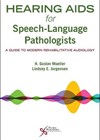
Hearing Aids for Speech-Language Pathologists: a Guide to Modern Rehabilitative Audiology
This is a book of two parts. The first six chapters are not pitched at speech language pathologists (SLP), at least not for those in typical practice in the UK. This section of the book is appropriate to experienced audiologists...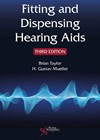
Fitting and Dispensing Hearing Aids – Third Edition
Fitting and Dispensing Hearing Aids – Third Edition is intended primarily as a course book for “non‑audiologists or undergraduate audiology students who have yet to fit their first pair of hearing aids”. It is aimed primarily at students in the...
Nasal nitric oxide – an inflammatory marker in paediatric allergic rhinitis?
Nasal nitric oxide (nNO) is mainly produced in the paranasal sinus mucosa and was shown in some studies to have increased expression in allergic rhinitis (AR). Although it represents a potential non-invasive tool for AR measurement, there remains no consensus...
Voice change after total thyroidectomy with intact laryngeal nerves – a common but temporary problem
It has been reported that up to 87% of patients have a degree of voice dysfunction after thyroidectomy, even when the laryngeal nerves are preserved. Postoperative inflammation, laryngeal oedema due to vascular congestion, direct damage to the cricothyroid muscles and...


