You searched for "theatre"
Hyposalivation: a review of current and future treatments
Hyposalivation remains a stubbornly difficult condition to treat, but novel therapies may not be far away. Saliva has many essential functions, including aiding digestion and swallowing, lubrication, maintaining tooth integrity and antibacterial activity. When patients experience reduced saliva production (hyposalivation),...Virtual Voices sing out
The search is on for musicians with a hearing implant to be part of an online collaboration. The Virtual Voices and Band project is inviting hearing implant users of all types, countries, abilities and brands to unite by recording a vocal or instrumental performance of Beethoven’s Ode to Joy.In conversation: Cesare Piazza and Giuseppe Spriano
Declan Costello catches up with the presidents of two important meetings taking place in Italy in June 2023 to discuss the highlights.Team proves secure pathway to the inner ear
An international team of surgeons and scientists has, for the first time, validated safe surgical access to the central core of the human cochlea.In conversation with Frederik Dikkers
Declan Costello, editor of ENT & Audiology News, has recently enjoyed a couple of conversations with Professor Emeritus Frederik Dikkers that you can now watch on YouTube.EUHA seeks start-ups
For the first time, the Europäische Union der Hörakustiker (EUHA) is offering you the opportunity to share your ideas in the centre of the industry exhibition in Hanover at the 68th International Congress of Hearing Aid Acousticians, 16–18 October.Hearing loss and dementia – a webinar with Professor Kevin Munro
Transforming the narrative around hearing loss and dementia A webinar with Professor Kevin Munro The British and Irish Hearing Instrument Manufacturers Association (BIHIMA) and Professor Kevin Munro, a leading expert in audiology, will host a webinar to discuss the critical...Celebrating female surgeons
A newly-commissioned painting of female surgeons has been added to the portrait collection at the Royal College of Surgeons of Edinburgh (RCSEd). ‘Eleven Surgeons’ by Scottish artist Kirstin Mackinnon features recipients of the Hunter Doig medal, awarded for excellence within the surgical profession.'Deafmetals' on display at the V&A
Ground-breaking designs in hearing aids are on display as part of a new exhibition at the V&A Museum in London. Deafmetal®, founded by Finnish designer Jenni Ahtiainen, transforms hearing instruments into bold, beautiful jewellery – known as Deafmetals – helping wearers reclaim their identity.Hearing pioneer Gerard O'Donoghue retires
The Nottingham Auditory Implant Programme (NAIP) has announced the retirement of Professor Gerard O’Donoghue, Consultant Neuro-Otologist at Queen’s Medical Centre, Nottingham. A pioneer in the field of hearing restoration, Gerry’s career has been defined by his groundbreaking work in cochlear implantation.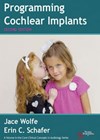
Programming Cochlear Implants - Second Edition
Wolfe and Schafer open their second edition with up-to-date images of brand-specific devices and show various configurations and customisations available to the recipient. For the audiologist, they introduce highly relevant topics such as polar plots for microphones, array types and...