When uncommon emergencies create uncertainty, simulation-based training offers a safe space to build confidence, competence and collaborative learning.
ENT emergencies can be daunting to manage, especially for those who have less familiarity with their nature. Colleagues from neighbouring specialties are often less well-versed in the spectrum of acute ENT problems that present to hospital, and attempts at teaching are frequently limited to case discussions or lecture series.
Our centre has developed a simulation-based training course for paediatric emergency trainees. This article explores the outcomes and attitudes toward the course from both a teaching and learning perspective.
As a specialty that is often perceived as more ‘niche’, ENT problems can be a source of anxiety for clinicians with limited exposure to their presentation and management. This sentiment has been reported previously in the literature and is often reflected in existing surveys [1]. Efforts at addressing this often involve a mixture of case discussions, lectures and ‘hands-on’ demonstrations on the use of ENT equipment, such as for removal of foreign bodies or nasal endoscopy [2]. One way of improving proficiency and delivering long-lasting learning is via the use of simulation-based training, affording an immersive and realistic learning experience whilst eliminating physical risk [3,4].
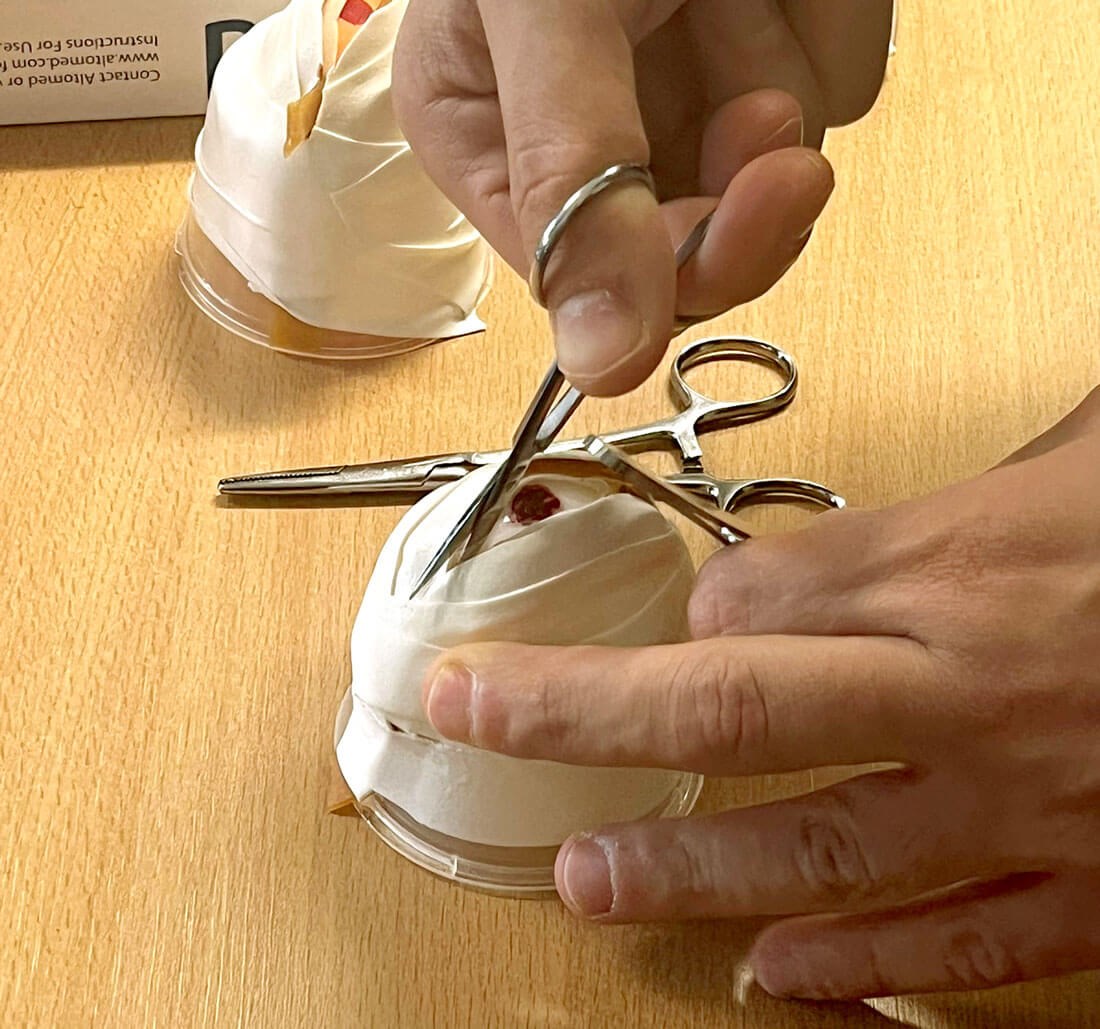
Image 1: Simulated lateral canthotomy demonstration.
In our centre, a collaborative effort between colleagues in ENT, ophthalmology and emergency medicine has culminated in the development of a simulation-based training course, aimed at addressing knowledge gaps and lack of familiarity with common and emergency problems in the two disciplines [5].
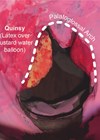
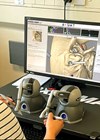
Our course is delivered as a full-day session, with equal time devoted to both ENT and ophthalmology. As well as utilising a low learner-to-faculty ratio and hands-on practical sessions, the highlight of the course is two simulated cases for each specialty. Delegates ‘walk through’ the scenario as a small group with a low-fidelity mannequin, and the scenario develops in real time. Delegates also are encouraged to ‘refer’ to and discuss with the relevant specialties as the scenario unfolds. Scenarios include blocked tracheostomies, post-tonsillectomy bleeds and lateral canthotomy simulation. (Our lateral canthotomy model is based on the model described at https://em3.org.uk/foamed/3/3/2023/resus-drills-lateral-canthotomy).
COURSE SETUP
- cope out needs for potential learners.
- Identify local faculty to develop course content.
- Identify a venue – we have a dedicated simulation suite in our centre.
- Recruit learners.
- Obtain equipment – sourcing from local departments minimises cost and carbon impact.
- Send out pre-course questionnaire and VLE learning material.
- Deliver course.
- Use VLE to deliver post-course content and consolidate learning
An encouragingly wide range of enthusiastic emergency medicine physicians attended, ranging from junior registrars to experienced consultants from across the country. Of course, the day is supplemented by coffee breaks, usually accompanied by a selection of homemade baked goods, which always go down a treat!
We evaluated our course’s efficacy using a seven-item, five-point Likert scale to measure the confidence of delegates in managing a number of ENT and ophthalmology scenarios. In addition, we focused on obtaining qualitative feedback from both delegates and faculty.
Feedback
As well as demonstrating a significant improvement in pre-course and post-course Likert score, the overwhelmingly positive qualitative feedback reflected the efficacy and success of the course. Themes identified from the feedback reflected a pre-existing sense of unfamiliarity and uncertainty in managing emergency situations, particularly when troubleshooting a paediatric tracheostomy. Trainees were also aware of the relative infrequency of emergency procedures, such as lateral canthotomy, but were cognisant of the need to be fluent and proficient in them, given their high acuity. A general theme of a lack of confidence in managing ENT and ophthalmology emergencies was also identified in the qualitative feedback.
Following the course, qualitative responses reflected overwhelming engagement and satisfaction with the combination of simulated cases and hands-on practical sessions. Trainees also valued the opportunity to work through high-acuity clinical scenarios together in a safe environment, with valuable debriefing between faculty and trainees helping to facilitate learning in a relaxed environment.
Simulation training – here to stay?
Our course focuses on replicating scenarios that are time-sensitive and associated with high morbidity and, as a result, are often stressful scenarios to navigate. Coupled with their infrequency and the relatively reduced confidence trainees have in managing such scenarios, this represents a clear training gap and learning need.
By utilising simulation in a relaxed, friendly environment, our course is able to break down a number of barriers that can obstruct learning and maximise the learning outcomes. It was fantastic and encouraging to see trainees from widely varying backgrounds, grades and experience coming together and collaborating in small groups. There was a clear sense of common goal-directed learning, and seeing the enthusiastic interaction between trainees only served to snowball the energy and learning on the day. We’ve all attended courses and felt a sense of nerves or anxiety. What if I say something wrong? What will everyone else think? These are common concerns and sources of potential anxiety that can hinder learning. It’s a credit to both the trainees and the superb faculty – including a range of ENT and ophthalmology registrars – that there was very little sign of any nerves or reluctance to engage.
"As well as utilising a low learner-to-faculty ratio and hands-on practical sessions, the highlight of the course is two simulated cases for each specialty"
As mentioned previously, simulation clearly has the potential for affording effective learning in a safe, consequence-free environment. The key to achieving this is to foster a non-judgmental learning space where trainees feel comfortable exploring the uncomfortable – scenarios that are inherently associated with stress and uncertainty. As well as this, we identified an unmet learning need within paediatric emergency medicine. Although not unique to ENT and ophthalmology, the current curriculum does not explicitly define which specialty-specific emergencies trainees should be competent to manage. This only further compounds any anxiety or unfamiliarity in managing these conditions.
Our course highlights the excellent result that multispecialty collaborative education can achieve. Using simulation in small groups, we’ve demonstrated the effectiveness of these low-cost training days. Overall, our aim is to increase the awareness and confidence in managing ENT emergencies by removing the barriers to learning, whilst maximising yield from the course.
References
1. Davis SJ, McDonald S. Covering ENT out of hours: how confident are senior house officers? J Laryngol Otol 2006;120(7):587–90.
2. Elloy M, Sama A. Does an ENT Introductory Course Improve Junior Doctors’ Confidence in Managing ENT Emergencies? Bull. R. Coll. Surg. Engl 2010;92(9):1–5.
3. Scalese RJ, Obeso VT, Issenberg SB. Simulation technology for skills training and competency assessment in medical education. J Gen Intern Med 2008;23(1 SUPPL):46–9.
4. Datta R, Upadhyay KK, Jaideep CN. Simulation and its role in medical education. Med J Armed Forces India 2012;68(2):167–72.
5. Nahabedian L, Layman S, Giblett N, et al. 6505 Delivering a novel paediatric ENT and ophthalmology emergency medicine simulation day. Arch Dis Child 2024;109(Suppl 1):A15.2–A16.
Acknowledgements
To the faculty who helped construct and deliver the course, including but not limited to:
Lucine Nahabedian (PEM consultant)
Neil Giblett (ENT consultant)
Shoshana Layman (Paediatric simulation fellow)
Joshua Whittaker (ENT registrar)
Soo Oh (ENT registrar)
Jeremy Reid (ENT registrar)
Hisham Hamze (Ophthalmology registrar)
Taiwo Makanjuola (Ophthalmology registrar)
Declaration of competing interests: None declared.