Smell loss in children often goes unnoticed. Recognising the signs, understanding the causes and improving access to assessment could transform care.
The hidden epidemic: why smell matters in children
When a child presents with nasal obstruction, we instinctively look for structural pathology. Yet olfactory dysfunction (OD) – affecting approximately 22% of adults – remains a diagnostic blind spot in paediatric practice. The consequences of this oversight are profound. Unlike nasal obstruction that parents readily identify, OD operates in stealth mode: children lack the vocabulary to articulate their deficit, parents dismiss vague complaints about food and clinicians rarely test what remains invisible.
Our recent international survey* data from 167 paediatric ENT surgeons across 36 countries reveals a sobering reality: whilst 83% report encountering OD in clinical practice, 54.8% never perform psychophysical olfactory testing. This closely mirrors our earlier UK data in non-paediatric ENT clinicians, where 54.9% of respondents never performed psychophysical testing in the assessment of OD as a presenting complaint. This diagnostic gap stems from multiple identified barriers – insufficient training (44.3%), time constraints (29.9%) and lack of funding (28%).
Smell serves as an early warning system for environmental hazards (spoiled food, gas leaks, fire), modulates appetite and food selection, and is vital for social bonding and appropriate social development (through a process called ‘chemosignalling’). For children, who are developmentally less equipped to compensate through other sensory and neurocognitive abilities, the risks of OD are amplified. For example, recent research demonstrated that OD can predict food neophobia (avoidance of new foods) in children aged three to nine years, linking olfactory impairment with nutritional restriction and potential long-term sequelae.
Recognising the clinical presentations: an etiopathological framework
Understanding paediatric OD requires recognising a fundamental epidemiological shift: whilst sinonasal disease and viral infections dominate adult-onset OD, congenital causes account for most paediatric cases.
Congenital olfactory dysfunction encompasses both isolated and syndromic forms. Kallmann syndrome pairs hypogonadotropic hypogonadism with anosmia, resulting from defective GnRH neuron migration from the olfactory placode. Diagnosis typically emerges during adolescence when delayed puberty prompts endocrine investigation, yet the anosmia exists from birth. CHARGE syndrome presents with cranial nerve I anomalies in 90% of cases, with OD now recognised as highly prevalent, often exceeding 80% when systematically assessed, yet remains underrecognised.
Acquired causes merit equal vigilance. Post-traumatic OD accounts for a tenth of paediatric cases and should prompt consideration, even after seemingly minor head injuries. Post-viral OD, while less common in children than adults, has gained prominence following the Covid-19 pandemic, with some children presenting with persistent chemosensory dysfunction requiring rehabilitation. Idiopathic cases warrant comprehensive neurological and endocrine evaluation to exclude occult pathology.
A recent systematic review identified association of paediatric OD with several common and uncommon conditions one may encounter in ENT practice (Figure 1).
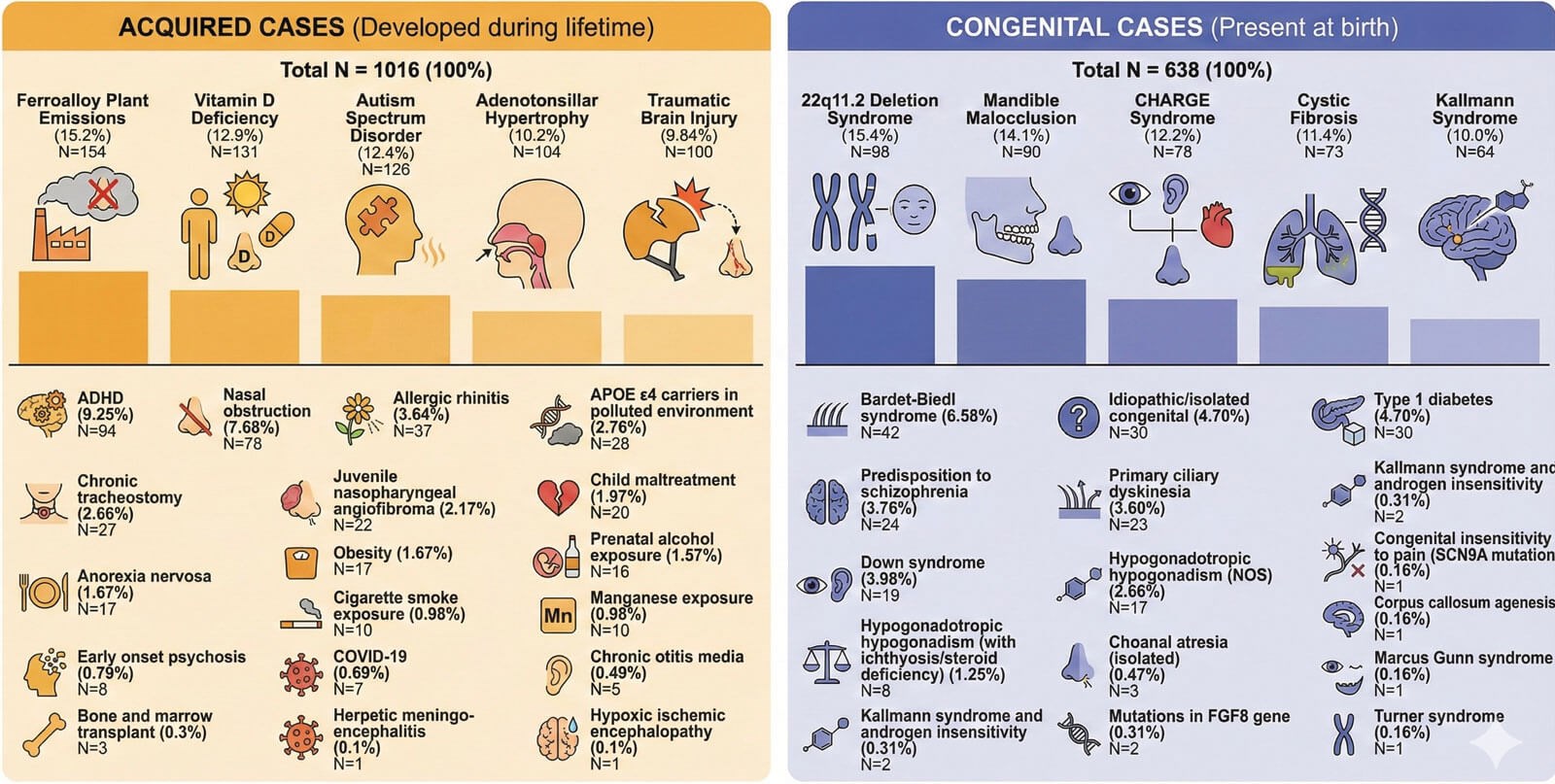
Figure 1: Congenital and acquired causes of paediatric OD, adapted from Payandeh et al [1].
Clinical assessment: a practical approach
The assessment pathway begins with a thorough history, including red flags: congenital anosmia warrants endocrine screening (especially for delayed puberty), genetic counselling and MRI to evaluate olfactory tract abnormalities.
Psychophysical testing remains the clinical gold standard but poses unique challenges in children, particularly regarding attention span, test comprehension and exposure/knowledge of odours. The University of Pennsylvania Smell Identification Test (UPSIT), The U-Sniff test and NIH Toolbox Odor Identification Test are validated tests that offer assessment of odour identification. The Sniffin’ Sticks test offers a more comprehensive evaluation of odour identification, discrimination and threshold.
Age-specific considerations shape assessment feasibility: in children under three years, psychophysical testing is unreliable, necessitating reliance on caregiver-reported history and neuroimaging. For ages three to six years, odour identification games and modified protocols show promise. Children aged seven to 12 years tolerate standard psychophysical tests with age-appropriate modifications, whilst adolescents can undergo adult protocols.
When comprehensive formal testing is inaccessible – a reality for many given resource constraints – we recommend referral to a centre in which this can be performed, and local screening tests where possible.
Management strategies: beyond watchful waiting
The therapeutic landscape for paediatric OD extends beyond expectant observation. However, international practice reveals significant underutilisation of evidence-based interventions, with only 35.9% of surveyed clinicians offering olfactory training (OT) for chronic OD.
Olfactory training – the systematic, twice-daily exposure to distinct odours (classically rose, eucalyptus, lemon, cloves) – represents a low-cost, low-risk intervention with good supporting evidence. In adults, meta-analytic work has demonstrated improved olfactory function comparing OT with placebo. This is supported by neuroimaging and basic science work demonstrating structural and functional brain alterations in humans, and enhanced olfactory neurogenesis in animals. In children, OT has demonstrated improved olfactory function following mild head injury. In addition to its clinical benefits, OT empowers families to actively participate in recovery.
Medical management varies by aetiology. Topical corticosteroids are commonly used for sinonasal (predominantly CRS-related) OD and are often used to exclude persistent inflammation in post-infectious cases. However, evidence for such practice in children remains limited. Systemic corticosteroids following acute head trauma show preliminary benefit in case reports, though robust paediatric trials are lacking.
Surgical intervention is indicated in children with obstructive adenohypertrophy or those with refractory CRS, according to existing guidelines.
Multidisciplinary collaboration is critical but underutilised. Only 1.7% of our survey respondents routinely involve dietitians, despite 47.3% of respondents recognising the impact of eating difficulties on quality of life. Endocrine evaluation and genetic counselling remain infrequent, except in obvious syndromic presentations. This fragmented approach delays diagnosis and misses opportunities for holistic support.
Quality-of-life impact: the invisible burden
Whilst 95.7% of clinicians do not employ quality-of-life metrics when assessing children with OD, the effects on lived experience are significant. OD creates a cascade of challenges: food loses its appeal, meals become battlegrounds and eating difficulties potentially emerge. Caregiver anxiety compounds the problem—parents worry about safety, nutrition and their child’s ability to detect danger.
The psychological toll extends beyond nutrition. In adult populations, olfactory dysfunction associates with social withdrawal, depression and heightened safety anxiety. Children, lacking developed coping strategies and unable to contextualise their deficit, may experience these impacts more acutely yet lack the insight or language to articulate distress. Quality-of-life research demonstrates that younger patients with more severe smell loss report greater impairment, underscoring the vulnerability of the paediatric population.
Safety concerns loom large. Children with OD cannot detect gas leaks, smoke or spoiled food. They may struggle with personal hygiene, lacking the olfactory feedback that signals when washing is needed. These deficits create dependence on caregivers and limit autonomy in age-appropriate ways – a teenager with anosmia cannot confidently cook unsupervised or recognise if they’ve applied excessive perfume.
Future directions and call to collaboration
Recent systematic reviews have highlighted critical gaps in paediatric olfactory assessment, particularly for syndromic populations with neurodevelopmental challenges. The call for developmentally appropriate olfactory assessments and integration of olfactory screening into routine paediatric care – analogous to vision and hearing assessments – could dramatically improve early detection.
Emerging technologies offer promise: olfactory implants, whilst experimental, represent a future frontier for profound, irreversible OD. Advances in stem cell therapy, gene therapy and regenerative medicine may one day restore olfactory neuroepithelium. For now, though, the challenge lies in optimising currently available interventions and ensuring equitable access to assessment and management.
As ENT surgeons, we occupy a unique position: we possess the anatomical expertise, the diagnostic tools, and the patient access to revolutionise paediatric olfactory care. The Sheffield cheMosensory Exploration Laboratory** is dedicated to addressing these critical gaps, with a vision to bring paediatric olfactory dysfunction out of the shadows and into the consultation room where it belongs. We welcome collaboration with clinicians encountering children with unexplained OD, complex cases requiring specialist input, or families seeking to participate in research advancing our understanding of paediatric smell and taste disorders.
* Unpublished data; preprint available for review:
https://doi.org/10.64898/2026.06.04.26354942
** SMEL (https://smell-lab.co.uk): Paediatric chemosensory research and innovation hub based at Sheffield Children’s Hospital in Sheffield, UK.
Further reading
1. Payandeh JE, Motamed M, Kirubalingam K, Chadha NK. Olfactory Dysfunction in Children: A Scoping Review. Otolaryngol Head Neck Surg 2023;169(6):1399–1408.
2. Whitcroft KL, Alobid I, Altundag A, et al. International clinical assessment of smell: An international, cross‐sectional survey of current practice in the assessment of olfaction. Clin Otolaryngol 2024;49(2):220–34.
3. Whitcroft KL, Altundag A, Balungwe P, et al. Position paper on olfactory dysfunction: 2023. Rhinology 2023;61(33):1–108.
4. Gellrich J, Lohrer EC, Hummel T, Schriever VA. Olfactory Dysfunction in Children and Adolescents-A Diagnostic Pathway. Neuropediatrics 2025;56(4):215–20.
5. Spencer GM, Karim K, Coyle P, et al. Olfactory dysfunction in CHARGE syndrome: a systematic review of prevalence, assessment methods, and clinical correlates. Rhinology 2026;64(2):146–60.
6. Whitcroft KL, Hernandez AK, Andrews P, et al. Olfactory implants: international opinion paper on emerging technologies and clinical applications. Rhinology 2025;63(Suppl 35):1–37.
7. Sorokowska A, Chabin D, Kamieńska A, et al. Olfactory performance and odor liking are negatively associated with food neophobia in children aged between 3 and 9 years. Nutr J 2024;23(1):105.
8. Stankevice D, Fjaeldstad AW, Ovesen T. Smell and taste disorders in childhood: Diagnostic challenges and significant impacts on a child’s well-being. Int J Pediatr Otorhinolaryngol 2024;184:112081.
Declaration of competing interests: None declared.