
You searched for "audiologist"
Style. Strength. Storz. Sybill Storz
This is an extraordinary book. When it arrived in my postbox, I certainly didn’t like it. When I opened the packet, it was big, heavy and very glitzy. My first thought was ‘coffee table book’, so I took it through...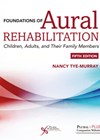
Foundations of Aural Rehabilitation: Children, Adults, and Their Family Members – Fifth Edition
Nancy Tye-Murray leaves no stone unturned in her fifth edition of Foundations of Aural Rehabilitation: Children, Adults and Their Family Members. The exhaustive but not exhausting content offers a three-dimensional insight into the process of (re)habilitation in the clinical setting...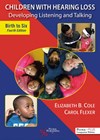
Children with Hearing Loss: Developing Listening and Talking, Birth to Six – Fourth Edition
This book is targeted at a wide audience, from students and healthcare professionals to parents of children with hearing loss. The book is split into two sections: the first section aims to provide the reader with background infomation about hearing...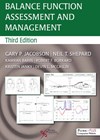
Balance Function Assessment and Management – Third Edition
Now in its third edition, this textbook provides an extensive amount of up-to-date information on the assessment and management of the vestibular system. Four new editors have been recruited for this edition and all chapters have been reviewed and reorganised...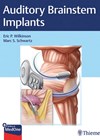
Auditory Brainstem Implants
This is a hardcover volume printed on a high-quality paper. The book is broken into 20 short chapters over 145 pages. It is illustrated with 149 figures. Edited by Eric P Wilkinson and Marc S Schwartz, both based in the...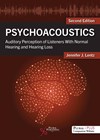
Psychoacoustics: Auditory Perception of Listeners with Normal Hearing and Hearing Loss - Second Edition
Dr Lentz’s Psychoacoustics: Auditory Perception of Listeners with Normal Hearing and Hearing Loss, Second Edition is a 287-page introduction to the eponymous field that fills some (like myself) with great interest, though I have recognised the soporific effect of even...
Use of technological aids and interpretation services
Hearing loss attracts large interest among researchers all over the world due to its prevalence and negative psychological side-effects. Usually hearing loss is managed with hearing aids. However, there are several additional technologies that can be of great help for...
Commercial desiccants or uncooked rice?
Moisture can damage any electronic devices including hearing aids. It is commonly known that rice can ‘rescue’ an electronic device if wetted. Authors of the below-described study researched whether uncooked rice could be used as an efficient equivalent to often...
British English speech test for occupational hearing assessment
It is very important to properly assess occupational fitness for several occupations such as police officer, military personnel or fire fighter. The aim of this study was to develop a British English speech in noise (SiN) test as a tool...
Self-report of hearing aids handling difficulties
The authors have raised an interesting subject concerning the ability of customers to self-assess their hearing aid handling skills. Previous studies showed that 96% of customers when asked if they are able to manage their hearing aids answered ‘yes’. However,...
Static positional nystagmus
This study aimed to clarify the interpretation of positional nystagmus (PN) by looking at the current criteria for significance of PN, comparison of PN in symptomatic patients with normative data, prevalence of PN among participants with balance problems and assessing...


