You searched for "parents"
Video-relay services for Deaf and hard-of-hearing communities
Deaf and hard-of-hearing communities experience many barriers when trying to communicate online or on the phone. Individuals encounter limitations communicating virtually with family members, booking crucial appointments and speaking to friends, to name a few. However, video relay service (VRS)...WCA Innovation Prize
At the World Congress of Audiology in Paris in September, a special prize was announced for the best innovation that addresses an unmet medical need. Candidates were selected from domains such as clinical trials or medical devices, and given five minutes and five slides to pitch in front of an international jury of researchers, clinicians, economists and industry professionals.Sniffing out the evidence – COVID-19 and loss of sense of smell and taste
Louis Pasteur once observed: “In the fields of observation chance favors only the prepared mind.” Professor Hopkins was certainly prepared when a few anecdotes of smell problems started to accumulate early in the pandemic’s course. Post-viral olfactory loss is nothing...In conversation with Professor Wolfgang Pirsig
Professor Wolfgang Pirsig is a key figure in the field of ENT history and is known for his fascinating discoveries of ENT features in art and historical objects. He kindly agreed to be interviewed for this special history focus by...PHACON artificial bone models for ENT training
Simulation, both in training and clinical practice, has become an increasingly important facet of a surgeon’s life. The escalating costs of cadaveric material makes synthetic alternatives an attractive proposition but, up until recently, these artificial versions have lacked the material...Head and neck cancer deaths to cost $535 billion by 2030
More than 500,000 people across the globe will die this year from head and neck cancer, which is the sixth most common cancer in the world and comprises malignancies of the nose, mouth, throat, larynx, and neck. Assuming current trends...Subjective tinnitus – adding mutebutton™ to your tinnitus toolbox
Neurophysiologic tinnitus or subjective tinnitus is typically a sound or a number of sounds that originate from the auditory nervous system. They are unwanted sounds that do not exist in the external environment. They can be heard in one or...Awake transnasal laryngeal and pharyngeal biopsy in the unsedated patient
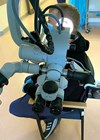
In an attempt to improve the efficiency and flow of patients through a busy ENT clinic, technology now allows the ENT surgeon to consider biopsies in the outpatient setting on a more regular and controlled basis. This can avoid the...
What is the optimum duration of voice rest after microlaryngoscopy procedures?
Recent survey data looking at the opinions and practices of otolaryngologists in the US and the UK demonstrate that there is a wide variation in recommendations made for voice rest after vocal fold surgery. In the US, the most common...
Person-centric practice within a hearing wellbeing programme
This Australian team describe their development process of a hearing wellbeing programme beginning in August 2020, with a wide variety of stakeholders being involved. Primarily, they report, they aimed to overcome the challenge of providing engaging social and emotional support...Clinical and financial success by providing specialised audiological tinnitus management
Diagnosis and management of a patient with chronic subjective tinnitus is one of the most labour-intensive areas of hearing healthcare. This is one reason some hearing care providers opt to exclude specialised tinnitus care from their practice: it may not...