
You searched for "perforation"
Developing an Innovation for ENT – from Idea to Market: how ‘e-i’ did it
Background endoscope-i (e-i) Ltd was incorporated into Companies House on December 3rd, 2012 following eight months of developing our first project, a simple iPhone adapter for endoscopes. Of the three founding shareholders, two are ENT surgeons and one a lecturer...EVOTION: Big data supporting public health policies for hearing loss
Big Data? Biosensors, smart hearing aids and smartphones? The EVOTION Project has it all and more! What will this project tell us about the future of hearing management? Doris-Eva Bamiou, Giorgos Dritsakis and Louisa Murdin, members of the EVOTION team,...
Neosensory Buzz: can a wristband really help with sound awareness and tinnitus?
As an audiologist, I am always looking for alternative and innovative solutions for patients who have tried all other traditional approaches. What else can I offer to patients who struggle to hear, even with appropriate amplification, or those who struggle...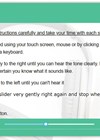
At-home earplug testing – a first of its kind
As an audiologist, it can be difficult to confirm the proper fit of earplugs. Although we can use sound field testing to assess the attenuation of the earplugs, this is not equipment that every audiology clinic has. Unfortunately, without proper...Pathways for becoming an audiologist in the USA: Part 2. Academic and licensure requirements today
Part 1 of this topic is available here. Professor Hall reviews current requirements for practising audiology in the USA; audiologists must have a Doctor of Audiology degree from an accredited university programme and a licence in the state where they...
Virtual and augmented reality in surgery
Virtual reality (VR) is a three-dimensional, computer generated environment which can be accessed using a virtual reality headset, allowing individuals to immerse themselves in this virtual world. Augmented reality (AR) systems layer virtual information over a live camera feed into...All set for IFOS – an interview with Professor Ramos
Professor Angel Ramos-Macias. Our Newsround editor, Haseem Raja, asks Professor Angel Ramos-Macias about his plans for IFOS 2026, which takes place in Istanbul in September. Can you briefly describe your role in IFOS 2026 and what it involves? My actual...Facing up to the challenge of behavioural observation in infant hearing assessment
The ability to assess detection and discrimination of speech by infants has proved elusive. Dr Iain Jackson and colleagues discuss how new technologies and fresh approaches might offer valuable insight into young infants’ behavioural responses to sound. The limits of...BTA – shortlisted for ‘Best not for profit’ communications award
The BTA and Evergreen PR launched the Tinnitus Manifesto with support from politicians, academics and people with tinnitus. The campaign has attracted more than…AAO-HNSF 'Call for Science' Deadline
The ‘Call for Science’ deadline for the American Academy of Otolaryngology–Head and Neck Surgery (AAO-HNSF) Annual Meeting is quickly approaching. Click here to link to the submission site and information on guidelines for submission. Please note that the Annual Meeting...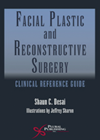
Facial Plastic and Reconstructive Surgery – Clinical Reference Guide
This book is an excellent pocket guide encompassing a wide range of facial plastic and reconstructive surgery. It is formatted in a very similar way to the well-known Otolaryngology and Head and Neck Surgery by Pasha. The book is organised...


