
You searched for "funding"
In conversation with Simone Botha Welgemoed, dancer and model
In this article, Simone Botha Welgemoed shares deep insights on what it is like to have a profound hearing loss and cochlear implant as a professional ballet dancer and model, and the challenges she faced from childhood to get to...OBITUARY: Peter Rhys Evans (1948–2022)
On 3 June 2022, we lost a widely recognised and respected ENT/head and neck surgeon, Mr Peter Rhys Evans.Audiological evaluation and management of teenagers with tinnitus
There is a growing interest in investigating, understanding and managing tinnitus in children and adolescents, with several articles on the subject published in journals over the last year. Brian Fligor describes the approaches to consider when discussing tinnitus with teenagers....Audiology in this issue... The Changing World of Computational Audiology
Deborah Vickers, PhD, Principal Research Fellow in Hearing & Deafness, University of Cambridge, UK. E: dav1000@cam.ac.ukTwitter: @SOUNDLabCam / @DebiVickers_ / @BEARS_CIwww-neurosciences.medschl.cam.ac.uk/sound-lab/ Lorenzo Picinali, Reader in Audio Experience Design, Imperial College London, UK. E: l.picinali@imperial.ac.uk ENT & Audiology News Jan/Feb 2022...The tip in rhinoplasty
Getting the tip right (both its position and its shape) is vital in rhinoplasty. George Marcells eloquently gives us his perspective on how to get it right. “Many surgeons overly concentrate on the profile at the expense of the frontal...Patient-centred audiological rehabilitation: facilitating and hindering factors for implementation
Introduction Patient-centred care in the health sector is a worldwide concern [1, 2]. Patient-centred rehabilitation is characterised by availability, appropriateness, preference, and timelines [3]. A consensus report by the Institute of Medicine [4] defines a patient-centred approach as ‘providing care...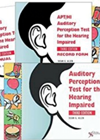
A Guidebook for the Auditory Perception Test for the Hearing Impaired
The Auditory Perception Test for Hearing Impaired (APTHI) assesses functional auditory skills that are the building blocks for language and academic development. The test is aimed at children with at least a moderate-to-severe hearing loss, aged three and over, but...
Till death do us part: the role of the speech and language therapists in palliative care
Increasingly, speech and language therapists are being involved in end-of-life and palliative care. This study reports on a three-phase project to explore this in the context of the Australian healthcare system. In phase one, the authors described a scoping review...
Hearing provides cues for the maintenance of balance
It is well known that balance relies on the integration of vestibular, visual and proprioceptive cues. However not much mention or attention has been given to the importance of auditory cues for balance maintenance. The authors set up experiments to...Help shape the future of mild to moderate hearing loss research
A James Lind Alliance Priority Setting Partnership has been formed to help shape the future of research into mild-moderate hearing loss. Who is the Priority Setting Partnership? The Partnership brings together Hearing Link, Action on Hearing Loss, the British Society...Take part in the FAMOUS study
Could your clinic be one of 40 NHS sites across the UK to participate in the FAMOUS study? Organisers need your help to improve the assessment and management of adult hearing loss.


