You searched for "protective"

Adult Rhinosinusitis Clinical Practice Guideline update
This is a summary of the ‘Clinical Practice Guideline: Adult Sinusitis’ from the American Academy of Otolaryngology-Head and Neck Surgery Foundation. This is an update of the 2015 version. Evidenc-based statements: 1a. Differential diagnosis of acute rhinosinusitis: Clinicians should distinguish...Optical cochlear implants: recent progress toward light-based hearing restoration
Optical cochlear implants combine optogenetics and light-based hardware to overcome limits of electrical CIs, promising sharper frequency resolution and more natural hearing. Cochlear implants (CIs) are among the most successful neuroprosthetic devices in modern medicine, restoring speech perception to hundreds...Hidden genetic disorders in children that may present to the otolaryngologist
Background Among the many hundreds of children presenting to the otolaryngology clinic are a few whose symptoms are due to an underlying genetic condition. In most cases the underlying syndrome is obvious and has already been diagnosed, such as the...Andrew Foster and deaf education
This article examines the career of deaf African American, Andrew Foster, and his contribution to deaf education in Sub-Saharan Africa. The history of medicine has often been guilty of attributing great revolutions to a single person (usually a white man)...Ida Institute’s legacy and the future of person-centred care
Professor Kris English reflects on the IDA Institute’s closure, celebrating its legacy of advancing patient-centred care and reshaping audiological counselling worldwide. In September 2008, the Ida Institute’s Director, Lise Lotte Bundesen, and her team held its inaugural ‘Defining Hearing Seminar’...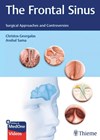
The Frontal Sinus: Surgical Approaches and Controversies
The Frontal Sinus: Surgical Approaches and Controversies is an exceptional resource for surgeons seeking to advance their knowledge in the field of sinus surgery. The book provides a detailed and insightful exploration of the various techniques, challenges, and potential complications...
A voice as smooth as silk?
A number of materials currently exist for vocal fold injection medialisation. Popular options include calcium hydroxylapatite (CaHA), hyaluronic acid (HA) and polydimethylsiloxane (PDMS). The authors of this paper state that there is an unmet need for an injectable material that...
Continuous Ambulatory Vestibular Assessment (CAVA)
This article presents initial test findings using a novel system called CAVA - Continuous Ambulatory Vestibular Assessment. Akin to the 24-hour ECG tape to identify cardiac arrhythmias, this system aims to continuously monitor the presence of a nystagmus pattern in...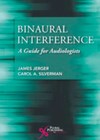
Binaural Interference: A Guide for Audiologists
This book details what binaural interference is, it looks at the basic principles of this topic and follows the research over the years that has gone into investigating what causes binaural interference. It makes for an interesting read, covering a...