
You searched for "audio"
Steroid use in acute acoustic trauma
Acute acoustic trauma (AAT) injuries include noise-induced damage to inner and middle ear presenting as hearing loss, tinnitus and vertigo. Classic presentation is sensorineural hearing loss with an intact tympanic membrane. The authors carried out a case-control study in military...
Blood-sampling prognostic predictors for Bell’s palsy
Bell’s palsy is generally defined as an acute-onset unilateral idiopathic mononeuropathy in the facial nerve. It is of unknown aetiology, however, inflammation is considered a major cause. Electroneurography assessing nerve excitability is the most reliable examination for predicting prognosis of...
Ethnic inequalities in hearing aid use
Recent events, including the COVID-19 pandemic, have once again highlighted health inequalities experienced by people from ethnic minority backgrounds. Our Editors’ Choice paper shows that there are inequalities in hearing aid use and includes the stark finding that ethnicity is...
Hearing difficulties and memory problems
Since the Lancet Commission report in 2020, we have all been aware that untreated hearing loss is potentially one of the biggest modifiable risk factors for dementia in midlife. Hearing loss is also associated with other risk factors for dementia,...
Audiometric and Quality of Life comparison between Bonebridge® and Osia®
Bone conduction implants are an alternative to hearing aids for varying reasons. Both Bonebridge® and Osia® are transcutaneous devices maintaining intact skin, establishing a connection between the implanted device and external processor through a magnetic system. Both are described as...
Epley manoeuvre angles
Posterior canal benign paroxysmal positional vertigo (PC-BPPV) is a common vestibular cause of dizziness regularly encountered in the outpatient clinic. The condition is often diagnosed with a positive Dix-Hallpike manoeuvre (DHM) – turning the patient’s head 45 degrees to the...Tackling information overload and retention – interactive multimedia videos for first-time hearing aid users
If you are an audiologist reading this article, how confident are you that all the information and advice that you offer your first-time hearing aid (HA) patients is understood, absorbed and then acted upon once they leave the comfort of...Integrating technology into audiological rehabilitation programmes
In the future, the rehabilitation of adults with hearing loss is likely to involve modern information technology. Using the Internet in the audiological rehabilitation process might be a cost-effective way to include additional rehabilitation components by guiding hearing aid users...Knowledge is power: the power of mobile technologies to enhance hearing-related knowledge
In recent years, the widespread use of smartphones has made it increasingly possible to improve knowledge, understanding and delivery of hearing healthcare. Melanie Ferguson tells us about the advances in mobile-health applications. Think back to five years ago - what...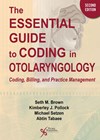
The Essential Guide to Coding in Otolaryngology: Coding, Billing, and Practice Management - Second Edition
Medical coding has been complex, evolving, and less understood by many, although it affects every medical practitioner practice in the United States. This book presents with the essentials of coding and billing for the otolaryngologist, thereby making it efficient and...
Risk factors for loco regional recurrence for oral SCC
Over 250,000 cases of oral squamous cell carcinomas are diagnosed annually worldwide with 128,000 registered deaths. The authors of this study are from a single institution in Germany and have conducted a retrospective audit of 517 patients with oral SCC...


