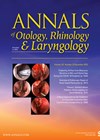
You searched for "complications"

Salivary Gland Neoplasms
Salivary Gland Neoplasms is another useful addition to the Advances in Otolaryngology series. This issue (Vol 78) sees Prof Patrick Bradley (Nottingham) and David Eisele (Baltimore) co-edit a 206-page edition, nicely divided into 23 chapters, covering basics like molecular pathology,...
The Nose – Revision & Reconstruction: A Manual and Casebook
Any nasal plastic surgery book which is recommended in forwards by Eugene Tardy and Claus Walter deserves to be taken seriously, and this does not disappoint. Hans Behrbohm has produced this high-quality book with contributions from eight other authors. The...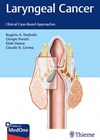
Laryngeal Cancer: Clinical Case-Based Approaches
This book, published by Thieme, provides a lot of information in a compact size. I enjoyed reading the book as it has an international list of authors and contributors from South America, USA, Europe and Asia which gives it an...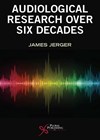
Audiological Research Over Six Decades
This is Dr James Jerger’s - one of the greatest - legacy of the vast contributions to the field of diagnostic audiology assessment throughout his career in a historical overview format. This is a concise and one-of-a-kind book, written without...The Launch of the British Endoscopic Ear Group
The British Endoscopic Ear Group (BEEG) has been established to support the continued development and integration of endoscopic ear surgery (EES) within UK otological practice and training. Interest has grown steadily in recent years, driven by improved instrumentation, increasing published evidence, and a new generation of surgeons trained in both microscopic and endoscopic approaches.
A raised neutrophil / lymphocyte ratio predicts vestibular schwannoma growth
It has long been known that the neutrophil to lymphocyte count ratio (NLR) is a marker of inflammation and that a higher ratio relates to poorer outcomes in some malignant tumours including some head and neck cancers. Neutrophilia (and therefore...
Method of delivery: all topical nasal corticosteroids are not made equal
There is an increasing body of evidence that the role of surgery for chronic rhinosinusitis is to facilitate the delivery of topical medical treatment – most notably, topical corticosteroids. Two recent studies, one using flow dynamics and another one examining...
Cochlear implantation in children with congenital long QT syndrome
Jervell and Lange-Neilsen syndrome is a condition where sensorineural deafness coincides with inherited abnormalities of the heart, resulting in prolonged ventricular repolarisation, frequently shown on an ECG with a prolonged QT interval. These children can present at implant centres for...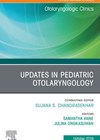
What to do if adenotonsillectomy does not cure sleep apnoea in children?
This article reviews the management of children with persistent obstructive sleep apnoea (OSA) following adenotonsillectomy (AT). Risk factors for patients to have persistent disease include obesity, being Afro-Caribbean and existing co-morbidities such as craniofacial and neuromuscular disorders. Initial assessment of...
Pain control for patients with chronic pain following surgery
There is an increasing number of patients with a background of chronic pain presenting to the otolaryngologist. Patients with chronic pain require extra consideration in postoperative pain control due to risk of tolerance and dependence. This article summarises postoperative management...
Diagnostic features of acute invasive fungal sinusitis
Acute invasive fungal sinusitis (AIFS) is a rare but frequently lethal condition, commonly associated with a high morbidity among those that survive. It has gained recent media attention on account of its increased incidence following infection with (and treatment for)...