You searched for "perforation"
Government Guidance on Hearing Aids
The UK Government’s Department of Health and Social Care (DHSC) has announced that tens of thousands of people with hearing loss will have access to new hearing aid devices, thanks to fresh guidance allowing businesses around the world to sell certain pioneering hearing aids in the UK.
Hearing Assistive and Access Technology
Authored by audiologists, the book primarily discusses a range of hearing assistive and access technologies (both old and new), and outlines how each device works, which scenarios it is best suited to, and its limitations. Divided into four sections, the...
Cochlear implantation in SSD
There are currently several trials for cochlear implantation (CI) in single-sided deafness (SSD) being undertaken to answer some of the questions this paper from New York raises. Who is best suited to receive one? What are their outcomes and how...
Moderating effect of hearing aids on association between hearing loss and brain structure?
Previous studies have suggested links between age-related hearing loss and structural changes in cortical regions with auditory and language functions, which could be causative of cognitive decline linked to the condition. The authors reason reduced sensory input could be causative...PHACON artificial bone models for ENT training
Simulation, both in training and clinical practice, has become an increasingly important facet of a surgeon’s life. The escalating costs of cadaveric material makes synthetic alternatives an attractive proposition but, up until recently, these artificial versions have lacked the material...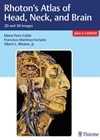
Rhoton’s Atlas of Head, Neck, and Brain
Albert Rhoton was a renowned American neurosurgeon with an intense interest in anatomy. This book was published after his death in 2016 and aims to continue Rhoton’s philosophy of patients benefit deriving from surgeons’ knowledge and understanding of complex anatomy....In conversation with Ad Snik
Professor Ad Snik has spent a large portion of his career in hearing implantation and has seen novel devices come and go, some of great benefit to patients, others which haven’t produced expected results. In this interview, he talks to...PLUM: using parent observations to identify persistent otitis media
Can parent observations help identify persistent otitis media sooner? PLUM uses everyday listening behaviours to flag children who may need urgent specialist care. Otitis media (OM) remains one of the most persistent health inequities facing Indigenous children globally. While prevalence...Dispelling myths about audiologic counselling: part one
In the first of a two-part series (see Part 2 here), Drs Clark and English explore common misconceptions in audiologic counselling and highlight the power of empathy and person-centred care. As patients sit before us, they experience any number of...Treating voice disorders in singers
There are few ENT surgeons who have as much insight into singers’ problems as Nick Gibbins. A good knowledge of working patterns, repertoire and the physiology of ‘vocal athletes’ is essential. He shares a few thoughts with us. When deciding...
Coblation for lingual haemangiomas
Haemangiomas are benign vascular tumours characterised histologically by a marked proliferation of blood vessels. They can be either congenital or acquired, and can affect the tongue, both within the oral cavity and the oropharynx. A variety of interventions exist for...