You searched for "funding"

Understanding Childhood Hearing Loss – Whole Family Approaches to Living and Thriving
Brian Fligor is an experienced paediatric audiologist working in America. This book was written for the hearing impaired child and their family to demystify the technical and emotional aspects of hearing loss and the journey from diagnosis through to adolescents....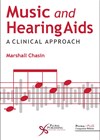
Music and Hearing Aids: A clinical approach
Given Marshall Chasin’s international reputation in the field of music and hearing aids, this book will come with high expectations. As an often-challenging clinical scenario for practising audiologists, and with no other dedicated books on the market, this text has...
Technology at the right time in the right place for people with communication difficulties
The ‘just-in-time’ (JIT) construct was developed as a business strategy for a major Japanese car company in the 1970s. It has now been applied to many other business models throughout the world. The JIT concept is where something is provided,...Choose Experience. Choose Expertise. Choose BenCorpp®
BenCorpp® is more than just a company - it is a family-owned business located in Mirandola, a small town in northern Italy, known worldwide as “the Biomedical Valley of Europe”.Neuxmed is now the exclusive UK and Ireland partner for Orlvision, a leader in German-designed and manufactured endoscopy systems
“At Neuxmed, our mission is to empower ENT specialists and speech and language therapists with innovative, reliable, and clinically proven endoscopic solutions,” says Michael Davies, MD at Neuxmed. “With over 12 years of experience in flexible endoscopic diagnostics, our team...3rd UK Smell & Taste Symposium
Following the success of events in 2022 and 2023, Professor Carl Philpott, Professor of Rhinology and Olfactology at the University of East Anglia, and Duncan Boak, CEO of Fifth Sense, the charity for people affected by smell and taste disorder,...AUDIOLOGY - In conversation with Dr Jerry Northern
Gareth Smith chats with Dr Jerry Northern and learns about his fascination with Mount Everest, the legendary Marion Downs and his unique career in audiology… Jerry with the legendary Marion Downs. Tell us about your background, how did you come...The role of objective measures and imaging to optimise cochlear implant outcomes
Should we be using new or novel objective measures and imaging to assist with our cochlear implant patients? Debi Vickers and Shak Saeed describe current clinical techniques and present advances that have the potential to optimise outcomes. Introduction It is...