You searched for "Snoring"
In Conversation with Professor John Russell, President of CEORL-HNS Dublin 2024
John Russell is professor of paediatric otolaryngology in Dublin and the President of the CEORL-HNS Congress in his hometown. Declan Costello caught up with him to find out what we can expect from the meeting, not just academically, but also...Covid-19 A message from Gareth Smith
Whilst our ENT colleagues have scrambled to the coronavirus ‘call to arms’ and taken the ultimate risk, for many audiologists and audiology services the threat of this global virus presents some different challenges. Whilst social isolation is a scary thought...Top news from the International Journal of Audiology
Prof Kevin Munro. The International Journal of Audiology (IJA) is pleased to congratulate authors, Drs Kevin Munroe, Kai Uus, Ibrahim Almufarrij, Nazia Chaudhuri and Veronica Yioe on their article, ‘Persistent self-reported changes in hearing and tinnitus in post-hospitalization COVID-19 cases’...From the editor SeptemberOctober 2022
Declan Costello, MA, MBBS, FRCS(ORL-HNS), Editor, ENT & Audiology News; Consultant Ear, Nose and Throat Surgeon, Wexham Park Hospital, Slough, Berkshire, UK. E: d.costello@nhs.net A few weeks ago, the ENT & Audiology News editorial team had a very productive meeting...Save the date: WCA 2024
The 36th World Congress of Audiology is taking place in Paris, 19–22 September 2024. The organisers have released a teaser video to encourage audiologists to attend a cutting-edge conference where diagnostic and therapeutic innovation, personalised medicine and translational research will...New managing director for EUHA
At the beginning of November 2022, Tobias Bartels took up his position as managing director of the European Union of Hearing Aid Acousticians (EUHA). The 48-year-old business graduate brings to bear more than 25 years of experience. His focus has...Call to enter WHO Film Festival
Submissions for the fourth edition of the Health for All Film Festival (HAFF) are open until 31 January 2023. Run by the World Health Oganisation (WHO), the HAFF celebrates the art of short films as a means of raising awareness of global health issues.
Clinical Management of Children with Cochlear Implants - Second Edition
This substantial volume is nearly 900 pages long but definitely worth the shelf space. That said, it hasn’t actually made it to a shelf since its arrival at our department as everyone who spotted it has wanted to borrow it!...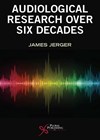
Audiological Research Over Six Decades
This is Dr James Jerger’s - one of the greatest - legacy of the vast contributions to the field of diagnostic audiology assessment throughout his career in a historical overview format. This is a concise and one-of-a-kind book, written without...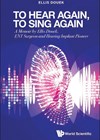
To Hear Again, To Sing Again: A Memoir by Ellis Douek, ENT Surgeon and Hearing Implant Pioneer
“The past is a foreign country: they do things differently there.” LP Hartley’s immortal words could have been written for these fascinating reflections on the practice of ear, nose and throat surgery during the second half of the 20th century....
Application of balloon dilatation in chronic eustachian tube dysfunction
Chronic eustachian tube dysfunction prevails in 1% of the adult population and can predispose to middle ear disease. There are subjective and objective features of this condition that can affect quality of life. The common methods to treat eustachian tube...