You searched for "cancer"
A legendary ‘parotid adenoma’: teaching aid or trophy? & The stapes: a classical heresy
A legendary ‘parotid adenoma’: teaching aid or trophy? A wander through the glass cases of the newly refurbished Hunterian Museum at the Royal College of Surgeons in London presents a particularly impressive sight to any ENT surgeon. The salivary adenoma...In conversation with Professor Paul J Donald
Prof Paul J Donald has recently stepped down as Chairman of the ORL-HN Department at UC Davis in Sacramento and is winding down to retirement. In this interview with Prof Pat Bradley, Prof Donald explains some of the highlights of...
Can and should vestibular schwannoma surgery be carried out via the endoscopic transcanal approach?
The extent and scope of endoscopic ear surgery has rapidly progressed in recent years, and this paper, from one of the leading proponents of this technique, reports on the outcomes of a case series of patients who have had total...Between sirens and silence: the burden on otorhinolaryngologists in wartime Ukraine
Ukrainian ENT teams continue life-saving and routine care under air raid alerts, with staff shortages, strained resources and the long psychological toll of war. War reshapes medicine long before it destroys hospitals. It alters the rhythm of clinical work, the...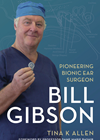
Bill Gibson: Pioneering Bionic Ear Surgeon
Professor Bill Gibson is one of the great pioneers of inner ear surgery and the recent publication of his biography is a reflection of his remarkable life and career. Bill Gibson: Pioneering Bionic Ear Surgeon will be enjoyed by everyone...In conversation with Prof Peter John Wormald: The past, present and future of treating CRS
At ERS2023, Prof PJ Wormald will lecture on the past, present and future of treating chronic rhinosinusitis (CRS). We caught up with him recently to hear about the major improvements, the hypes and his dreams for the future of treating...
Facial filler danger zones
Non-surgical facial rejuvenation techniques are increasing and are now undertaken by plastic, maxillofacial and ENT surgeons as well as non-surgeon technicians in the private sector. Although the technique of using fillers is less invasive than surgical options, it is not...Mapping the nose – first spatial map of olfaction published
Scientists at Harvard Medical School have created the first detailed map of smell receptors in the nose, catching up with similar achievements in sight, hearing and touch. The map reveals that smell receptors are highly organised into tight bands based on type. The findings provide foundational knowledge needed to develop better therapies for loss of smell.Leadership in academia
I went into medicine with the clichéd view of wanting to help people. I found that by doing surgery I could help a small number of people, albeit usually to a large effect. Then, I recognised that by engaging in...
Oropharyngeal malignancies
The authors retrospectively reviewed 44 patients who underwent a combined transoral and transcervical treatment without mandibulectomy for oropharyngeal malignancy. The combined approach was performed first by a neck dissection followed by transoral excision of the lesion and reconstruction by a...