You searched for "balanc"
CEORL-HNS Dublin update
There are now only six weeks to the 7th Confederation Congress of European Otorhinolaryngology-Head and Neck Surgery.Monika Matusiak given associate professorship by World Hearing Centre
The World Hearing Centre of the Institute of Physiology and Pathology of Hearing, Warsaw, Poland is now eligible to award an academic degree and the first nominee to receive such promotion is Dr Monika Matusiak.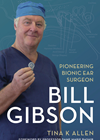
Bill Gibson: Pioneering Bionic Ear Surgeon
Professor Bill Gibson is one of the great pioneers of inner ear surgery and the recent publication of his biography is a reflection of his remarkable life and career. Bill Gibson: Pioneering Bionic Ear Surgeon will be enjoyed by everyone...
Outcomes for transoral vestibule approach thyroid surgery
Ed’s choice explores a systematic review examining one of the recent innovations in head and neck surgery. It may come as a surprise to some that within a few years of the first published cases of transoral vestibule thyroidectomy, an...
Outcomes of temporal bone-resurfacing for pulsatile tinnitus associated with vascular wall anomalies
This month’s Ed’s choice is an interesting systematic review into the management of pulsatile tinnitus. There are impressive results from resurfacing of symptomatic anatomical abnormalities of the temporal bone and I suspect that referrals for further imaging and otology clinic...
Is there increased cardiovascular risk with macrolide antibiotics?
This month’s Ed’s Choice delightfully reviews the potential cardiovascular consequences of long-term macrolide use in the treatment of chronic rhinosinusitis. This used to be one of my ‘go-to’ topics of conversation at home after a bad day at work, although...
Antibiotic prophylaxis in otolaryngologic surgery. Less is better!
Jan/Feb 2020 Editor’s Choice is a review of antibiotic prophylaxis in ENT and OMF surgery. It is not the first systematic review and meta-analysis published in the last two years. If anyone else has been offered a “potentially career-altering opportunity”...
Can we predict risk of adverse events preoperatively in patients undergoing head and neck cancer surgery?
Ed’s Choice reviews a paper aiming to create a reliable index to predict postoperative outcomes in head and neck cancer patients. This interesting study identifies variables that may assist in risk assessing prospective surgical candidates. There have been a few...
Some guidelines for treating rhinological patients during the COVID-19 pandemic
This is a very interesting and informative multinational European guide to the treatment of rhinology patients during the current pandemic, describing the safe delivery of a rhinological service to patients. Much of this has become well understood and standard practice...
Sinus airflow after FESS using models and fluid dynamics
This is a very interesting study from Australia and New Zealand looking at flow of air into the nose and sinuses after FESS surgery. There is plenty of data regarding computational fluid dynamics for preoperative cases but not much for...
Dupilumab prospective RCT for CRSwNP, a multinational trial of 60 patients with a 16-week CT follow-up
This transcontinental work describes a randomised, double blind, placebo controlled parallel group study over a 16-week period, assessing 60 patients with CRSwNP by CT scan scores. All patients had a four-week period of intranasal corticosteroids followed by randomisation to add...