
You searched for "dizziness"

Effect of COVID-19 on hearing and balance
Rhinological symptoms are cardinal features of COVID-19. However there have only been anecdotal reports on the involvement of the ear, the closest neighbour to the nose and throat. The aim of this study was ‘to assess the presence of persistent...
Subtypes of vestibular migraine
The authors argue that the current Barany criteria (ICVD) for vestibular migraine (definite and probable – dVM and pVM) are too restrictive. For instance, whereas a category of chronic migraine with or without aura is recognised in ICHD-3, ‘chronic VM’...
Booklet-based supervised vs. non-supervised vestibular rehabilitation
There are conflicting results in the literature about home-based vestibular rehabilitation training (VRT) as opposed to physiotherapist-led training. A randomised controlled trial was designed to interrogate this further. The primary aim was to assess “the effects of a booklet-based exercise...
Epley manoeuvre angles
Posterior canal benign paroxysmal positional vertigo (PC-BPPV) is a common vestibular cause of dizziness regularly encountered in the outpatient clinic. The condition is often diagnosed with a positive Dix-Hallpike manoeuvre (DHM) – turning the patient’s head 45 degrees to the...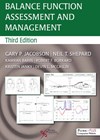
Balance Function Assessment and Management – Third Edition
Now in its third edition, this textbook provides an extensive amount of up-to-date information on the assessment and management of the vestibular system. Four new editors have been recruited for this edition and all chapters have been reviewed and reorganised...
New diagnostic criteria for Ménière’s disease – an international consensus
Most readers are familiar with the American Academy diagnostic criteria for Ménière’s disease (MD) but a significant minority will be aware of other criteria from Japan and Korea. This new effort is a collaboration between these three bodies and the...
Treatment options for vestibular neuritis: systematic review and meta-analysis
Vestibular neuritis (VN) is the third most common cause of peripheral vertigo. VN has been postulated to have viral aetiology and historically it was treated with steroids, until 2011 when a Cochrane review demonstrated lack of robust evidence behind this...
Can tympanometry be used to diagnose Ménière’s disease?
The authors proposed multifrequency tympanometry (MFT) as an in-office test which may be able to diagnose Ménière’s disease (MD) that is quicker and more cost-effective than other methods. MFT measures the acoustic admittance of the middle ear and external ear...
Recovery of vestibular function after vestibular neuritis
It is well known that recovery from vestibular neuritis (VN) is not solely mediated through central vestibular compensation, but also at the peripheral level. The authors conducted a prospective study to track the dynamic changes in recovery from vestibular neuritis...
Covid-19 and vestibular symptoms review
Since the coronavirus pandemic, there have been several studies looking into alterations within the auditory system but few in the vestibular system associated with Covid-19. This review delves into the specific evidence. It is challenging to elucidate the link between...


