You searched for "ESS"
The era of lateral flow tests in ENT
The COVID-19 pandemic brought to light the versatility of lateral flow tests (LFTs), with heavy endorsement from healthcare professionals and a greater awareness among the general public.Interacoustics introduces the game-changing Audible Contrast Threshold (ACT™) test
For more than a century, hearing aids have been prescribed based solely on the pure tone audiogram.With the introduction of ACT, Interacoustics goes beyond the audiogram, and is now able to address the number one complaint from people with hearing loss: hearing conversations in noisy situations.AURITEC presents AT2000: Advanced Multichannel Audiometry and Cochlear Implant Integration
AURITEC AT2000 is a state-of-the-art audiometer that stands out for its exceptional capabilities in multichannel audiometry and its unique integration with cochlear implants.Landmark study at Homerton University Hospital confirms GastroPanel®’s diagnostic accuracy
BIOHIT HealthCare is pleased to announce that a clinical study conducted by Homerton University Hospital NHS Foundation Trust, London, has confirmed the diagnostic accuracy of GastroPanel in identifying gastric cancer risk in patients with upper abdominal complaints. This study demonstrated...In conversation with Dr John Woo and Mr Derek Skinner
Dr John Woo and Mr Derek Skinner have between them an absolute wealth of experience and expertise in the fields of surgical training and specialist examinations. Here, they tell us about their involvement in surgical education, and explain some of...
Management of peritonsillar abscesses – should we be offering a hot tonsillectomy?
Peritonsillar abscesses (PTAs) are one of the most common reasons for patients being referred to ENT services on an emergent basis worldwide. The conventional treatment for adult patients with a PTA in the UK involves needle aspiration or incision and...The British Acoustic Neuroma Association (BANA) Annual Conference 2025
The British Acoustic Neuroma Association (BANA) will host their Annual Conference this year in Ashover in the Peak District, this year focusing on members’ personal experiences. BANA (British Acoustic Neuroma Association) is a registered charity providing invaluable information and support to people with Acoustic Neuroma / Vestibular Schwannoma (ANVS) and their support networks.Dispelling myths about audiologic counselling: part one
In the first of a two-part series (see Part 2 here), Drs Clark and English explore common misconceptions in audiologic counselling and highlight the power of empathy and person-centred care. As patients sit before us, they experience any number of...New online support for hyperacusis
An innovative new package of self-guided online support and information has been launched to help people with hyperacusis – severe sensitivity to everyday sounds – and those that care for them.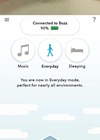
Neosensory Buzz: can a wristband really help with sound awareness and tinnitus?
As an audiologist, I am always looking for alternative and innovative solutions for patients who have tried all other traditional approaches. What else can I offer to patients who struggle to hear, even with appropriate amplification, or those who struggle...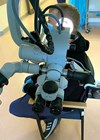
MicroREC Optical System
The MicroREC is a product by Custom Surgical, a German medtech company, and works as an attachment for an operating microscope to enable procedures to be viewed and recorded on a smartphone. It’s advertised as a device used in ENT,...